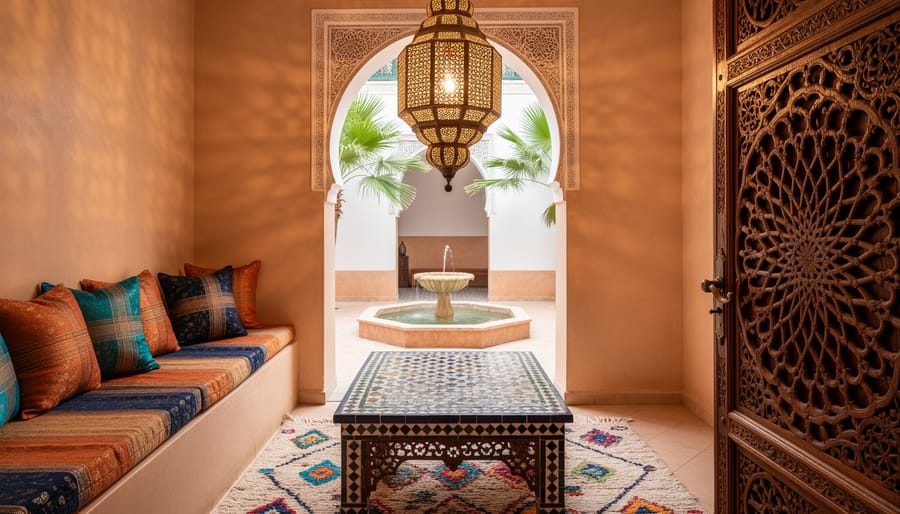
Why Your Moroccan Interior Design Search Keeps Showing You the Same Tired Ideas
Search beyond Pinterest’s surface-level mood boards by diving into ereere specialized Moroccan design archives, Instagram accounts of Moroccan riad owners, and cultural heritage sites that showcase authentic regional variations. Explore the distinct differences between Fes geometric tile work, Marrakech’s bold color palettes, and Essaouira’s coastal minimalism rather than settling for homogenized “Moroccan” aesthetics that blend everything together.
Look specifically for artisan techniques like traditional zellige mosaic patterns, carved cedarwood mashrabiya screens, and hand-loomed Berber textiles when filtering search results. These elements carry centuries of craftsmanship and regional storytelling that mass-produced imitations simply cannot replicate. Understanding the cultural significance behind tadelakt lime plaster or the symbolic meanings in Boucherouite rug patterns transforms your space from themed decor into a meaningful design narrative.
Focus your search on sustainable sourcing from cooperatives and fair-trade importers who work directly with Moroccan craftspeople. This approach ensures you’re bringing home pieces with genuine provenance while supporting the communities keeping these traditions alive. When you discover a brass lantern hand-pierced in Taroudant or a sabra silk cushion woven in the Atlas Mountains, you’re not just decorating; you’re preserving cultural heritage and creating a home filled with stories. The richness of authentic Moroccan design lies not in accumulating accessories, but in thoughtfully curating pieces that honor their origins and speak to your personal connection with this vibrant aesthetic tradition.
What Web Search Services Get Wrong About Moroccan Design
When you type “Moroccan interior design” into a search engine, you’re likely bombarded with results showing mass-produced poufs in garish colors, generic “bohemian” accessories labeled as Moroccan, and Pinterest boards filled with what amounts to visual stereotypes. This disconnect between what appears in search results and genuine Moroccan design tradition creates a frustrating barrier for anyone seeking true inspiration.
Most web searches conflate Moroccan style with a vague “exotic” aesthetic, presenting oversimplified interpretations that reduce centuries of craft mastery to a few decorative clichés. You’ll see endless listings for metallic lanterns and geometric cushions divorced from their cultural context, stripped of the stories they tell about Berber heritage, Islamic artistry, or the cross-pollination of Arab, African, and Mediterranean influences that define Morocco’s visual language.
The problem deepens when search algorithms prioritize commercial marketplace listings over educational content. Rather than learning about zellige tilework’s mathematical precision or the symbolic meanings woven into Boucherouite rugs, you’re pushed toward products marketed as “Moroccan-inspired” that bear little resemblance to anything you’d find in a Marrakech riad or Fez medina home.
This confusion matters because understanding authentic Moroccan design principles transforms how you search and what you discover. When you recognize that true Moroccan interiors balance intricate ornamentation with functional simplicity, favor handcrafted imperfection over factory uniformity, and use color with intentional restraint rather than overwhelming excess, you’ll naturally refine your search terms. Instead of broad queries, you’ll seek specific elements like tadlakt plasterwork, sabradou archways, or vintage Azilal textiles.
The key is shifting from passive scrolling through generic results to actively hunting for resources that honor Moroccan craftsmanship’s depth and diversity. This means looking beyond the first page of search results and questioning whether what you’re seeing reflects genuine cultural tradition or simply commercial convenience packaged with an “exotic” label.
The Essential Elements Search Algorithms Overlook
Color Palettes That Tell a Story
Moroccan color palettes carry centuries of meaning, drawing from the nation’s diverse landscapes and rich cultural heritage. The signature jewel tones—deep sapphire blues, emerald greens, and ruby reds—aren’t merely decorative choices. They reflect precious stones traded along ancient caravan routes and represent prosperity and celebration in Moroccan homes.
The iconic Majorelle blue, a vibrant cobalt shade, originated from the famous garden in Marrakech and symbolizes spiritual protection. Pair it with warm terracotta oranges that mirror the Atlas Mountains at sunset for a balanced, authentic palette. Earth-toned ochres and clay reds ground these bolder hues, creating harmony that feels both energizing and peaceful.
When implementing these colors, start small if the intensity feels overwhelming. Paint a single accent wall in deep indigo, or introduce saffron yellow through textiles like cushions and throws. Layer colors gradually—Moroccan design thrives on richness built through multiple elements rather than one bold statement.
Consider the 70-20-10 rule: use earthy neutrals for 70 percent of your space, jewel tones for 20 percent, and metallic golds or bright whites for the final 10 percent. This approach honors traditional Moroccan color wisdom while maintaining livability in contemporary homes.
Geometric Patterns and Sacred Geometry
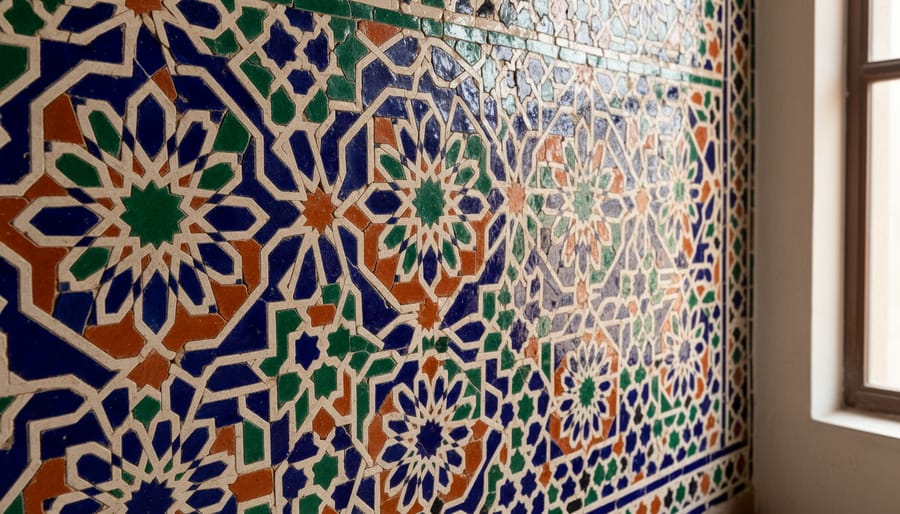
At the heart of Moroccan design lies a profound spiritual language expressed through mesmerizing geometric patterns. Zellige tilework, those hand-cut mosaic tiles arranged in intricate star formations and interlocking shapes, represents the Islamic tradition of depicting the infinite nature of creation through mathematics and repetition. When searching for authentic pieces, look for slight irregularities in the glazing and cutting—these imperfections are the signature of artisan craftsmanship. Genuine zellige tiles have a luminous, slightly uneven surface that catches light differently throughout the day, unlike the perfectly uniform finish of factory-made alternatives.
Carved plasterwork, or gypsum stucco, showcases similar sacred geometry principles. These elaborate patterns aren’t merely decorative—they embody centuries of mathematical knowledge and spiritual symbolism. When exploring traditional tilework patterns online, examine the depth and precision of the carving. Authentic pieces display layered relief work with crisp edges and flowing arabesques that seem to dance across surfaces. Mass-produced versions often lack this dimensional quality, appearing flat and lifeless by comparison. Understanding these distinctions empowers you to curate spaces that honor Morocco’s artistic heritage while avoiding commercialized imitations.
Textural Layering Techniques
The magic of Moroccan interiors lies in the fearless mixing of textures that would seem contradictory in other design traditions. Rather than adhering to matchy-matchy rules, Moroccan homes embrace beautiful chaos where rough meets refined, creating spaces that feel lived-in and luxurious simultaneously.
Start by anchoring your room with textiles in varying weights and weaves. Layer a plush wool Beni Ourain rug over terracotta tiles, then add silk cushions alongside rougher sabra cactus silk throws on low seating. The Moroccan philosophy encourages abundance—think three, four, even five different textile patterns coexisting peacefully through shared color palettes of jewel tones, earthy ochres, and deep indigos.
Metal elements add essential visual punctuation. Oxidized brass lanterns with intricate piercing cast lacy shadows across walls, while hammered copper trays become functional art pieces. Don’t shy away from patina and age marks; these imperfections tell stories and add authenticity.
Introduce carved cedar or painted wood pieces—perhaps a mashrabiya screen or an ornate chest—to provide warmth against cool plaster walls. The wood grain contrasts beautifully with the smoothness of hand-painted ceramic tiles and pottery.
The key is balance through variety. Each material should have its moment without overwhelming the others. When you run your eyes across a truly Moroccan-inspired room, they should dance from texture to texture, discovering new tactile delights with each glance. This sensory richness transforms ordinary spaces into intimate sanctuaries that wrap around you like a warm embrace.
Smart Search Strategies for Authentic Moroccan Design Inspiration
Keywords That Actually Work
Transforming your search results starts with knowing the right words. Instead of scrolling through endless “Moroccan-inspired” listicles, try searching for these authentic design terms that will unlock a treasure trove of genuine resources and artisan work.
Start with riad, the traditional Moroccan house built around an interior garden or courtyard. This term opens doors to architectural layouts and spatial planning unique to Moroccan homes. Search for mashrabiya to discover the intricate wooden lattice screens that filter light beautifully while maintaining privacy, a signature element you’ll want to explore for window treatments or room dividers.
When hunting for wall finishes, tadelakt is your magic word. This ancient waterproof lime plaster technique creates those smooth, luminous surfaces you see in hammams and luxury riads. Similarly, zellij refers to the mesmerizing mosaic tilework formed from hand-cut geometric pieces, perfect for backsplashes or accent walls.
For textiles and seating, search boucherouite for colorful recycled fabric rugs, and poufs for the iconic leather ottomans that ground Moroccan living spaces. The term moucharabieh yields results for carved screens and panels, while souk will connect you with marketplace vendors and authentic sources.
Don’t forget bahja, meaning joy or happiness, often used to describe the vibrant color palettes characteristic of Moroccan interiors. Each of these terms carries cultural significance and will guide you toward resources that understand the depth and heritage behind the aesthetics, not just surface-level imitations.
Finding Credible Sources and Artisans
Discovering authentic Moroccan design resources requires detective work, but the journey rewards you with treasures that tell genuine stories. Start by seeking out cultural institutions and museums with Moroccan collections online, as these often provide historically accurate inspiration and connect you to vetted artisan networks.
When browsing for Moroccan goods, look beyond polished product photos. Authentic artisan shops typically share stories about their craftspeople, feature slight variations between items that reveal handmade origins, and provide detailed information about traditional techniques like zellige tile-making or hand-knotted carpet weaving. If every product looks machine-perfect with identical replicas, you’re likely viewing mass-produced imports.
Red flags for dropshipping sites include generic descriptions, no mention of artisan names or regions, impossibly low prices for supposedly handcrafted items, and shipping times exceeding several weeks. Genuine Moroccan sellers often maintain social media showing their workshops, artisans at work, and the creative process behind each piece.
Seek recommendations from cultural organizations, Moroccan diaspora communities, and fair-trade certified retailers who prioritize ethical sourcing. Websites ending in .ma (Morocco’s domain) or those featuring Arabic alongside English often indicate closer connections to source. When implementing Moroccan-inspired design tips, purchasing from verified artisans ensures your home reflects authentic craftsmanship while supporting traditional skills passed through generations. Consider visiting virtual souks, attending Moroccan cultural festivals locally, or connecting with interior designers specializing in North African aesthetics who maintain direct artisan relationships.
Room-by-Room Moroccan Design Ideas You Won’t Find on Page One
Creating a Riad-Inspired Living Room
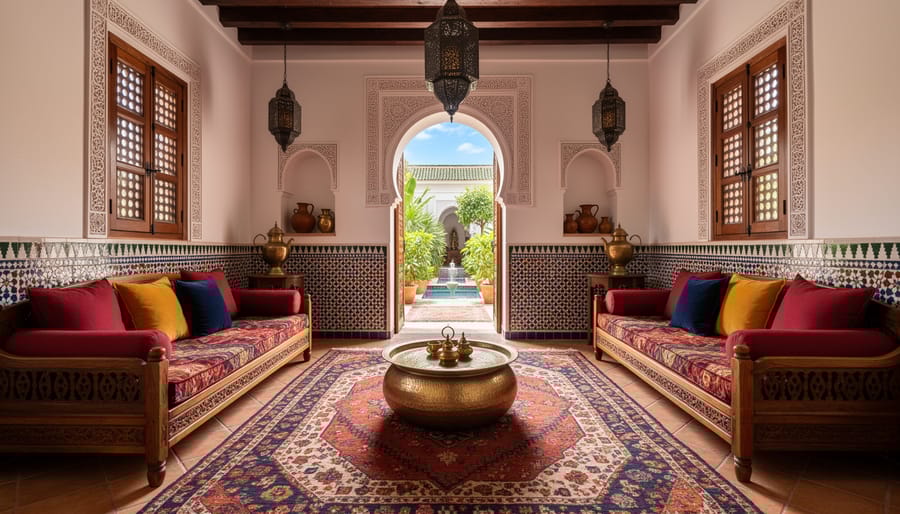
The traditional riad, with its inward-facing courtyard design, offers a blueprint for creating peaceful, layered living spaces that feel both intimate and grand. At the heart of a riad-inspired living room lies the concept of creating multiple zones within a single space, just as the courtyard serves as the soul of a Moroccan home.
Begin by establishing a central focal point that draws the eye upward, mimicking the open-air courtyard effect. This could be a stunning brass lantern chandelier or a decorative ceiling medallion with geometric patterns. Arrange your seating in a conversational square or U-shape around a low-slung coffee table, encouraging the intimate gathering style inherent to Moroccan culture.
Layer your lighting thoughtfully, combining ambient, task, and accent sources. Pierced metal lanterns cast mesmerizing shadow patterns across walls, while floor lamps with jewel-toned glass shades provide pools of warm light. Consider installing dimmer switches to recreate the magical transition from bright afternoon sun to candlelit evening.
Ground the space with a substantial area rug featuring traditional Berber or Beni Ourain patterns, then build texture through floor cushions, poufs, and banquettes lined with embroidered pillows. The key is creating that signature riad feeling of sanctuary where every corner invites you to pause, recline, and savor the moment.
Bedroom Retreats with Moroccan Soul
Transform your sleeping quarters into a sanctuary that honors Moroccan tradition without defaulting to the obvious draped canopy. Start with the foundation: layer your bed with a handira, the traditional Berber wedding blanket featuring sequined geometric patterns and soft white wool. These aren’t merely decorative—they carry centuries of blessing and protection symbolism, adding spiritual depth to your space.
Authentic Moroccan bedroom design embraces the interplay of shadow and light. Install a pierced metal floor lamp that casts intricate patterns across walls and ceiling, mimicking the effect of mashrabiya screens found in historic riads. Position it near a corner to create an ambient glow rather than harsh overhead lighting.
Frame your windows with vintage kohl-dyed textiles or sabra silk curtains in deep jewel tones—these natural fabrics filter daylight beautifully while maintaining privacy. Create an intimate seating nook using low-slung poufs clustered around a small brass tray table, perfect for morning tea or evening reading.
For the walls, consider a single statement piece: a genuine Beni Ourain rug hung as tapestry art, or arrange a collection of ornate brass mirrors reflecting candlelight. Keep surfaces intentionally sparse, allowing each carefully chosen element to breathe and tell its story.
Transforming Outdoor Spaces into Moroccan Havens
Traditional Moroccan riads reveal their greatest treasures within their hidden courtyards, where tranquility meets artistry under open skies. You can recreate this enchanting atmosphere in your own backyard by embracing the essential elements that define outdoor Moroccan spaces.
Start with a central water feature as your focal point. Moroccan courtyards traditionally incorporate fountains or reflecting pools to create soothing sounds and visual harmony. A simple tiled fountain with geometric zellige patterns brings instant authenticity, while the gentle trickling water cools the air naturally.
For seating, arrange low-slung furniture with plush cushions in jewel tones like sapphire, emerald, and ruby. Layer Moroccan-inspired outdoor rugs beneath wrought-iron or carved wooden benches to define intimate conversation zones. Consider creating a shaded majlis area with flowing canopies in vibrant fabrics that dance with the breeze.
Plant selections should evoke the lush oases found throughout Morocco. Incorporate fragrant jasmine, climbing bougainvillea in magenta and orange, and potted citrus trees. Date palms and olive trees provide shade while nodding to North African landscapes. Border pathways with lavender and rosemary for aromatic strolls.
Complete your Moroccan garden sanctuary with lanterns featuring intricate metalwork that casts mesmerizing shadow patterns at dusk. Hang several at varying heights to create ambient lighting. Add colorful ceramic planters, decorative tiles on walls or walkways, and perhaps a small mosaic table for mint tea service, transforming your outdoor space into a personal riad retreat.
DIY Projects That Bring Moroccan Magic Home
Hand-Painting Moroccan Tile Patterns
Transform plain tiles or wooden surfaces into stunning zellige-inspired artwork with this accessible hand-painting technique. Traditional Moroccan zellige features intricate geometric mosaics, but you can capture its essence using acrylic paints and painter’s tape.
Begin by cleaning your surface thoroughly and applying a primer if needed. Sketch your chosen geometric pattern lightly with pencil – start with simple star formations or interlocking diamonds common in Moroccan riads. Use painter’s tape to create crisp edges for your shapes, pressing firmly to prevent paint bleed.
Select a color palette inspired by Moroccan landscapes: deep cobalt blues reminiscent of Chefchaouen’s famous streets, terracotta oranges echoing desert sands, and jewel-toned emeralds and sapphires found in traditional palaces. Apply paint in thin, even layers, allowing each color to dry completely before adding adjacent sections.
For an authentic aged appearance, lightly sand edges once dry or apply a glaze wash. The beauty of zellige lies in its slight imperfections – handmade variations add character rather than detract from the design. Focus on repeating patterns to create rhythm across your surface.
This DIY approach brings the soul of Moroccan craftsmanship into your home while honoring the artisanal traditions that have flourished for centuries in Fez and Marrakech workshops.
Assembling an Authentic Moroccan Seating Area
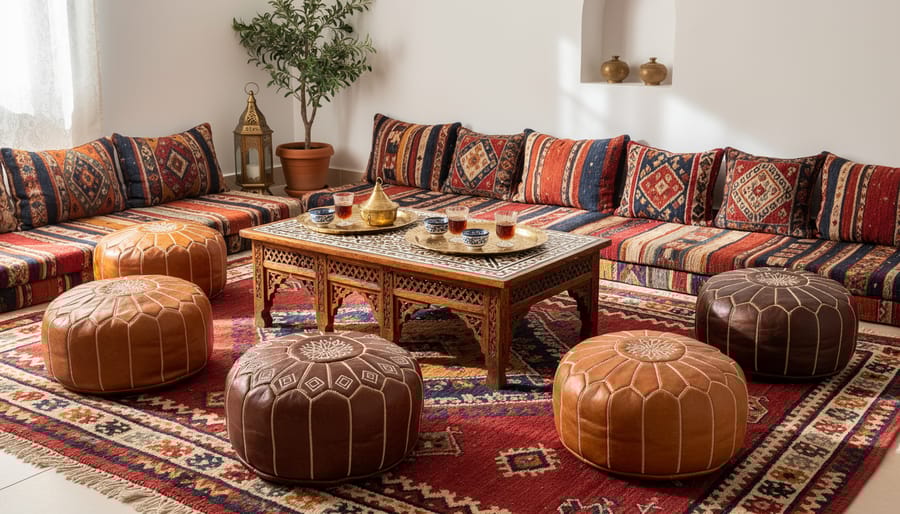
Creating an authentic Moroccan seating area transforms your space into a warm, inviting haven that honors centuries of North African hospitality traditions. The foundation lies in embracing low-to-the-ground seating arrangements that encourage intimate conversation and relaxed gatherings.
Start by sourcing genuine floor cushions called muda or zabuton-style seating in rich jewel tones like sapphire blue, emerald green, and ruby red. Layer these with handwoven Berber poufs, traditionally stuffed with fabric scraps or wool, which serve double duty as footrests and extra seating. Look for leather poufs featuring intricate embroidered patterns or geometric designs that reflect tribal heritage. Authentic pieces often show slight irregularities that speak to their handcrafted origins.
Position these elements around a low table, ideally a carved wooden piece or a hammered metal tray table that sits just above floor level. Arrange cushions against walls or create a circular formation in your living room to foster the communal atmosphere central to Moroccan culture.
For a DIY approach, purchase cushion covers from Moroccan artisan cooperatives online and fill them yourself with high-density foam. This supports traditional craftspeople while keeping costs manageable. Mix textures freely by combining smooth leather poufs with nubby wool cushions and silk-trimmed pillows.
Remember that Moroccan homes prioritize comfort and abundance over minimalism. Don’t hesitate to pile cushions generously, creating that signature luxurious, lived-in feeling where guests naturally want to settle in and stay awhile.
Your search for authentic Moroccan interior design inspiration doesn’t have to end with the same tired Pinterest boards and commercialized catalogs. By looking beyond the surface, you’ve discovered that genuine Moroccan design is rooted in centuries of craftsmanship, cultural storytelling, and intentional beauty. Each zellige tile pattern carries meaning, every carved plaster detail represents skilled artisanship, and those vibrant color combinations reflect the landscapes and traditions of Morocco itself.
As you bring these elements into your home, remember that authentic Moroccan design isn’t about perfectly replicating a riad in Marrakech. It’s about understanding the cultural significance behind the aesthetics and adapting them thoughtfully to your space. Whether you’re commissioning handcrafted lanterns from Moroccan artisans, attempting a DIY tadelakt-inspired wall treatment, or simply incorporating a few carefully chosen poufs and textiles, you’re participating in a living design tradition.
Take time to learn the stories behind the pieces you choose. Support artisans when possible, respect the cultural origins of the designs, and blend Moroccan elements with your existing style in ways that feel authentic to both the tradition and your personal aesthetic. Your space should reflect not just the visual beauty of Moroccan design, but also an appreciation for the rich culture that created it. Move forward with confidence, knowing that you’re equipped to create a home that honors this magnificent design heritage while remaining uniquely yours.


Add A Comment