What to Use Instead of Tile for Backsplash: Alternatives That Transform Your Kitchen
If you’re looking beyond ceramic and porcelain tile, tadelakt plaster stands out as the most authentic alternative for a Moroccan-inspired backsplash, offering the same water resistance as tile with far more warmth and texture. This ancient lime-based finish, polished with river stones and sealed with olive oil soap, brings an artisan quality that machine-made tiles simply can’t match. But it’s far from your only option.
The best alternative depends on what you’re trying to solve. Renters gravitating toward peel-and-stick panels can still channel Moroccan geometry through pattern choices. Homeowners chasing that hand-crafted Fez medina aesthetic might prefer hammered metal sheets in copper or brass, which catch light like the lanterns in a riad courtyard. Budget-conscious renovators often turn to beadboard painted in saturated jewel tones, a surprisingly effective backdrop for displaying hand-painted ceramics and woven textiles.
What unites these alternatives is freedom from grout lines and rigid installation. You gain speed, flexibility, and in many cases, the ability to remove or change your backsplash without demolition. Some options like glass panels or stainless steel lean modern, but can be warmed with Moroccan accents in your hardware, lighting, and open shelving displays.
The real question isn’t whether you should skip tile. It’s which alternative best carries the pattern, color, texture, or craftsmanship that makes Moroccan design so magnetic. This guide walks you through eight proven options, comparing them on installation ease, durability, cost, and their potential to express authentic North African style in your kitchen.
Your Best Alternatives at a Glance
Choosing a backsplash without traditional tile opens up seven distinct material families, each bringing its own balance of practicality and visual character. Here’s how they stack up when you’re weighing installation effort, budget, performance, and the ability to channel Moroccan design sensibilities into your kitchen.
| Material | Installation Ease | Typical Cost Range | Durability | Moroccan Style Fit |
|---|---|---|---|---|
| Metal panels (copper, brass, tin) | Moderate (adhesive or screws) | $15-40/sq ft | High, resists moisture, heat | Excellent, echoes traditional metalwork |
| Glass sheets | Professional recommended | $30-60/sq ft installed | Very high, nonporous, heatproof | Strong, replicates jewel tones |
| Natural stone slabs | Professional only | $40-100/sq ft installed | High, needs sealing | Excellent, nods to carved stonework |
| Reclaimed wood | Moderate (nail or adhesive) | $8-25/sq ft | Moderate, requires sealing | Good, warmth of zouak woodwork |
| Specialty wallpaper | Easy (paste or peel) | $2-8/sq ft | Low to moderate, avoid direct splash zones | Excellent, abundant geometric patterns |
| Paint + protective coating | Easy (brush or roller) | $1-3/sq ft | Moderate, topcoat critical | Variable, tadelakt plaster is authentic |
| Peel-and-stick materials | Very easy (peel, press) | $1-6/sq ft | Low to moderate, renter-friendly | Good, many zellige-inspired designs |
Metal and glass deliver professional-grade performance without grout maintenance. Stone slabs bring the heft of Moroccan architecture but demand expert installation. Wood adds organic texture, while wallpaper and paint serve budget-conscious renovators willing to trade some durability for swift transformation. Peel-and-stick sits at the accessible end, ideal when you need reversibility or want to test a bold pattern before committing. Each path trades off differently across cost, longevity, and the DIY factor, but all seven can express Moroccan character when you choose the right textures, colors, and details.
Understanding Each Backsplash Alternative
Metal Panels and Tin Tiles
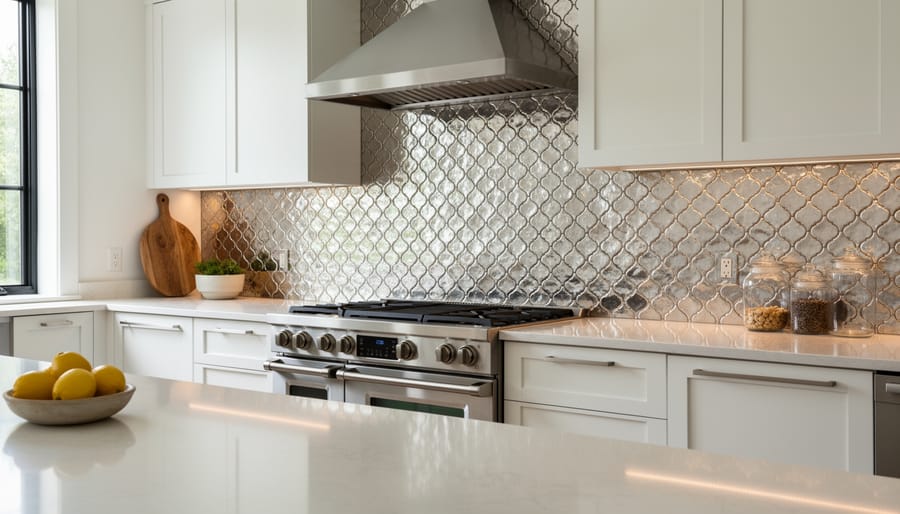
Pressed metal panels offer a luminous alternative to ceramic tile, drawing on centuries of Moroccan metalwork tradition. Copper, brass, and tin sheets come in formats ranging from 2×2-foot panels to narrow planks, installed with construction adhesive or a track system. The embossed patterns, geometric stars, quatrefoils, arabesque vines, catch and reflect light throughout the day, creating the same dimensional shimmer that makes zellige tile so captivating. Unlike flat tile, metal’s surface shifts with every angle, bouncing morning light off stove areas and casting subtle shadows that highlight relief details. Copper develops a warm patina over time, deepening its Moroccan character, while sealed brass maintains its golden gleam. Most panels arrive pre-finished, requiring only cuts around outlets and end caps at edges, making them more forgiving than precise tile layouts.
Glass Sheets and Panels
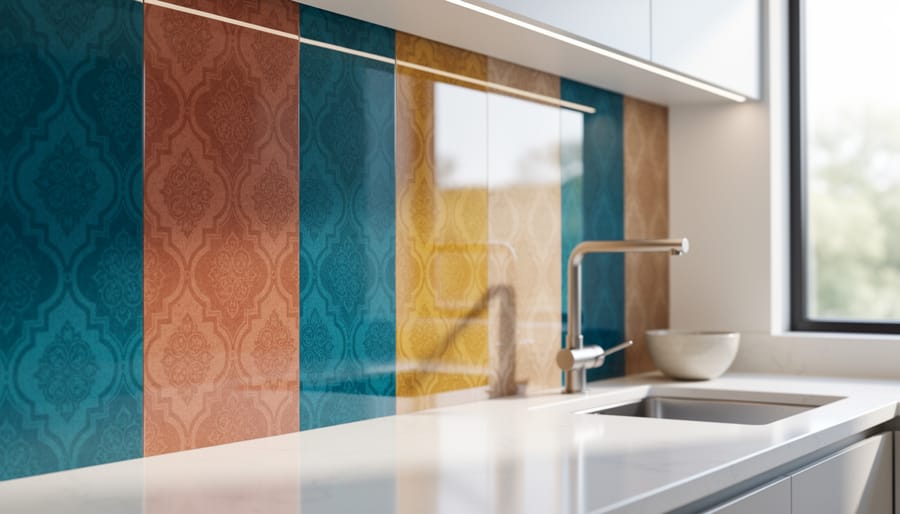
Glass sheets and panels deliver the sleek, seamless look homeowners want when they’re searching for what to use instead of tile for backsplash. Back-painted glass comes in virtually any color, deep sapphire blues, emerald greens, and rich amber tones mirror the jewel palette of Moroccan riads without a single grout line to clean. Textured glass adds subtle pattern through embossed or sandblasted surfaces that catch light like carved stucco, while frosted options diffuse brightness beautifully in compact kitchens. The material’s non-porous surface resists moisture and heat, making it practical behind sinks and cooktops. Installation requires precise measuring and professional handling since glass is unforgiving of errors, but the result is a luminous, contemporary surface that brings Moroccan color intensity into modern kitchens without traditional tile’s maintenance demands.
Natural Stone Slabs
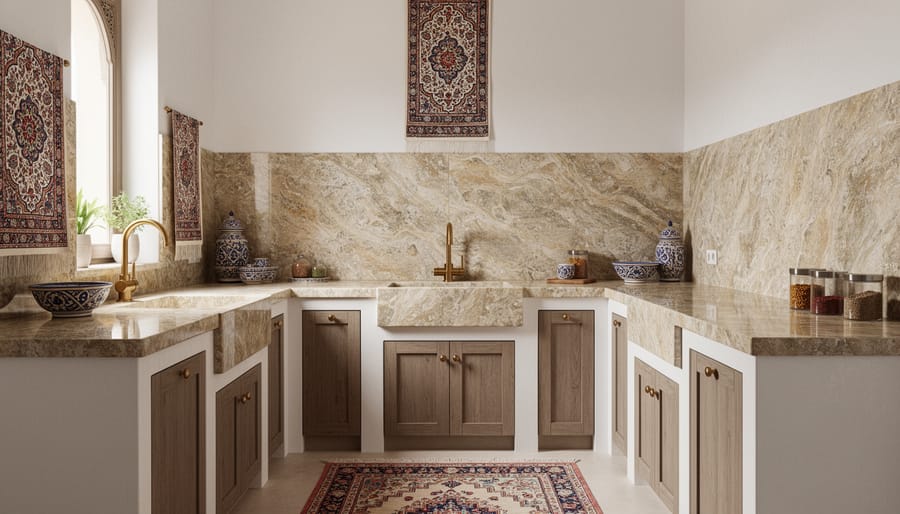
Natural stone slabs, marble, granite, and quartzite, replace tile entirely by running a single, continuous piece of stone up the wall. Instead of grout lines and individual tiles, you get seamless expanses where veining and mineral deposits create their own organic patterns. Moroccan architecture has celebrated carved stone for centuries, from zellige surrounds to hammam walls, and these slabs honor that tradition while simplifying installation.
Marble brings soft, flowing veins in whites, grays, and golds that echo the natural variation of zellige mosaics without the labor. Granite offers durability and speckled texture in earth tones, think terracotta browns and ochre yellows common in Moroccan interiors. Quartzite delivers both: the elegance of marble with granite’s toughness, often in dramatic veining that reads like calligraphy across the wall.
Large-format stone requires professional fabrication and mounting, but the result is a backsplash that feels carved from a single block, fitting for kitchens aiming for timeless, handcrafted character rooted in North African design heritage.
Reclaimed and Decorative Wood
Reclaimed wood brings unexpected warmth to kitchens seeking alternatives to ceramic tile. Weathered barn wood planks, shiplap panels, and tongue-and-groove boards create textured backsplashes with rustic charm, each plank tells a story through its grain patterns and natural patina. Cedar stands out for its natural resistance to moisture and insects, making it particularly suitable behind sinks where steam is present.
Carved decorative wood panels elevate the material beyond rustic into artisanal territory. Traditional Moroccan woodwork, known as zouak, features intricate geometric patterns and arabesque motifs hand-carved into cedar, walnut, or thuya wood. These carved panels echo the ornate cedarwood doors found in Moroccan riads and mosques, bringing authentic cultural craftsmanship to modern kitchens. The carved relief catches light differently throughout the day, creating shadow play similar to the dimensional quality of zellige tile.
Wood backsplashes require proper sealing with marine-grade polyurethane or epoxy to withstand kitchen moisture and grease. Keep wood installations away from direct stove contact, use it on perimeter walls or above sinks where heat exposure is minimal. The material ages gracefully, developing deeper patina over time rather than showing wear.
Specialty Wallpaper with Protective Coating
Specialty wallpaper engineered for kitchens offers a renter-friendly backsplash alternative that brings intricate Moroccan patterns to your cooking space without grout, mortar, or permanence. Modern vinyl wallpapers designed for high-moisture areas feature geometric stars, arabesque florals, and trellis motifs screen-printed or digitally rendered in traditional palettes, cobalt blue, saffron gold, terracotta. The key difference from standard wallpaper: a factory-applied or post-installation clear protective coating (polyurethane or acrylic) that seals the surface against splashes, steam, and grease. This topcoat transforms decorative paper into a wipe-clean surface suitable for areas away from direct heat sources. Installation requires clean, smooth walls, wallpaper adhesive or paste-the-wall formulas, and careful seam alignment, most DIYers complete a standard backsplash area in an afternoon. The coating must fully cure (typically 72 hours) before exposure to moisture, and edges near countertops benefit from a bead of clear caulk to prevent peeling.
Decorative Paint and Tadelakt Plaster
Painted backsplashes offer one of the most budget-friendly alternatives to tile, especially when sealed with a clear epoxy resin or marine-grade polyurethane topcoat. You can apply these protective layers over any paint color or hand-painted pattern, geometric Moroccan motifs, arabesque designs, or solid jewel tones, creating a completely waterproof, heat-resistant surface behind your stove or sink. The sealed finish resists grease splatter and wipes clean like glass, though you’ll need to wait several days for the topcoat to fully cure before heavy use.
For homeowners seeking authentic Moroccan character, tadelakt plaster stands apart. This ancient lime plaster technique, used in Moroccan hammams and riads for centuries, creates a seamless, softly luminous surface with subtle texture variations. Artisans apply multiple thin layers of lime plaster, then polish the surface with river stones and seal it with black olive soap, a natural waterproofing method that’s proven itself over generations. The result feels warm to the touch, develops a gentle patina over time, and eliminates grout lines entirely. Tadelakt requires skilled application and costs more than paint, but delivers unmatched authenticity and a living surface that evolves beautifully with age.
Peel-and-Stick Materials
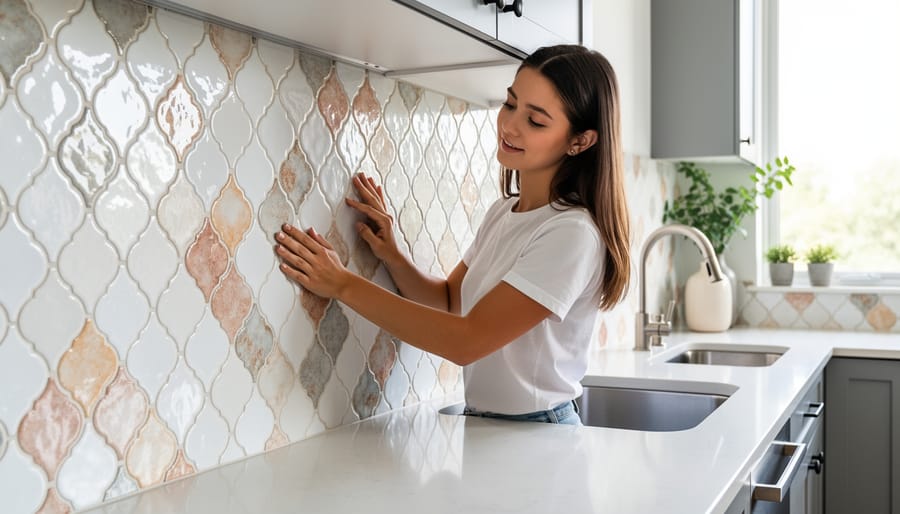
Peel-and-stick backsplash materials offer the easiest installation path for anyone exploring what to use instead of tile for backsplash projects. These self-adhesive products come in three main types: vinyl sheets (thin, flexible, budget-friendly), gel panels (thicker with dimensional texture), and composite boards (rigid, more substantial feel). You simply peel off the backing paper and press the material onto clean, smooth walls, no grout, no special tools, no permanent commitment.
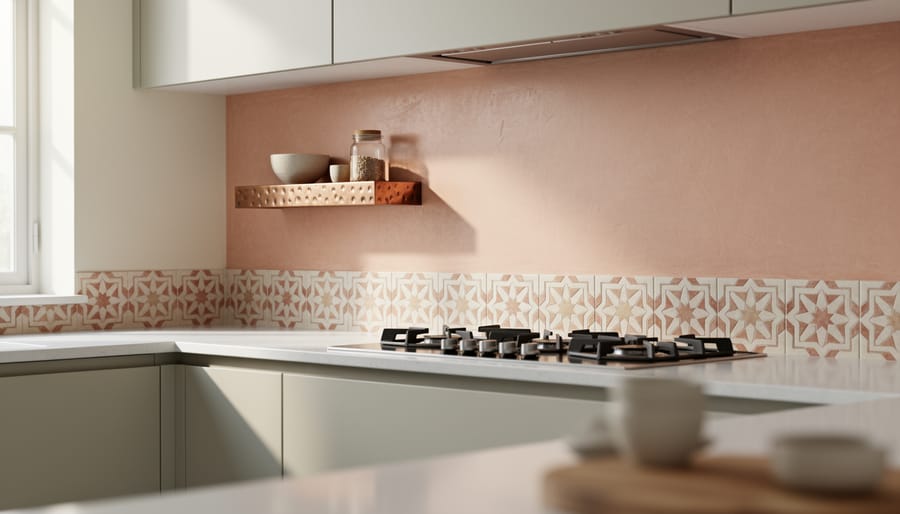
For Moroccan-inspired kitchens, manufacturers now produce peel-and-stick options that convincingly mimic zellige tile patterns, complete with the characteristic irregular glazing and handcrafted variations. You’ll find geometric star motifs, arabesque designs, and even faux cement tile patterns in traditional blue-and-white or terracotta colorways. The best versions include subtle texture that catches light like real ceramic.
Renters particularly benefit since most peel-and-stick materials remove cleanly without damaging walls, though you should test a small corner first. They work behind sinks but avoid placing them directly behind ranges where high heat can loosen adhesive. Quality varies dramatically by brand, cheaper vinyl can peel at seams within months, while premium gel products often last several years. Expect to pay $8 to $25 per square foot. Installation takes an afternoon, making this the most accessible alternative for DIY beginners wanting Moroccan character without professional help or landlord approval.
Comparing Alternatives Across What Matters Most
Installation and DIY Friendliness
Installation difficulty separates truly DIY-friendly backsplash alternatives from those demanding professional help. Peel-and-stick materials and wallpaper require nothing beyond a utility knife, level, and squeegee, renters and first-time renovators can complete installation in an afternoon with zero prior experience. Decorative paint with protective topcoat needs basic painting skills and a steady hand for cutting in edges, making it accessible to anyone comfortable with a brush and roller.
Metal panels and glass sheets occupy the middle ground. Cutting metal to fit around outlets requires tin snips and patience, while mounting demands construction adhesive and understanding of wall substrate. Glass installation requires precise measurements, specialized adhesive, and extreme care during handling, one crack ruins the entire sheet, pushing many homeowners toward professional installers.
Tadelakt plaster and natural stone slabs belong firmly in the professional category. Authentic tadelakt application involves layering lime plaster in precise thicknesses, polishing with river stones, and treating with olive soap, techniques Moroccan craftsmen master over years. Stone slabs weighing 100-plus pounds need structural assessment, specialized cutting equipment, and epoxy bonding that allows no room for error. Reclaimed wood falls somewhere between: experienced DIYers can mount planks with construction adhesive and finish nails, but proper sealing against moisture and creating even spacing requires carpentry confidence most casual renovators lack.
Durability and Kitchen Performance
Kitchen demands separate true performers from cosmetic choices. Metal panels, especially stainless steel and copper, laugh off grease splatter and steam, wipe clean in seconds, and handle stovetop heat without warping or discoloring. Glass sheets match that resilience: back-painted varieties resist moisture completely, tolerate high temperatures behind ranges, and never absorb cooking oils. Tadelakt plaster, when properly applied and sealed with olive soap, becomes waterproof and heat-stable; authentic installations last decades in Moroccan kitchens exposed to far worse than your morning eggs.
Natural stone slabs perform admirably if sealed annually. Marble and quartzite shrug off moisture but can etch from acidic splashes; granite resists staining better. All three tolerate heat near cooktops without issue.
Reclaimed wood and wallpaper falter behind stoves, heat degrades finishes, grease soaks in, and moisture causes swelling or peeling. Reserve these for low-splash zones away from direct cooking. Painted backsplashes with epoxy coatings hold up reasonably well to moisture and cleaning but scratch more easily than glass or metal. Peel-and-stick materials vary wildly: quality vinyl versions survive light use and wipe clean, but cheap options lift at seams and discolor from heat within months.
For heavy cooking, install metal, glass, or sealed stone behind your range and sink. Save decorative options for calmer walls.
Design Versatility and Pattern Potential
Traditional Moroccan tile’s visual richness, intricate zellige mosaics, layered geometric stars, hand-painted arabesques, sets a high bar for backsplash alternatives seeking comparable pattern depth. Peel-and-stick materials now offer convincing printed Moroccan motifs, though they lack the dimensional texture of actual tile. Specialty wallpaper delivers the most detailed pattern replication, with digitally-printed arabesque trellises and multicolored geometric grids that mimic patchwork layouts convincingly. Metal panels etched or embossed with Moorish designs add authentic three-dimensional relief, catching light like hammered copper in a Marrakech medina.
Paint with stencils grants complete customization, you control every color, scale every pattern repeat, and layer designs to match your vision precisely. Tadelakt plaster takes the opposite approach: its appeal lies in monochromatic, hand-troweled texture rather than busy pattern, creating serene depth through subtle color gradations and organic surface movement. Glass sheets accept custom back-painting in any Moroccan palette, sapphire blues, saffron yellows, terracotta reds, but deliver solid fields of color rather than intricate motifs. Reclaimed wood and stone slabs contribute natural grain and veining that read as organic patchwork, though without the deliberate geometry Moroccan design celebrates.
Long-Term Cost and Maintenance
The cheapest upfront alternatives, paint with protective coating and peel-and-stick materials, cost $2-8 per square foot installed, making them attractive for tight budgets. However, both require replacement every 3-7 years. Paint needs resealing when scratches expose the surface, and peel-and-stick edges lift with moisture exposure, especially near sinks.
Mid-range options like reclaimed wood ($8-15 per square foot) and specialty wallpaper ($6-12 per square foot) balance initial cost with moderate longevity. Wood demands annual sealing to prevent water damage and warping. Wallpaper, even with protective coating, shows wear around cooking zones within five years.
Metal panels ($15-35 per square foot) and glass sheets ($20-40 per square foot) carry higher upfront costs but deliver 15-20 year lifespans with minimal maintenance, occasional wiping for metal, glass cleaner for panels. Neither stains or requires resealing.
Tadelakt plaster ($30-60 per square foot) represents the premium choice, lasting decades when properly applied. It needs olive soap treatment twice yearly to maintain its waterproofing, a simple ritual that preserves its authentic Moroccan finish.
Natural stone slabs ($25-75 per square foot) fall mid-to-high cost, requiring professional installation and annual sealing, but offer 20-plus year durability that justifies the investment for permanent homes.
Which Alternative Is Right for Your Kitchen and Style
For Authentic Moroccan Character
When you want a backsplash that feels genuinely rooted in Moroccan tradition rather than merely inspired by it, three materials stand above the rest: tadelakt plaster, copper or brass metalwork, and carved cedar panels.
Tadelakt delivers the most authentic choice. This lime plaster technique, polished with river stones and sealed with black olive soap, has waterproofed Moroccan hammams and kitchens for centuries. Its soft, undulating surface catches light like no tile can, and skilled artisans can tint it in traditional hues, warm terracotta, dusty rose, or creamy beige. The application process itself is a craft passed through generations.
Hand-hammered copper or brass panels bring the metalwork mastery of Moroccan souks into your kitchen. Look for sheets with hand-tooled geometric patterns or repousse designs that mirror the lanterns and trays found in Fez medinas. These metals develop a living patina over time, deepening their character with use.
Carved cedar backsplash panels reference the intricate zouak woodwork adorning Moroccan palaces and riads. Commission a section featuring traditional arabesque or star-and-cross patterns, or source reclaimed carved panels from architectural salvage specialists who work with Moroccan imports. The natural oils in cedar provide inherent moisture resistance while filling your kitchen with subtle fragrance.
For DIY Enthusiasts and Renters
Peel-and-stick materials top the list for renters and DIY enthusiasts because they install without adhesives that damage walls and peel away cleanly when you move. Look for vinyl or gel options printed with Moroccan geometric patterns, many mimic zellige tile arrangements convincingly. Apply them directly over painted drywall in an afternoon using only a utility knife and smoothing tool.
Removable wallpaper offers broader pattern choices, from intricate arabesques to bold trellis designs. Seal it with a clear spray coating rated for kitchens to handle splashes. This combination protects your deposit while delivering authentic Moroccan flair.
Paint remains the most budget-friendly path. Choose a color from the traditional palette, sapphire blue, clay orange, or deep teal, then coat with water-based polyurethane. You’ll need two weekends: one for painting, another for sealing. Touch-ups require only a brush, and you can repaint over it when tastes change without demolition.
For High-Traffic and Heavy-Use Kitchens
If you cook daily, entertain frequently, or run a household where the stovetop never seems to cool down, your backsplash needs to perform, not just look good. Glass sheets, metal panels, and sealed stone slabs are the workhorses among non-tile alternatives because they handle the realities of a busy kitchen without constant upkeep.
Tempered glass backsplashes take direct heat without discoloring, wipe clean with a single pass, and resist grease splatter better than any porous material. Metal panels, especially stainless steel, copper, or brass, laugh off moisture and heat while developing a patina that hides minor scratches in high-traffic zones. Sealed natural stone slabs like honed granite or quartzite bring the heft and impermeability of continuous surfaces with no grout lines to scrub, making them ideal behind ranges where spills are inevitable.
These materials outperform softer alternatives because they’re engineered or naturally built to endure: they don’t warp from steam, stain from turmeric, or require resealing every season. For kitchens that see real action, durability isn’t optional, it’s the foundation of a backsplash that keeps pace with your cooking.
For Budget-Conscious Renovations
If you’re renovating on a tight budget, three backsplash alternatives deliver impressive Moroccan character without the price tag of ceramic or porcelain tile. Decorative paint topped with a clear polyurethane or epoxy coating runs $50, $150 for materials in an average kitchen, you simply roll or sponge on your chosen color (consider ochre, terracotta, or deep indigo), then seal it with two coats of protective finish once dry. The entire project takes a weekend and requires no special tools.
Peel-and-stick panels printed with Moroccan geometric patterns or faux zellige designs cost $1, $3 per square foot and install in hours with only scissors and a smoothing tool. Many options now feature heat-resistant vinyl suitable for areas near ranges, and they’re completely removable if you rent or plan to upgrade later.
Reclaimed wood planks, salvaged fence boards, barn siding, or pallet wood, often cost nothing if you source them yourself or under $2 per square foot from architectural salvage yards. Sand them lightly, arrange in a horizontal or herringbone pattern, seal with food-safe polyurethane, and you’ve created a warm textured backdrop reminiscent of traditional Moroccan cedarwork. All three options leave plenty of room in your budget for statement lighting or hand-painted pottery to complete the look.
Bringing Moroccan Flair to Your Non-Tile Backsplash
Layering Moroccan character into your non-tile backsplash starts with color. Deep indigo and cobalt blues anchor the palette, paint a glass panel in midnight blue, or choose peel-and-stick wallpaper patterned with sapphire arabesques. Balance these jewel tones with warm terracotta and burnt orange, which bring the earthiness of Marrakech souks. Accent with touches of gold or brass, either through metalwork panels or by stenciling geometric motifs in metallic paint over a neutral plaster surface.
Pattern transforms plain materials into Moroccan statements. On painted backsplashes, use a laser-cut stencil to apply repeating eight-pointed stars or interlocking hexagons in contrasting shades, this mimics zellige tile geometry without actual tile. For wood or metal panels, consider adding thin inlaid strips or nail heads arranged in traditional patterns. Wallpaper printed with Moorish arches, lattice screens, or hand-painted florals instantly references centuries of North African design.
Texture deepens authenticity. If you’re applying tadelakt plaster, leave visible trowel marks and polish to a soft sheen, the imperfection tells a story of handcraft. On metal panels, choose hammered or embossed finishes rather than flat surfaces. Layered stenciling (one pattern over another in low-contrast colors) adds dimension that catches light like hand-carved plasterwork.
Accessorize thoughtfully to complete the look. Hang pierced metal lanterns above the counter; their shadows echo the intricate cutwork found in Moroccan riads. Display glazed pottery or tagines on open shelving flanking the backsplash, choose pieces in saffron yellow, turquoise, or olive green. Install wrought-iron brackets or hooks in arabesque shapes to hold utensils or towels. These small additions frame your backsplash material within a cohesive Moroccan narrative.
Test your color and pattern choices on sample boards before committing. Paint a scrap of drywall, apply your stencil, view it under your kitchen lighting at different times of day. Moroccan design celebrates richness and complexity, but balance prevents overwhelm, let one bold element (a jewel-toned glass panel, an intricate stencil) lead, then support it with quieter textures and metallic accents.
Common Questions About Tile Alternatives for Backsplashes
Do backsplash alternatives to tile meet building codes?
Most non-tile backsplash materials are code-compliant for residential kitchens, but check your local requirements for heat-resistant clearances behind cooktops. Metal panels, glass sheets, and sealed stone typically meet or exceed fire safety standards, while combustible materials like wood require proper spacing from heat sources.
Will using something other than tile hurt my home’s resale value?
Quality alternatives like natural stone slabs, copper panels, and professionally installed glass can actually enhance perceived value by offering distinctive character. Peel-and-stick and wallpaper options are easily replaced before selling if you’re concerned about buyer preferences.
Can I install a non-tile backsplash over my existing countertops?
Yes, most alternatives work with any countertop material. Metal panels and glass sheets sit flush against granite or quartz edges, while tadelakt plaster flows seamlessly into stone counters for a cohesive look that’s particularly striking in Moroccan-inspired kitchens.
What’s the best way to clean backsplash materials that aren’t tile?
Glass and metal panels wipe clean with standard glass cleaner or mild soap and water. Tadelakt plaster needs only a damp cloth and occasional olive soap treatment to maintain its waterproof finish, while sealed wood requires gentle cleaners without harsh chemicals that could damage the protective coating.
Are tile alternatives safe to use directly behind a range or cooktop?
Metal panels, tempered glass, and stone slabs handle heat well and work behind ranges with proper clearance. Wood, wallpaper, and standard paint shouldn’t be installed in direct cooking zones, reserve these for areas away from high heat, or use heat-resistant materials like stainless steel or copper specifically behind your stove.
These practical considerations help you move forward confidently with alternatives instead of tile for your backsplash. Your choice should balance aesthetic vision, whether you’re drawn to the burnished warmth of copper echoing Moroccan lanterns or the crisp modernity of back-painted glass, with the functional demands of your cooking space. The right material will serve your kitchen beautifully for years while expressing your personal style and cultural appreciation.
Who Should Choose Which
Choose tadelakt plaster or metal panels if you’re committed to authentic Moroccan character and willing to hire skilled tradespeople. These deliver genuine cultural depth and become permanent design features worth the investment.
Pick peel-and-stick materials or wallpaper if you’re renting, on a tight timeline, or lack DIY experience. You’ll achieve dramatic visual transformation in an afternoon with zero special tools, and you can remove everything when you move without losing your security deposit.
Go with glass sheets or sealed stone slabs if you cook frequently, entertain often, or need a backsplash that withstands serious kitchen activity. The upfront cost pays back in durability and nearly maintenance-free performance over decades.
Select paint with protective coating if budget is your primary constraint but you still want personalization. A weekend project delivers custom color and pattern at a fraction of any other option’s cost, though you’ll repaint every few years.
Choose reclaimed wood or carved panels if you’re building a layered, eclectic space where warmth and texture matter more than perfect water resistance. Keep these away from direct sink splash zones, but they excel as statement areas that anchor your Moroccan design vision with organic, artisanal character.
Your kitchen backsplash doesn’t need to be tile to be beautiful, durable, or distinctly Moroccan. From the authentic craftsmanship of hand-polished tadelakt plaster to the modern convenience of peel-and-stick materials that capture zellige geometry, the alternatives to traditional ceramic and porcelain tiles open creative possibilities that ceramic simply can’t match. Each material we’ve explored, metal panels that echo the metalwork of Fez artisans, glass sheets in jewel tones, carved cedar wood, protective-coated wallpaper with arabesque motifs, offers its own pathway to expressing Moroccan character while solving real kitchen challenges like installation complexity, rental restrictions, or budget constraints.
The best choice isn’t universal. It’s the one that balances your priorities: authenticity versus ease, upfront cost versus longevity, bold pattern versus subtle texture. A renter transforming a bland galley kitchen has different needs than a homeowner restoring a historic home’s cooking space, yet both can achieve that layered, richly textured aesthetic that defines Moroccan interiors.
Trust what you’ve learned about how these materials perform in real kitchens. Match your selection to your cooking habits, your comfort with tools, and the story you want your space to tell. Then move forward with confidence. Your backsplash alternative isn’t a compromise, it’s an intentional design choice that reflects both practical wisdom and personal vision. The Moroccan soul of your kitchen lives in the thoughtfulness of your decisions, not in whether you used tile.