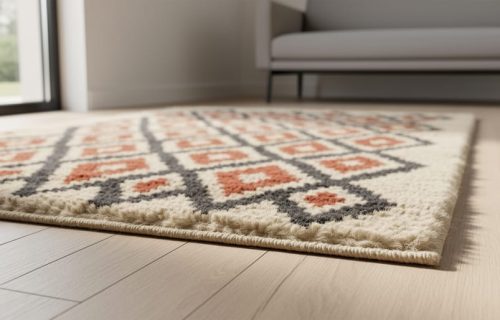
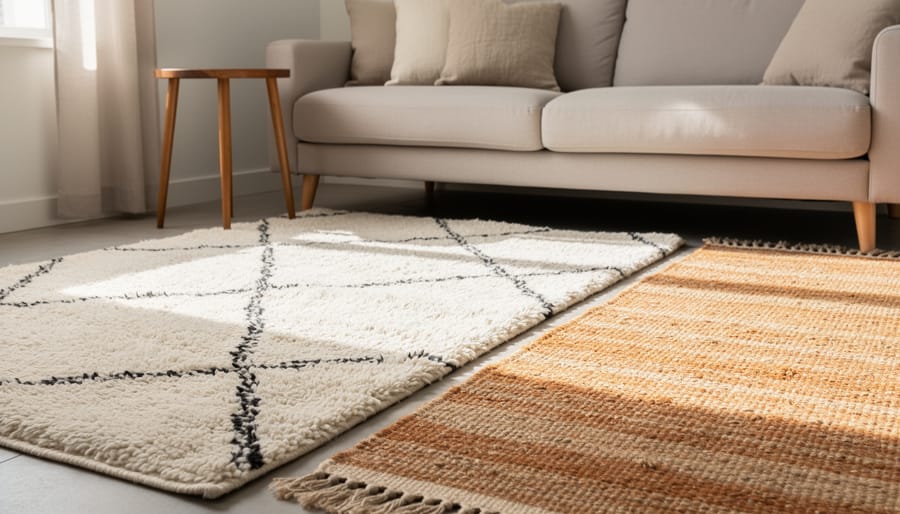
6 Modern Moroccan Rug Picks for Your 4×6 Spaces
In the interest of transparency, we earn a commission on some purchases made through links on this site. As an Amazon Associate I earn from qualifying purchases.
A 4×6 Moroccan rug is the Goldilocks size for a bedroom corner, an entryway, or a reading nook: big enough to anchor a space, small enough to layer and move around. The six picks below cover the main looks, from the cloud-soft Handwoven Moroccan Beni Ourain Rug to the grounded, natural-fiber Jute Traditional Kilim Rug Boho Flatweave Area Rug. They also include a family-friendly pick, the 5×7 Area Rug Living Room: Modern Washable Indoor Carpet Black a size up and noted as such, plus the Beni Ourain Moroccan Rug SAFAVIEH Kilim Collection Accent Rug and Geometric Kilim Wool Jute Rug.
Each one is labeled by what it does best, so you can match a rug to your room rather than scroll forever. Two terms help here. Beni Ourain refers to the creamy, diamond-patterned rugs woven by Berber communities in Morocco’s Atlas Mountains. Kilim is a flatwoven textile, thin and tough, with bold geometric patterns. Knowing which you’re after narrows the hunt fast.
Tight on floor space? Our guide to 2×3 Moroccan rugs covers the smaller end, and these modern rug picks offer more variety. Below, we explain how we chose, compare the specs, and share simple DIY styling and care ideas.
How We Chose These Moroccan-Inspired Rugs for Small Spaces
Choosing a rug for a compact corner is a bit like choosing a single beautiful object for a shelf: it has to earn its place. I looked for pieces that carry the spirit of Moroccan interior design while still working in a real home with real foot traffic. Each pick was weighed against the same five questions:
- Design heritage: does it echo Moroccan or Berber motifs, such as diamond lattices and bold geometrics?
- Size fit: is it a true 4×6, or close enough to work in the same spaces?
- Material and weave: wool, jute, or polyester, hand-knotted, flatwoven, or jacquard.
- Customer ratings: what do actual owners say after living with it?
- Everyday practicality: how easy is it to care for with kids, pets, or a busy doorway?
A quick cultural note, so the terms feel familiar. Beni Ourain rugs come from Berber weavers in Morocco’s Atlas Mountains, traditionally creamy wool with simple diamond patterns. A kilim is a flat-woven textile with no pile, often covered in bold geometric designs. “Flatweave” simply describes that smooth, low profile, which makes these rugs great for doorways and under furniture.
I’ll be upfront about one thing: not every rug here is a traditional Moroccan piece. Some are Moroccan-inspired, borrowing the graphic language in a modern format. Where that’s the case, I’ll say so, along with any size differences from a true 4×6. That way you can enjoy the heritage honestly and choose what suits your space.
1. Handwoven Moroccan Beni Ourain Rug, Best for a Cozy Bedroom Landing

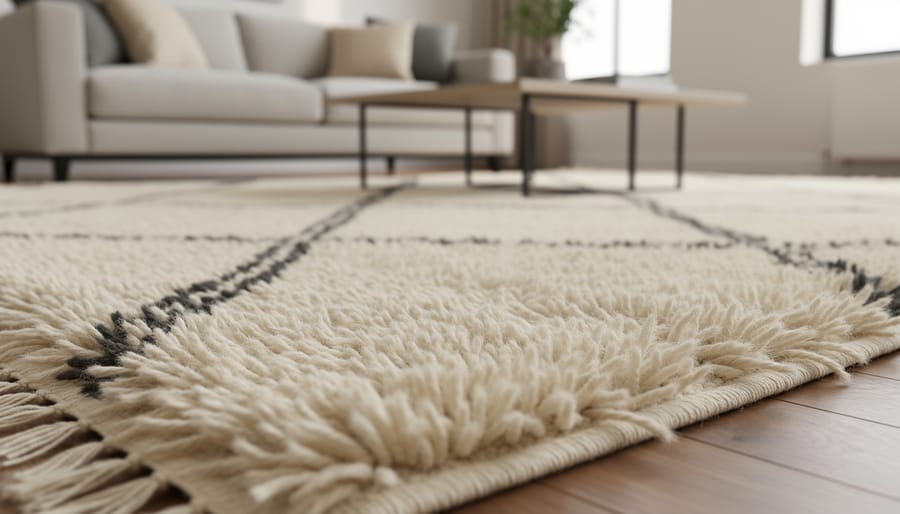
Few rugs carry as much quiet history as the Beni Ourain. Berber weavers in the Atlas Mountains have long made these pieces from thick, creamy sheep’s wool, then marked them with diamond motifs in dark undyed wool. Those lines are not random decoration. Many read as personal and symbolic, passed down through families, so it’s worth admiring one with a little reverence for the hands behind the pattern.
This handwoven pick captures that heritage in a size that suits a bedside or a reading corner. The cream ground feels like a soft pause in the room, while the diamond lattice adds just enough graphic rhythm to keep it from looking plain. Step out of bed onto the shaggy pile and you’ll understand why this style became a favorite for sleeping spaces. If you’re building a sanctuary around Moroccan bedroom style this is a lovely place to begin.
Styling is simple. Let one side of the rug slide under the bed frame so your feet land on wool each morning. Or tuck it beside an armchair with a brass lantern and a stack of books for a nook that invites you to linger. Warm woods, terracotta pots, and linen bedding all sit beautifully against that creamy tone.
Customers rate it 4.2 out of 5, and it usually ships within 7 to 8 days.
One honest trade-off: shaggy textures ask for gentleness. Shake it out outdoors, spot-clean rather than scrub, and keep it away from heavy foot traffic so the pile keeps its softness.
2. Jute Traditional Kilim Rug Boho Flatweave Area Rug, Best for Natural-Texture Entryways

A kilim is a flat-woven textile, closer to a tapestry than a fluffy carpet. There’s no knotted pile here. The weft threads are woven tightly through the warp, which gives the rug its crisp, graphic patterns: diamonds, zigzags and stepped triangles that echo designs found across North Africa and the wider Berber and nomadic weaving world. In Morocco, kilim-style pieces are often used on floors, over benches, even as wall hangings.
This pick brings that tradition together with jute, a natural plant fiber with a dry, earthy texture. Run your hand across it and you feel the ridges of the weave instead of a plush surface. That grounded, organic character is exactly why jute pairs so well with brass lanterns, whitewashed walls and terracotta pots.
The listing is part of a Tribal Series, so expect bold, repeating geometric motifs rather than a subtle, tone-on-tone look. Because the weave is flat, it sits low and lets doors swing freely, which makes this 4’x6′ size a smart choice for an entryway or a living room corner where you want a pop of pattern without bulk. Try it beneath a console table, with a woven basket and a pair of shoes lined up beside it.
Shoppers have rated it 4.3 out of 5 from 29 customer ratings, a solid showing for a natural-fiber flatweave. One thing to know: at the time of research, only 1 was left in stock, so if the earthy texture appeals to you, it’s worth checking sooner rather than later, though availability can change at any moment.
A rug pad underneath will keep a flatweave from creeping on smooth floors and add a little cushion underfoot.
3. 5×7 Area Rug Living Room: Modern Washable Indoor Carpet Black, Best for Busy Households

Not every Moroccan-style rug has to be a delicate heirloom. If your home runs on muddy paws, juice cups, and dropped crayons, this black graphic rug is the practical pick on the list. It borrows the bold, patterned spirit of Moroccan design and wraps it in a washable format that actually forgives real life.
Here’s the honest part: this one is a 5×7, which is a little larger than a true 4×6. That extra foot in each direction changes how the rug behaves. Before you commit, tape out the dimensions on your floor with painter’s tape and live with it for a day. If the rug still sits comfortably under the front legs of your sofa or fills a bedroom floor without crowding a doorway, the larger size will feel generous and grounded. If it bumps into walls, a radiator, or the swing of a door, a 4×6 is the better fit for you.
On the specs side, washable Moroccan-style rugs commonly use polyester with a jacquard weave, a technique that builds the pattern into the fabric rather than printing it on top. That construction is a big part of why this category handles spills and everyday wear so well. Always check the care label before you toss any rug in the machine.
Shoppers have given it a 4.5 out of 5 rating from 3,363 customer ratings, a strong signal for a busy-household workhorse, and it was in stock at the time of research. Styling tip: the black base makes a lovely quiet backdrop, so layer in warm cream pillows or a brass-toned side table to echo that Moroccan warmth.
4. Beni Ourain Moroccan Rug, Best for a Statement Diamond Lattice

The Beni Ourain look begins in the Middle Atlas Mountains, where Berber weavers have long knotted thick, creamy wool into rugs meant to keep families warm through cold highland winters. This pick carries that heritage into a cream diamond lattice, hand-knotted and measuring 4×4 feet. It is square, not a 4×6 rectangle, so think of it as the cousin that fits a different kind of space.
That shape is a strength in the right spot. A square rug anchors a small seating group beautifully, slips under an accent chair with the front legs resting on the pile, or works as a soft layer over a larger jute or flatweave base. The diamond lattice does the visual heavy lifting, so you can keep the surrounding palette quiet and let the pattern speak.
Hand-knotting is the reason this piece takes patience. Each knot is tied individually, row after row, and the lattice has to stay crisp as the design builds. A made-to-order rug like this is woven after you commit rather than pulled from a warehouse shelf, which is why it usually ships within 4 to 5 weeks. If you need a rug by the weekend, this isn’t the one. If you enjoy waiting for something made with care, the delay becomes part of the story.
Customers rate it 4.1 out of 5, a solid showing for a handmade piece. A gentle tip: wool pile like this appreciates a light shake outdoors and quick attention to spills, so a little ongoing care keeps that creamy tone glowing in your home.
5. SAFAVIEH Kilim Collection Accent Rug, Best for High-Traffic Doorways

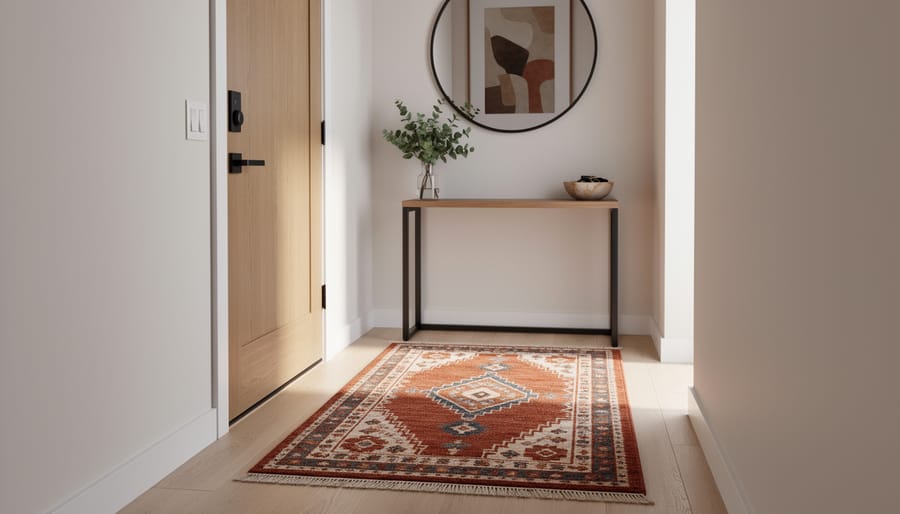
If your front door opens straight onto the busiest few feet of your home, the SAFAVIEH Kilim Collection accent rug in 4′ x 6′ earns its spot. It’s a handmade wool kilim in a warm red and multicolor palette, and the flatweave construction is exactly why it suits entryways and hallways. With no deep pile to trap grit, a flatweave lies low, so doors swing freely and shoes wipe clean across it. Wool brings natural resilience, springing back under daily footfall in a way many synthetics struggle to match.
Shoppers have given it 4.2 out of 5 from 102 customer ratings, a steady vote of confidence for a rug meant to be walked on every day. At the time of research, only 20 were left in stock, so if the colors speak to you, it’s worth acting soon, though availability can change.
A little context helps here. The listing describes the design as Southwestern tribal, and that influence deserves a nod alongside the Moroccan kilim traditions that inspire this list. Both come from weaving cultures that favor bold geometry and storytelling through pattern, and when you bring such pieces home, it’s a lovely way to honor Moroccan heritage by learning where the patterns come from.
For styling, let the red be the star. Pair it with soft, neutral walls in warm white or sand, then add brass accents like a lantern, a mirror frame, or a hook rail to pick up the glow. The result feels grounded, welcoming, and just a little dramatic the moment you step inside.
6. Geometric Kilim Wool Jute Rug, Best for an Eco-Minded Bohemian Look

Some rugs wear their sustainability on the surface, and this one does. The Geometric Kilim Wool Jute Rug is a natural handwoven flatweave that blends wool with jute, two fibers that have been spun and woven by hand for generations. The blend gives it a dry, earthy texture, with wool bringing a touch of softness and jute adding that sun-baked, rustic grain.
The design leans into a multicolor vintage tribal look, with bold geometric shapes stacked in warm, layered tones. If you’ve admired the diamond and zigzag motifs that run through Berber and kilim weaving, you’ll recognize the visual language here. The listing describes the style as bohemian with Southwestern influence, so think of it as a cousin to Moroccan kilims rather than a strict traditional piece. It’s a good reminder to appreciate the original craft while being honest about a rug’s actual lineage.
At 4×6, it’s an easy fit for a living room corner, the foot of a bed, or a sunny spot beside a reading chair. Because it’s a flatweave, it sits low and tucks neatly under furniture legs without catching doors.
The eco-minded angle is genuine: natural, renewable fibers instead of synthetic backing, which suits anyone building a calmer, earth-toned home. One small DIY idea: layer it over a larger plain jute rug for a woven-on-woven look, then add a clay pot of dried pampas beside it.
A word of honesty on the reviews. It holds a 4.2 out of 5 from just 5 customer ratings, which is a small sample, so treat it as an encouraging signal rather than a verdict. At the time of research, only 3 were left in stock, so order soon if it speaks to you.
Key Details to Compare Before You Choose a 4×6 Moroccan Rug
Before you fall for a pattern, line up the practical details. They decide whether a rug works in your home as well as it looks in a photo.
Size and shape. Most picks here are true rectangles near 4×6, but two bend the rule. The washable black rug is a 5×7, and the Beni Ourain diamond lattice is a 4×4 square. Measure your nook first, then decide whether the extra length or the squarer footprint suits it. Retailers such as Amazon group Moroccan rugs by size, and a “Small Rugs (2×3 – 4×6)” category is a handy place to start browsing.
Materials and weave. Here is how the six picks break down:
– Wool: the Beni Ourain pieces and the SAFAVIEH kilim, soft underfoot and resilient.
– Jute and wool-jute blends: the two natural-texture kilims, earthy and a little coarser.
– Polyester: the washable option, built for easy cleanup.
Weave shapes the feel, too. The washable style uses a jacquard weave for its graphic pattern, the Beni Ourain rugs are hand-knotted, and the kilims are flatweaves.
Pile and texture. Shaggy Beni Ourain rugs invite bare feet but ask for gentle care. Flatweave kilims lie low, which suits doorways and chairs that slide.
Shipping and stock. Handwoven and made-to-order pieces ship more slowly, from about a week to several weeks. Stock on the kilims was limited when I researched this. Availability changes often, so check the listing for current details before you plan around a rug.
Styling and Care Tips: Make a 4×6 Moroccan Rug Feel at Home
A 4×6 rug has a gift for small spaces, and a few simple moves make it feel like it has always belonged. Try layering a flatweave kilim over a larger natural jute base. The jute adds earthy texture, and the kilim’s geometry reads as a deliberate accent rather than an afterthought. Whatever you choose, slide a non-slip rug pad underneath so the edges stay flat and the rug stays put.
For a reading-nook vignette you can pull together in an afternoon, place the rug in front of an armchair so the front legs rest on it. Tuck a leather or woven pouf at one corner as a footrest, then set a brass lantern on the floor beside the chair. Add a small side table with a stack of books and a glass of mint tea, and you have a corner that glows in the evening.
Care depends on the rug. Wool pieces like the Beni Ourain and kilim picks do best with a gentle shake outside, light vacuuming without a beater bar, and prompt blotting of spills. Spot-clean rather than soaking. A washable polyester rug with a jacquard weave, like the black pick above, can go in the machine, but only if the label says so, so follow its directions exactly.
Remember, too, that many Berber weavers stitch symbols into their rugs, with diamonds, zigzags, and lines that can carry stories of family, protection, and the land. Learning what a motif means, and where your rug comes from, is a lovely way to honor the people who made it.
Moroccan 4×6 Rug Questions, Answered
What rooms suit a 4×6 rug?
A 4×6 is a wonderful size for entryways, reading corners, bedside spots, and small seating nooks. It anchors a compact space without overwhelming it, and it works beautifully as a layering piece too.
What is the difference between Beni Ourain and kilim?
Beni Ourain rugs come from Berber weavers in Morocco’s Atlas Mountains and are known for creamy wool, a plush texture, and diamond motifs. Kilims are flat-woven, tapestry-style rugs with bold geometric patterns, so they feel thinner and more graphic underfoot.
Are washable Moroccan-style rugs a good choice?
They suit busy homes with kids or pets, since many are made of polyester with a jacquard weave, like the RAMEFILD 4×6 listing. They’re Moroccan-inspired rather than traditionally handwoven, so choose them for practicality rather than heirloom craftsmanship.
How do I layer a small rug?
Place a 4×6 flatweave over a larger jute base to add pattern and depth, and set a non-slip pad underneath so the layers stay put. Keep the base in a neutral tone and let the smaller rug carry the color.
If you’re still undecided, start with the room’s foot traffic. Tight, busy spots reward a flatweave or washable option, while a quiet bedside corner is the place to indulge in a softer, shaggier texture.
The right 4×6 Moroccan-style rug comes down to three honest questions: how much foot traffic will it face, which texture do you want underfoot, and how much hand-crafted heritage do you want in the room? A busy doorway and a quiet bedside nook call for different answers, and that’s exactly what makes the choice personal.
Whichever piece you choose, look for one that honors the Berber and Moroccan weaving traditions it draws from, whether it’s a hand-knotted heirloom or a washable modern nod. Lay it down, add a pouf and a glowing brass lantern, and let a little Moroccan warmth settle into your home.