Benjamin Moore Color Codes: Decoding Moroccan Red and the Paint Number System
Benjamin Moore color codes are alphanumeric identifiers that let you pinpoint exact paint shades across their 3,500-color collection, ensuring the terracotta you select today matches perfectly when you reorder next year. Each code corresponds to a unique formula, eliminating the guesswork that comes with color names alone. For those drawn to Moroccan interior design understanding these codes becomes essential when recreating the rich, saturated hues found in Marrakech riads and Fez medinas.
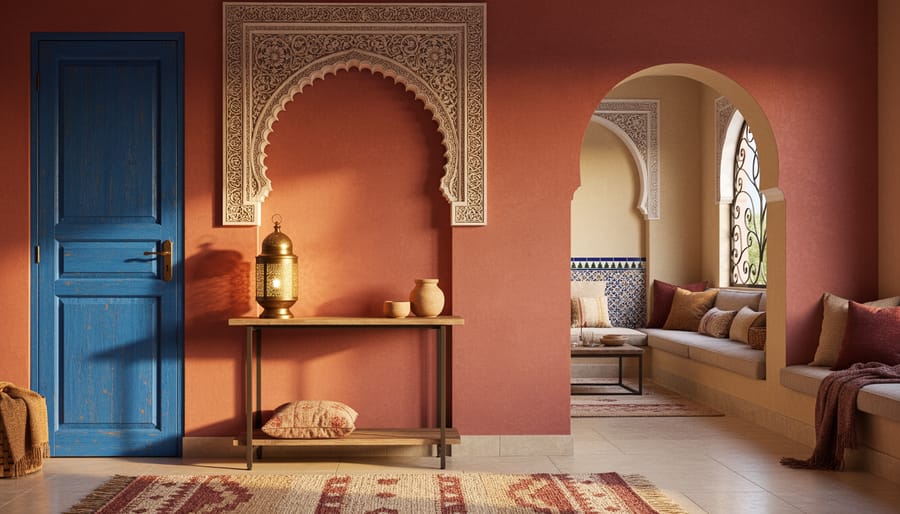
The system works through a simple structure: every Benjamin Moore color carries a number that identifies its position in their master collection. When you fall in love with a shade like Moroccan Red (2082-20), that code tells paint professionals exactly which pigments to mix, in what proportions, for your chosen finish. This precision matters tremendously when you’re layering colors to achieve the depth characteristic of Moroccan spaces, where burnt orange archways meet cobalt blue doors and saffron-yellow accent walls.
For homeowners transforming their spaces with Moroccan-inspired palettes, these codes solve a common frustration: color variations between batches. The warm, earthy tones central to this aesthetic demand consistency. A feature wall in desert rose or burnt sienna needs to match perfectly when you’re ready to paint the adjacent dining nook six months later.
What Benjamin Moore Color Codes Are
Breaking Down the Code Structure
Let’s decode Moroccan Red 2174-20 to understand exactly what each part of a Benjamin Moore color code tells you.
The color name, Moroccan Red, identifies the hue in Benjamin Moore’s collection. It’s the marketing name that conjures the warm, earthy tones of Marrakech’s medina walls and traditional Moroccan textiles. But it’s the number that does the real work.
The first part, 2174, is Benjamin Moore’s internal color family identifier. This four-digit number places Moroccan Red within a specific range of their color system, grouping it with related hues that share similar base pigments and color characteristics. Colors with numbers close to 2174 will have related undertones and intensity, which helps when you’re searching for coordinating shades.
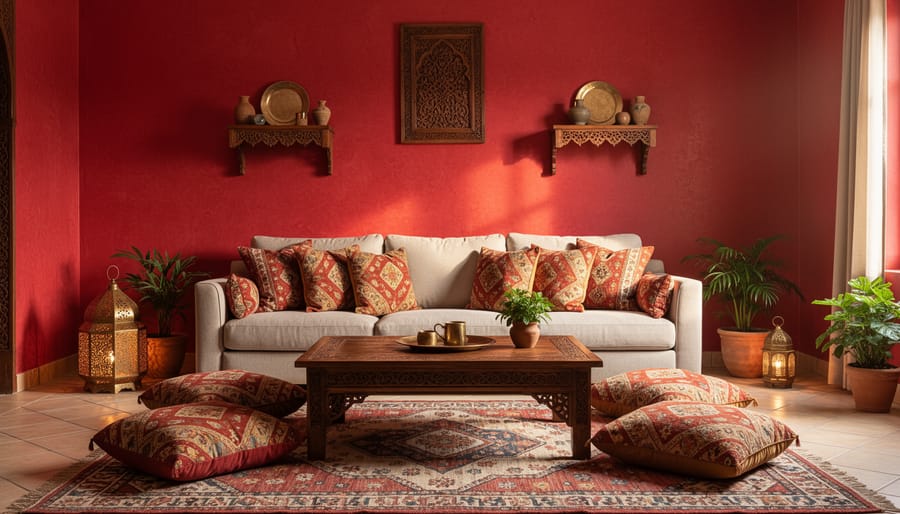
The second part, 20, indicates the Light Reflectance Value on Benjamin Moore’s scale. This number tells you how much light the color reflects, essentially, how light or dark it appears on your wall. Lower numbers mean deeper, more saturated colors that absorb light. Moroccan Red’s 20 rating places it firmly in the rich, intense range, perfect for creating those dramatic Moroccan accent walls that anchor a room with depth and warmth.
Here’s what each component reveals:
- Color name (Moroccan Red): Marketing identifier and visual reference
- First number (2174): Color family placement within Benjamin Moore’s system
- Second number (20): Light Reflectance Value indicating depth and light absorption
- Complete code (2174-20): Unique identifier ensuring you get this exact shade every time
Understanding this structure means you can confidently order paint knowing the 2174-20 code guarantees the same rich Moroccan Red whether you’re buying one gallon today or touching up in five years.
What Benjamin Moore Color Codes Do for Your Moroccan Design Project
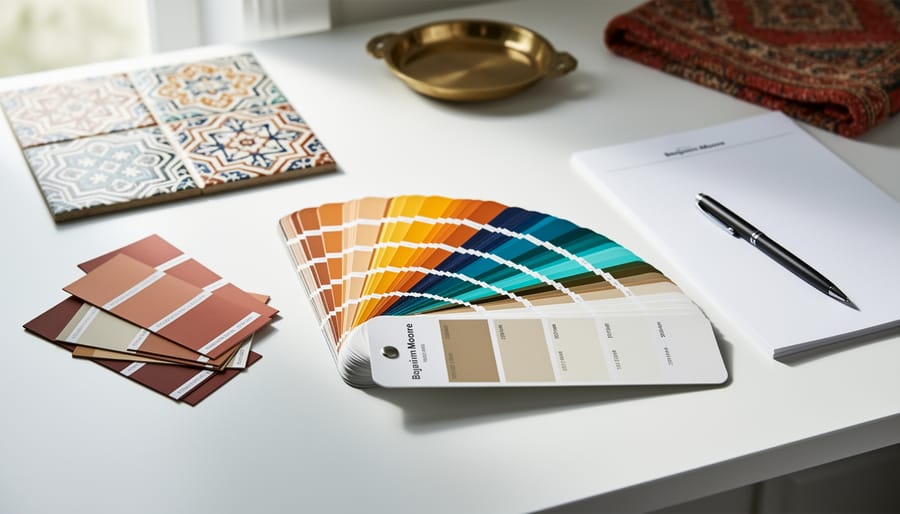
When you’re bringing the rich, layered colors of Moroccan design into your home, precision matters. Benjamin Moore’s color code system transforms vague color names into concrete specifications, giving you control over every shade in your palette. Here’s how these numeric identifiers become practical tools in your design project.
The most immediate benefit: you’ll get the exact color every single time you order. Say you paint your living room in Moroccan Red 2174-20 and six months later need touch-up paint or want to extend that color into an adjacent hallway. Without the code, asking for “Moroccan Red” at any paint counter risks variation, different batches, slightly different formulations, subtle shifts in tone. With the code, 2174-20 gives you identical pigment ratios regardless of when or where you purchase it. This consistency extends across Benjamin Moore’s entire network, from big-box retailers to independent dealers.
Color codes also simplify coordination across multiple rooms. Moroccan interiors often feature a cohesive palette that flows from space to space, perhaps Moroccan Red in the dining room, a softer terracotta in the hallway, and cream accents throughout. When you’re juggling four or five colors, referring to them by their codes eliminates confusion. You can plan your scheme on paper, order all your paint in one trip, and ensure each room receives its intended shade.
| Design Scenario | Challenge Without Codes | How Color Codes Solve It |
|---|---|---|
| Reordering paint months later | Relying on memory or color name alone; risk of getting a similar but different shade | 2174-20 ensures identical formula every time, regardless of store or timing |
| Working with contractors or designers | Vague verbal descriptions lead to guesswork and potential mistakes | Precise code removes ambiguity; everyone references the same specification |
| Matching existing historic colors | No clear reference point for discontinued or vintage shades | Original code from old paint can or chip provides exact restoration formula |
| Coordinating purchases across locations | Different stores may interpret color names differently | Code standardizes the order at any Benjamin Moore retailer |
For restoration projects, codes become archival records. If you’re refreshing a Moroccan-inspired space originally painted a decade ago, the color code on the old can or a saved paint chip lets you match that historic shade perfectly, maintaining design continuity even as paint lines evolve.
Perhaps most valuable for DIYers: codes streamline communication with contractors and painters. Instead of showing a photo and hoping they interpret the color correctly, you hand them a list of codes. This clarity prevents costly mistakes and ensures your Moroccan vision translates accurately from concept to finished walls.
Moroccan Red 2174-20: A Deep Dive into the Code
Coordinating Colors Using Code Families
Understanding Benjamin Moore’s numeric system unlocks a powerful strategy for building cohesive Moroccan palettes around colors like Moroccan Red 2174-20. The first two digits of any Benjamin Moore code indicate the color family, which means colors sharing similar numbers often share undertones and harmonize naturally. Moroccan Red sits in the 2100s family, a range of warm, earthy reds and terracottas that form the backbone of traditional Moroccan interiors.
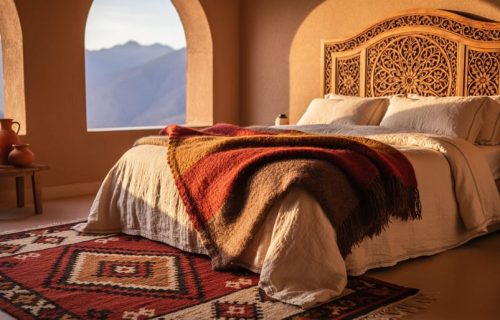
To create an authentic Moroccan bedroom style look to colors within the 2100-2200 range for harmonious companions: shades like Venetian Gold 2158-20 and Clay Brown 2102-10 share that sun-baked earthiness. For contrast, explore the 1000s family of warm creams and ivories, colors such as White Dove OC-17 and Soft Chamois OC-13 provide the crisp plaster-wall effect that balances Moroccan Red’s intensity.
Benjamin Moore colors that coordinate beautifully with Moroccan Red include:
- Golden Honey 2147-40, a warm amber that echoes lantern light
- Spiced Pumpkin 2175-20, a neighboring terracotta in the same family
- Dark Olive 2140-30, a grounding jewel tone for accent walls
- Quarry Rock 1568, a soft taupe that tempers bold reds
- Windham Cream HC-6, an off-white with warmth that won’t clash
The system even helps you find complementary jewel tones: blues in the 800s range like Prussian Blue 805 or greens in the 600s create the vibrant contrasts seen in Moroccan tile work. Write down the codes of colors you’re considering, then request small sample pots using those exact numbers to test how they interact with Moroccan Red in your specific lighting before committing to gallons.
Who Should Use Benjamin Moore Color Codes
Anyone working with paint can benefit from understanding Benjamin Moore’s color code system, but certain groups find it especially valuable for creating authentic Moroccan-inspired interiors.
DIY Homeowners Creating Moroccan Spaces
If you’re transforming your home with Moroccan design elements, color codes are your insurance policy against disappointment. When you’ve found the perfect terracotta for your feature wall or that exact jewel-toned teal for accent details, the code ensures you’ll get that precise shade whether you’re buying paint today or touching up six months from now. It also lets you confidently order online and pick up at your local store, knowing the color will match your vision.
Interior Designers Specifying Authentic Palettes
Professional designers working on Moroccan-themed projects rely on color codes to communicate exact specifications to clients and contractors. The codes eliminate guesswork, ensuring the rich ochres and deep blues that honor Moroccan heritage appear as intended. They’re particularly useful when coordinating across multiple rooms or matching fabrics and tiles to paint colors.
Renovators and Restorers
If you’re refreshing a room with existing Moroccan colors, the code system helps you match what’s already there. Benjamin Moore’s archival system means even discontinued colors can often be recreated from their codes, preserving the integrity of established color schemes.
Multi-Location Shoppers
Anyone ordering paint from different Benjamin Moore retailers benefits from the universal code system. Whether you’re buying from a store across town or having paint shipped to a vacation property, the code guarantees consistency. This reliability matters especially when building layered Moroccan palettes where subtle tone variations can disrupt the overall harmony.
How to Find and Use Benjamin Moore Color Codes
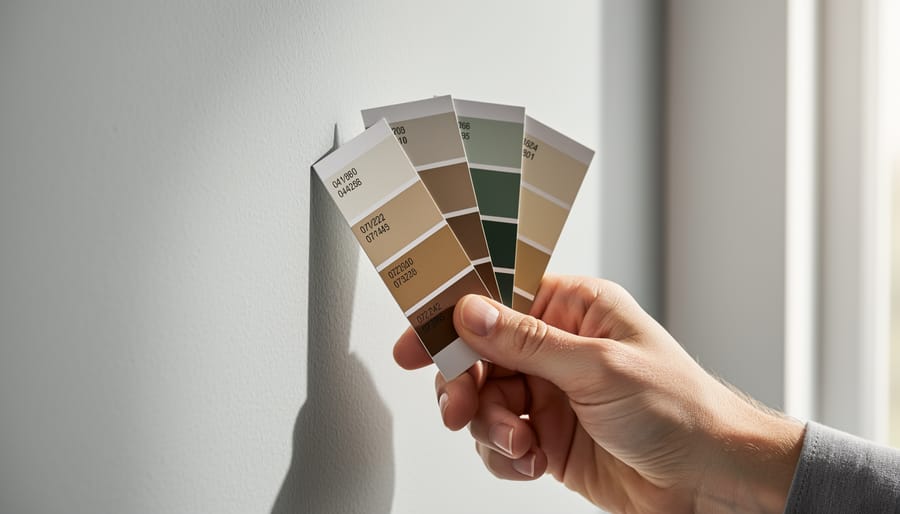
Where to Find the Code on Your Materials
Every Benjamin Moore product carries its color code, but the location varies depending on what you’re holding. On paint cans, you’ll find the complete code, both the color name and number, printed on the front label, typically just below the product line name (like Regal Select or Aura). The side or back label often repeats this information alongside the formula details.
Color chips display the code on the reverse side. Flip over that small swatch of Moroccan Red you picked up at the store, and you’ll see “2174-20” printed clearly, usually near the top alongside coordinating color suggestions. Store printouts and receipts also include the full code, which becomes invaluable when you need to reorder months later without the original chip.
Digital resources make codes equally accessible. Benjamin Moore’s online Color Gallery shows the numeric code beneath each color swatch, while their Color Portfolio app displays it prominently when you save favorites. If you’ve used their Personal Color Viewer tool to test Moroccan Red on a room photo, the code appears in your saved project details. Keep these materials, they’re your reference guide for maintaining color consistency throughout your Moroccan-inspired home.
DIY Project: Creating a Moroccan Color Palette with Benjamin Moore Codes
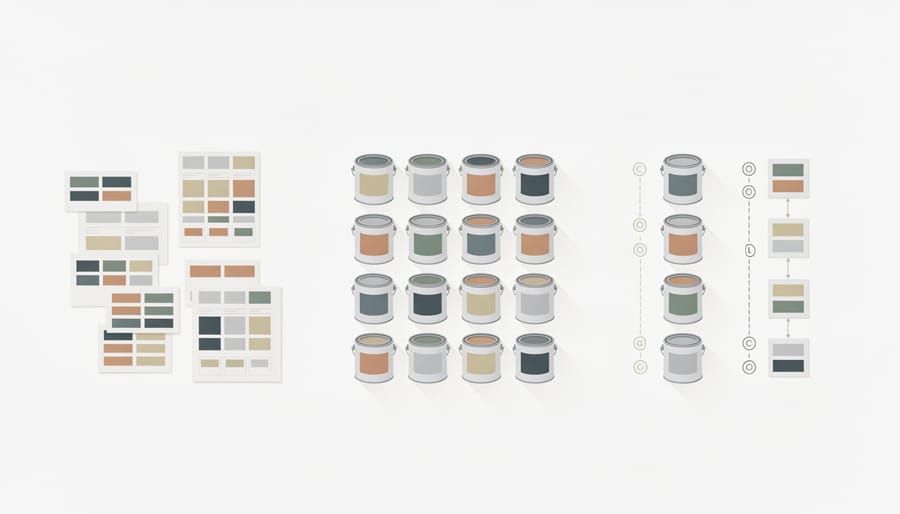
Building your own Moroccan color palette becomes remarkably straightforward once you understand Benjamin Moore’s code system. Start with Moroccan Red 2174-20 as your anchor color, this deep, earthy red captures the warmth of Marrakech’s clay walls and serves as the foundation for your scheme. The beauty of using color codes is that you can expand this palette with confidence, knowing each shade will arrive exactly as intended.
To create an authentic Moroccan palette around your Moroccan Red, gather these complementary Benjamin Moore colors:
- Soft Chamois OC-13, A warm cream that evokes sun-bleached plaster and provides breathing room between bolder hues
- Adobe Orange 2171-30, Terracotta undertones that echo traditional clay pottery and architectural details
- Turquoise Powder 2057-50, The jewel tone found in Moroccan tile colors perfect for accent walls or decorative elements
- Golden Honey 297, Saffron-inspired warmth that bridges red and cream tones seamlessly
- Kensington Blue 840, Deep indigo that adds drama and sophistication to niches or ceiling details
Request color chips for each code from your local Benjamin Moore retailer or order samples online. Arrange them on a large board in the proportions you plan to use, perhaps 40% Moroccan Red, 30% Soft Chamois, and 30% divided among accent colors. Pin fabric swatches, tile samples, or photographs of your space alongside the chips to visualize how the palette interacts with your existing elements.
Test your selections by painting poster boards with sample pots of each color, then move these boards around your rooms at different times of day. Natural light dramatically affects how these rich hues appear. If you’re considering backsplash alternatives or painted surfaces instead of tile, this testing phase prevents costly mistakes.
Write down each color code and its intended location, living room feature wall gets Moroccan Red 2174-20, hallway gets Adobe Orange 2171-30. This creates a shopping list that any paint store can fulfill precisely, even years later when you need touch-ups.
What Benjamin Moore Color Codes Does
Benjamin Moore’s color code system does far more than assign numbers to paint, it serves as the backbone of the company’s entire color matching and consistency program. The codes enable Benjamin Moore’s Color Lock technology, which guarantees that every gallon of Moroccan Red 2174-20 you purchase will match precisely, whether you buy it today or five years from now. This consistency extends across Benjamin Moore’s entire product line, from their premium Aura line to their more budget-friendly ben paints, meaning the same code delivers the same color regardless of which finish or formula you choose.
The coding system also powers Benjamin Moore’s Color Portfolio app and online visualizer tools, letting you preview how Moroccan Red will look in your actual room using augmented reality. When you visit a Benjamin Moore retailer with a color code, their ColorReader device can match it instantly or suggest coordinating shades from the same numeric family. The system even works backward, bring in a fabric swatch or tile from your Moroccan rug, and the retailer can scan it to find the closest Benjamin Moore code, ensuring your wall color harmonizes perfectly with your existing décor pieces.
How to Visit, Contact, or Get Involved
Finding the right Benjamin Moore color for your Moroccan-inspired space starts with knowing where to access their color code system. Visit any authorized Benjamin Moore retailer to explore physical color chips showing the complete code for each shade, including Moroccan Red 2174-20. These independent paint stores offer expert color consultations and can mix precise formulas using the codes you’ve selected.
Benjamin Moore’s website provides a comprehensive color gallery where you can search by code, browse curated palettes, and use their Color Viewer tool to visualize how specific codes will look in your room. The site includes detailed information about each color’s LRV and undertones, essential data for Moroccan design projects where lighting plays a crucial role.
For personalized assistance, contact Benjamin Moore’s customer service team through their website’s support portal. They can help locate discontinued colors by code, suggest coordinating shades for your Moroccan palette, and direct you to the nearest authorized retailer carrying their full range.
Many Benjamin Moore stores offer color consultation appointments where professionals help you build cohesive schemes using the code system. These sessions prove invaluable when you’re matching multiple colors for layered Moroccan interiors, bringing your code list and room photos ensures productive conversations about your specific project needs.
Common Questions About Benjamin Moore Color Codes
Homeowners pursuing Moroccan-inspired interiors often have the same practical questions about navigating Benjamin Moore’s color code system. Here are clear answers to help you use these codes with confidence in your own projects.
Do Benjamin Moore color codes ever change?
No, established color codes like Moroccan Red 2174-20 remain consistent over time. Once Benjamin Moore assigns a code to a color, that formula stays the same, ensuring you can match your paint years later for touch-ups or additional rooms.
Are color codes the same across all Benjamin Moore paint lines?
Yes, the color code remains identical whether you choose Regal Select, Aura, or Ben, the finish and formula change, but Moroccan Red 2174-20 is the same hue in every line. The code identifies the color itself, not the paint product.
How can I find the color code if I only have a dried paint sample?
Take your sample to a Benjamin Moore retailer for color matching using their spectrophotometer technology. The device analyzes your sample and identifies the closest Benjamin Moore code, though exact matches work best with clean, untextured samples.
Can I use a Benjamin Moore color code at any paint store?
Benjamin Moore codes work only at authorized Benjamin Moore retailers, you can’t take a BM code to a big-box store that carries other brands. The proprietary formulas behind each code are exclusive to the Benjamin Moore system.
Understanding these fundamentals saves you from common pitfalls when working with the code system. The consistency built into Benjamin Moore’s approach means you’re not guessing whether your terracotta accent wall will match the original you painted three years ago.
One question that comes up frequently concerns online ordering. When you order paint online using a color code, you’ll receive the exact same formulation as in-store purchases. The code acts as your guarantee of accuracy across all purchasing channels. This reliability matters especially for multi-room projects where you’re buying paint in stages, your second batch of Moroccan Red will match the first perfectly.
If you’re coordinating multiple Benjamin Moore colors for a Moroccan palette, write down each complete code (name and number) rather than relying on color names alone. Names can sometimes apply to different historical formulations, but the numeric code eliminates any ambiguity. Keep your codes in a home maintenance file alongside paint receipts for future reference.
Understanding Benjamin Moore’s color code system transforms how you approach Moroccan-inspired design. That simple combination of name and number, like Moroccan Red 2174-20, gives you precision and confidence. You’re not guessing at shades or hoping the paint matches your vision. You’re specifying exactly the terracotta warmth or deep jewel tone that defines authentic Moroccan interiors.
The numbering system becomes your design tool. Use it to coordinate colors across rooms, match historical hues in older homes, and communicate your vision clearly to painters and suppliers. Whether you’re painting a single accent wall or reimagining your entire home with Moroccan character, these codes ensure consistency from the first sample to the final coat.
Start with Moroccan Red if its earthy richness speaks to you, then explore the broader palette using the code families as your map. Benjamin Moore’s system opens up hundreds of possibilities, sunbaked ochres, cool tile blues, creamy neutrals that echo plaster walls. Each code is your guarantee that the color in your mind will appear on your wall. That certainty lets you design boldly, mixing traditional Moroccan tones with your personal style, knowing the results will match your expectations perfectly.