What Is Moroccan Bedroom Style (and What Makes It Authentic)?
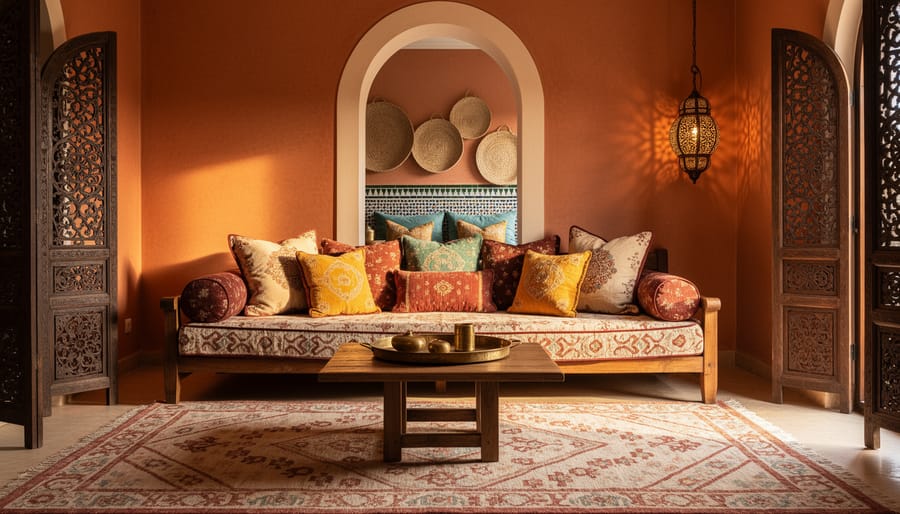
Moroccan bedroom style blends the rich visual traditions of North African design with elements borrowed from Berber, Arab, and Moorish cultures, creating spaces defined by saturated jewel tones, intricate geometric patterns, layered textiles, and ornate metalwork. If you’ve ever walked into a room and felt instantly transported by warm terracotta walls, carved wooden screens, and the soft glow of pierced lanterns, you’ve experienced the sensory immersion this aesthetic offers.
What makes this style enduringly popular in 2026 is its ability to transform ordinary bedrooms into personal sanctuaries that feel both exotic and deeply comfortable. Unlike minimalist trends that strip rooms down to essentials, Moroccan design celebrates abundance. Think hand-knotted rugs stacked on floors, embroidered cushions piled on low-slung daybeds, and walls adorned with zellige tilework or tadelakt plaster that seems to capture and hold light.
But recreating an authentic Moroccan bedroom isn’t about randomly scattering poufs and lanterns throughout your space. The style follows specific architectural principles and layering techniques rooted in centuries of craftsmanship and cultural tradition. Understanding these essential features allows you to move beyond surface-level decoration and build rooms with genuine soul and coherence.
This guide breaks down the foundational elements that define Moroccan bedroom design, from the structural bones of archways and carved plaster to the finishing touches of brass trays and woven baskets. You’ll learn which colors, patterns, and materials create the signature look, and discover practical ways to adapt these features for Western homes without losing their authentic spirit.
What Moroccan Bedroom Style Really Means
Moroccan bedroom style is a design approach rooted in centuries of North African craftsmanship and sensory living. At its heart, it transforms sleeping spaces into intimate retreats that engage all the senses through layered textures, intricate patterns, and warm, enveloping atmospheres. This isn’t a style that simply decorates walls and arranges furniture; it creates an experience of comfort and refuge that reflects how Moroccan families have traditionally designed their most private spaces.
The philosophy behind Moroccan bedroom design draws from three major cultural influences that shaped Morocco’s architectural identity. Berber traditions brought geometric patterns, handwoven textiles, and a connection to natural materials like clay and wool. Arab influences introduced ornate tilework, carved plaster, and the concept of creating paradise within domestic walls. Andalusian heritage, carried by craftspeople fleeing medieval Spain, contributed refined decorative techniques, garden-inspired motifs, and sophisticated color palettes. These traditions merged over centuries to create a distinctive aesthetic that balances opulence with intimacy.
Understanding a few foundational terms helps decode what makes a bedroom authentically Moroccan:
- Riad
- A traditional Moroccan house built around an interior courtyard garden, where bedrooms open onto peaceful shared spaces rather than facing the street. This inward-facing design philosophy influences how Moroccan bedrooms create their own world of calm.
- Zellige
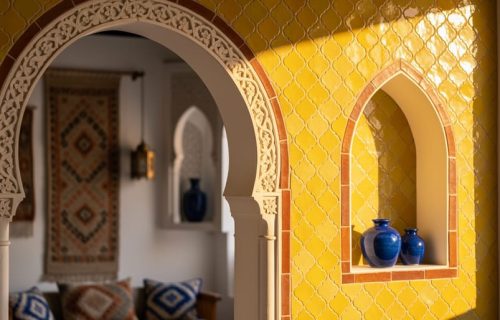
- Hand-cut mosaic tilework arranged in intricate geometric patterns, traditionally used on floors, walls, and fountains. Each piece is individually chiseled from glazed terra cotta.
- Tadelakt
- A waterproof lime plaster technique polished with river stones and treated with black soap, creating smooth, subtly lustrous walls. Originally developed for hammams, it brings organic texture to bedroom surfaces.
- Moucharabieh
- Carved wooden lattice screens that filter light and air while maintaining privacy, creating ever-changing shadow patterns throughout the day.
What distinguishes Moroccan bedrooms from purely decorative styles is their functional luxury. Every ornate element serves a purpose: thick textiles insulate against temperature swings, low seating creates informal gathering spaces, layered lighting allows adjustment for different moods, and rich colors promote psychological warmth. The style evolved in riads where bedrooms doubled as daytime sitting rooms for family, explaining why they combine elaborate decoration with genuine comfort rather than treating the bed as the sole focus.
How Moroccan Bedroom Design Works
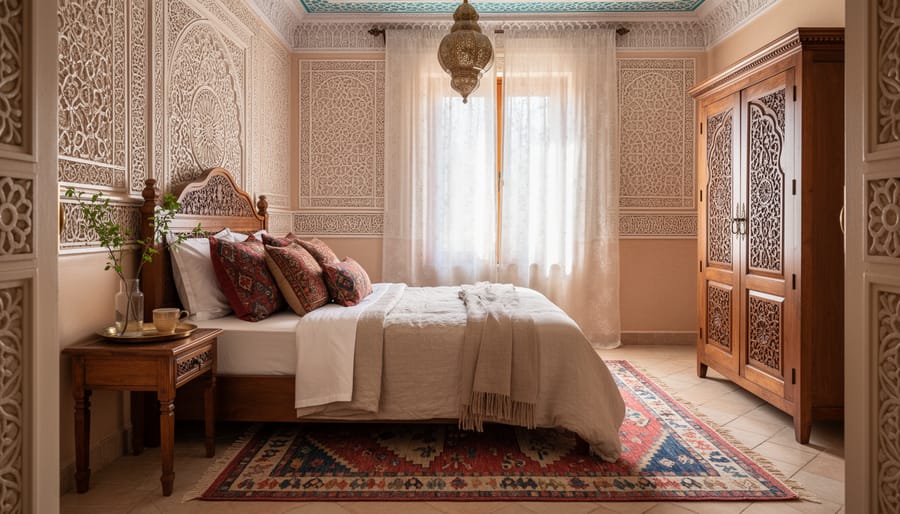
Moroccan bedroom design operates on a fundamentally different philosophy than Western minimalism. Rather than stripping away elements to reveal clean lines, it builds depth through deliberate accumulation. Each layer, textile over textile, pattern against pattern, light filtered through metalwork, works together to create spaces that feel simultaneously opulent and intimate.
The first principle centers on texture and pattern layering. A Moroccan bedroom rarely shows bare surfaces. Floors receive hand-knotted rugs layered over tiles, walls wear carved plaster beneath hanging textiles, and beds stack embroidered coverlets over woven blankets atop patterned sheets. This isn’t random piling; it’s strategic depth-building. The eye moves from one texture to another, discovering embossed leather beside smooth tadelakt, rough-hewn wood near polished brass. Patterns intersect without competing because they share a color story and vary in scale, a large geometric zellige pattern on the floor grounds smaller florals on cushions and micro-details in carved gypsum overhead.
Light and shadow provide the second organizing principle. Moroccan designers treat light as a sculptural material. Pierced metal lanterns cast geometric shadows that shift across walls as the day progresses. Window screens filter harsh afternoon sun into dappled patterns, while low evening lamps create pools of warm glow. This constant play between illumination and darkness makes spaces feel alive and responsive rather than static.
The third principle involves creating intimate zones within the bedroom. Traditional Moroccan homes featured large multipurpose rooms, so designers carved out psychological spaces through furniture arrangement and floor-level seating. A corner piled with cushions becomes a reading nook, a low brass table with surrounding poufs forms a tea area, while the bed itself sits slightly elevated or within an alcove to define its sanctuary status. These zones don’t require walls, they’re suggested through rugs that mark boundaries, lighting that pools in specific areas, and changes in ceiling height or decoration.
The sensory approach ties everything together. Visual richness through color and pattern engages the eyes. Tactile variety, nubby wool, cool tiles, warm wood, silky throws, invites touch. Aromatic elements like cedarwood furniture, rosewater sachets, or amber incense appeal to smell. Even sound gets considered; heavy textiles dampen noise, creating acoustic softness. Every design choice serves this multi-sensory experience, transforming the bedroom from a place you merely see into a sanctuary you inhabit with your whole body.
Essential Architectural and Structural Features
Walls and Ceiling Treatments
Tadelakt plaster creates the signature smooth, waterproof finish seen throughout Moroccan homes. This ancient lime-based technique produces subtle, organic texture with a soft sheen that catches light beautifully. Traditional tadelakt appears in earth tones like terracotta, warm ochre, and creamy white, though deeper hues work for accent walls. Modern homeowners can approximate this look with Venetian plaster or specialty tadelakt-effect paints applied in thin layers, though authentic tadelakt requires skilled artisans who burnish the surface with river stones and seal it with olive oil soap.
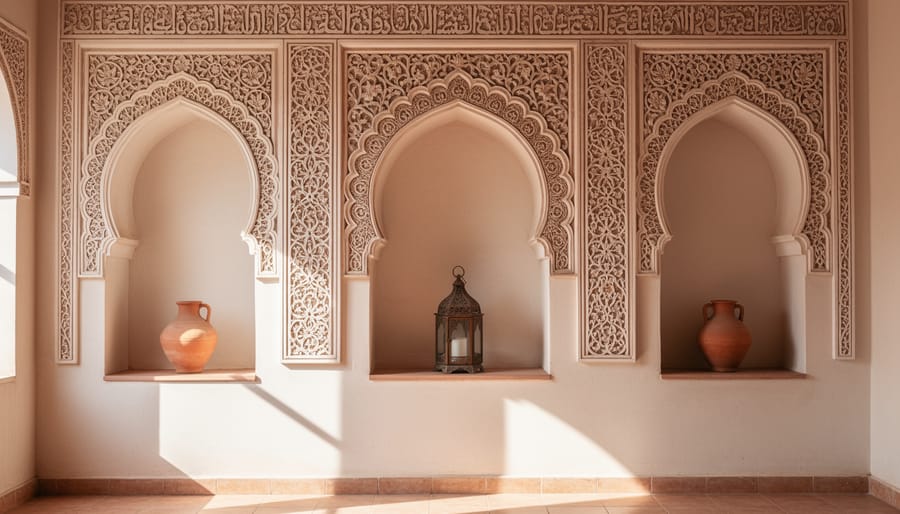
Carved gypsum panels transform plain walls into three-dimensional art. These intricate plasterwork pieces feature geometric patterns or floral motifs, typically framing doorways, creating niches, or forming decorative borders where walls meet ceilings. Purchase pre-cast gypsum panels from Moroccan import suppliers or commission custom work from plaster artisans familiar with Islamic geometric design.
Exposed wood beam ceilings add warmth and architectural interest. Dark-stained cedar or walnut beams contrast dramatically against light plaster, while painted beams in traditional Moroccan blues or greens introduce color overhead. Faux beams offer budget-friendly alternatives that capture this essential element without structural modification.
Doors, Windows, and Archways
The doorways of a Moroccan bedroom are architectural statements, not afterthoughts. Keyhole arches, those distinctive horseshoe shapes that narrow at the top, frame entries and alcoves, softening hard edges and creating a sense of ritual as you pass through. These arches often feature carved plaster surrounds or painted borders in contrasting colors, drawing the eye upward.
Wooden doors themselves tell stories through their craftsmanship. Look for pieces with geometric carvings, metal stud details, or panels inset with cedar or thuya wood. Authentic Moroccan doors sit lower in their frames than Western standards, contributing to the intimate scale of traditional rooms.
Window treatments go beyond fabric. Moucharabieh screens, carved wooden lattices, filter harsh sunlight into dappled patterns while maintaining privacy. These screens cool rooms naturally, as the small openings create airflow without exposing the interior. For modern homes, decorative metal grilles or carved wood panels installed as shutters achieve similar effects. Even a simple arched window frame painted in deep indigo or terracotta immediately signals Moroccan influence, transforming a standard opening into a focal point that plays with light throughout the day.
Color Palettes That Define Moroccan Bedrooms
Moroccan bedrooms draw their visual power from color palettes rooted in the country’s diverse landscape and rich artisan traditions. The colors you choose aren’t random, they reflect Morocco’s geography, from the deep blues of Chefchaouen to the terracotta red of Marrakech’s medina walls and the golden ochre of Saharan dunes.
The most iconic Moroccan palette centers on jewel tones layered against warm neutrals. Sapphire blue holds special significance as a protective color, traditionally believed to ward off negative energy. You’ll often see it paired with gold accents, creating the opulent contrast found in royal riads. Emerald green represents paradise and renewal in Islamic tradition, while ruby red symbolizes strength and passion. These saturated hues work best as accent walls or in textiles rather than dominating every surface.
Earthy palettes offer a more grounded approach, drawing from Morocco’s clay architecture and desert landscapes. Terracotta, burnt sienna, warm ochre, and sandy beige create enveloping warmth without overwhelming the senses. This scheme works particularly well in bedrooms with abundant natural light, as the colors shift beautifully throughout the day.
Authentic Moroccan color combinations and their traditional applications:
- Deep indigo with warm white and copper accents, evokes coastal medinas, ideal for creating calm sleeping spaces
- Terracotta with saffron yellow and cream, reflects desert kasbahs, adds warmth to north-facing rooms
- Emerald green with gold and ivory, traditional palace palette, best used in textiles and decorative elements
- Fuchsia pink with orange and purple, Marrakech market inspiration, works as bold accent wall behind bed
- All-white with natural wood and silver, modern riad style, showcases architectural details and textile patterns
The key to authentic combinations lies in contrast and layering. Pair one dominant color with two supporting tones, then add metallic accents. Avoid pastel versions of these hues, Moroccan color is unapologetically saturated or earth-toned, never diluted into pale imitations.
Textiles and Fabric Elements
Textiles transform Moroccan bedrooms from decorated spaces into sensory experiences. The layering of fabrics creates depth, warmth, and that signature luxurious-yet-comfortable feel that defines this style.
Start with the bed itself, which serves as the textile centerpiece. Authentic Moroccan bedding features hand-embroidered duvet covers in geometric or floral patterns, often worked in metallic threads against jewel-toned backgrounds. Layer a sabra silk throw, made from cactus fiber, across the foot of the bed for its characteristic sheen and texture. These aren’t just decorative; the weight and drape of natural fibers regulate temperature better than synthetic alternatives.
Pillows deserve special attention in Moroccan design. Rather than matching sets, mix embroidered cushions with sequined pieces, brocade covers, and kilim pillow cases. Authentic fabrics include handwoven cotton from Fez, silk from the Atlas Mountains, and wool from Berber shepherds. Pile them generously, six to ten pillows isn’t excessive here. The varied textures invite touch and create visual interest.
Floor coverings anchor the entire room. Berber rugs, with their abstract diamond patterns and thick wool pile, provide both warmth underfoot and sound absorption. A vintage boucherouite rag rug adds color and history. In traditional homes, these rugs are layered, a larger neutral base with smaller, more ornate pieces on top. This approach works beautifully over existing carpet or hardwood.
Curtains should be substantial rather than sheer. Choose heavy cotton or silk panels in saturated colors that pool slightly on the floor. Many Moroccan bedrooms use fabric to section off sleeping alcoves or create a canopy effect, making the space feel cocooned and intimate.
Tapestries or large textile hangings on walls add a final softening touch, absorbing echoes and introducing pattern at eye level. Look for pieces with tassel trim or woven stripes in traditional color combinations.
Furniture Choices for Authentic Moroccan Bedrooms
Moroccan bedroom furniture sits lower to the ground than typical Western pieces, creating an entirely different relationship with the space. Platform beds rarely exceed twelve inches in height, often featuring wide frames that double as perches for throwing decorative pillows or setting a morning tea tray. This low profile makes rooms feel more spacious vertically while establishing an intimate, grounded atmosphere that encourages relaxation.
Carved wood dominates Moroccan furniture design, with cedar and thuya being traditional choices for their durability and aromatic qualities. Headboards feature intricate geometric lattice work or flowing arabesque patterns, hand-carved by artisans using techniques passed through generations. These aren’t subtle carvings, the detail work often extends three to four inches deep, creating dramatic shadow play as light moves through the room.
Inlay work distinguishes authentic pieces from mass-market imitations. Skilled craftspeople embed tiny pieces of mother-of-pearl, bone, or contrasting woods into darker frames, creating complex star patterns or repeating geometric designs. A single nightstand might contain thousands of individually placed fragments. This painstaking decoration elevates functional furniture into artworks that command attention.
Seating areas within bedrooms reflect the Moroccan tradition of hospitality. Low banquettes line walls, topped with firm cushions and piled with pillows, creating conversation spaces that don’t require separate chairs. Storage chests serve triple duty as seating, surface space, and concealed organization, often painted in bold colors or decorated with metal studs forming geometric patterns.
The overall effect differs sharply from minimalist Western bedroom furniture. Moroccan pieces embrace ornamentation without apology, understanding that richly decorated surroundings feed the spirit. Every surface tells a story through its craftsmanship.
Lighting That Creates Moroccan Ambiance
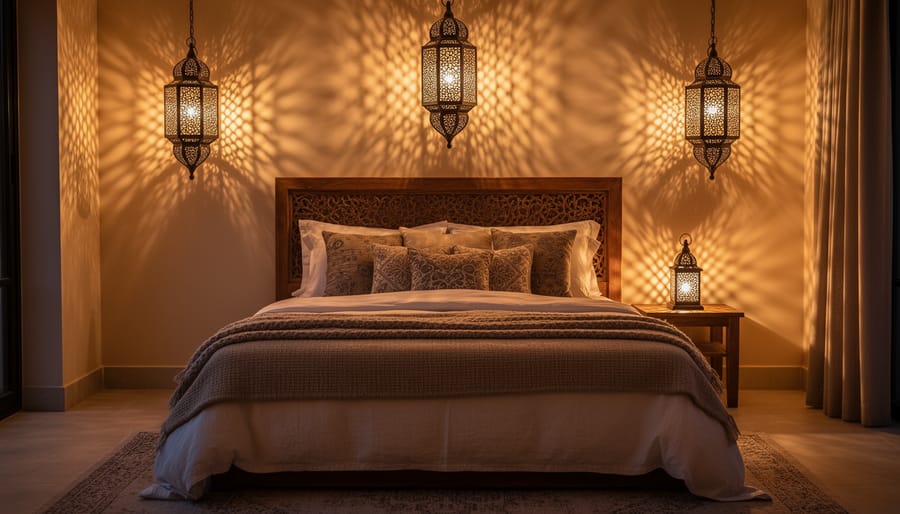
Lighting in Moroccan bedrooms does far more than illuminate, it sculpts atmosphere and emotion. Rather than relying on bright overhead fixtures that flatten a room’s character, Moroccan design embraces warm, layered light sources positioned at varying heights to create depth and intimacy. The signature element is the pierced metal lantern, handcrafted from brass, copper, or tin with intricate geometric cutouts that cast mesmerizing shadow patterns across walls and ceilings. When lit, these lanterns transform plain surfaces into moving art, with delicate arabesque shapes dancing as you move through the space.
Pendant lights suspended at different levels add drama without overwhelming the senses. Choose fixtures with colored glass panels in amber, cobalt, or ruby tones that filter light into rich, jewel-like hues. These work beautifully above seating areas or flanking the bed. Wall-mounted candle sconces in aged metal provide accent lighting while honoring traditional illumination methods, many Moroccan homes still favor candlelight for its soft, flickering quality that modern bulbs struggle to replicate.
Strategic placement matters as much as the fixtures themselves:
- Hang a statement lantern centered above the bed, positioned low enough to create intimacy but high enough to avoid obstruction
- Place pairs of matching sconces on either side of arched niches or doorways to emphasize architectural features
- Cluster small lanterns at varying heights in corners to build ambient light without harsh glare
- Position floor lanterns near low seating areas to illuminate reading spaces while maintaining cozy shadows
- Layer candlelight on surfaces, nightstands, windowsills, carved chests, for evenings when electric light feels too clinical
The goal is achieving what Moroccans call “twilight lighting”, that magical hour when day transitions to night and shadows soften edges. Install dimmer switches on all electric fixtures to control intensity throughout the day, and choose warm-spectrum bulbs (2700K or lower) that mimic candlelight rather than cool whites that feel sterile. This approach creates a bedroom that shifts with your mood, always welcoming, never harsh.
Decorative Accents and Finishing Touches
The smallest details often make the strongest impression in a Moroccan bedroom. These finishing touches transform a well-designed space into one that feels complete and lived-in, adding layers of authenticity that larger furniture pieces alone cannot achieve.
Start with ceramic vessels and pottery in traditional shapes: tagine-form lidded containers, hand-painted bowls from Fez or Safi, and decorative plates displayed on carved wooden stands. Authentic Moroccan ceramics feature geometric patterns, calligraphy, or floral motifs in cobalt blue, emerald green, and saffron yellow. Group smaller pieces on nightstands or arrange larger statement vessels on the floor beside carved chests.
Metalwork adds reflective surfaces and intricate detail. Hammered brass or silver trays propped against walls or displayed on ottomans catch candlelight beautifully. Mirrors framed in pierced metalwork or studded leather create focal points while amplifying light. Small trinket boxes with engraved patterns hold jewelry and add sparkle to dresser tops.
Carved wooden screens serve multiple purposes beyond decoration. Position a folding screen to section off a dressing area, or mount a single panel as wall art. The geometric cutouts cast fascinating shadows and add architectural interest without permanent renovation.
Decorative tilework need not cover entire walls. A single row of zellige tiles creates a striking border along one wall, or frame a mirror with colorful tile fragments in a mosaic pattern.
Plants breathe life into the space. Fill glazed ceramic planters with palms, ferns, or succulents. The contrast between organic greenery and ornate containers adds balance.
Finally, engage the sense of smell. Brass incense burners, small bottles of orange blossom or rose water, or a dish of dried lavender complete the sensory experience that defines Moroccan spaces.
Bringing Moroccan Bedroom Style into Your Home
Transforming your bedroom doesn’t require gutting walls or importing a Moroccan riad room by room. Start by evaluating what you already have. Flat walls become canvases for warm ochre or deep terracotta paint. Add a border stencil near the ceiling using geometric Moroccan patterns, you’ll find downloadable templates online. If you have standard doorways, a simple arched frame overlay (cut from medium-density fiberboard and painted) creates instant architectural interest for under $50.
Budget constraints shouldn’t stop you. Thrift stores and estate sales yield carved wooden boxes, brass trays, and ceramic vessels at fraction-of-retail prices. Sand and refinish these pieces, then arrange them deliberately rather than cluttering every surface. One substantial element, a hand-knotted Berber rug or an intricately carved headboard, carries more authenticity than a dozen mass-produced “Moroccan-inspired” items.
For textiles, visit fabric districts or online sellers specializing in natural fibers. Buy plain linen or cotton in jewel tones, then hand-stitch simple geometric borders using embroidery floss. Layer three or four pillows with different textures: smooth silk, nubby handwoven cotton, soft velvet. Drape a lightweight throw across your bed’s foot rather than tucking everything in tightly, Moroccan bedrooms invite touch and tactile exploration.
DIY lanterns prove surprisingly manageable. Purchase plain metal lantern frames from craft stores, then use a metal punch to create your own geometric patterns before adding amber or cobalt glass panels. Hang these at varying heights for that essential interplay of light and shadow.
Shop thoughtfully when buying purportedly authentic pieces. Research artisan cooperatives in Morocco that ship internationally, ensuring your purchase supports actual craftspeople rather than factory replicas. Look for hand-hammered metalwork irregularities, natural dye variations in textiles, and individually carved (not molded) details.
Respect the style’s origins by learning which elements carry cultural or religious significance. Avoid appropriating sacred symbols as mere decoration, and choose pieces that celebrate Moroccan artistry without reducing it to exotic props.
Common Questions About Moroccan Bedroom Style
How much should I budget for a Moroccan bedroom makeover?
Costs vary widely depending on whether you prioritize authentic artisan pieces or contemporary alternatives. A full transformation with handcrafted furniture, authentic textiles, and architectural modifications can run $5,000, $15,000, while a budget-conscious approach using paint, fabric accents, and market finds can achieve the look for $800, $2,000. Start with one statement piece like a carved headboard or vintage lantern, then layer affordable textiles and DIY elements around it.
Can I mix Moroccan style with other design aesthetics?
Moroccan elements blend beautifully with Mediterranean, Bohemian, and even modern minimalist styles when you maintain a consistent color story and don’t overcrowd the space. Pair a carved wooden screen with clean-lined furniture, or introduce Moroccan textiles into a neutral Scandinavian bedroom. The key is choosing complementary pieces rather than competing focal points.
How do I avoid making my bedroom look like a theme park?
Focus on quality over quantity and leave breathing room between decorative elements. Choose two or three signature features, perhaps an arched alcove, layered textiles, and pierced lanterns, rather than cramming in every Moroccan motif. Stick to a cohesive color palette and balance ornate pieces with simpler surfaces like plain plaster walls or neutral bedding.
What distinguishes Moroccan style from general Bohemian design?
While both embrace rich textiles and global influences, Moroccan style has specific cultural roots in Islamic architecture and North African craftsmanship. It features distinctive elements like zellige tilework, keyhole arches, and geometric patterns rooted in Islamic art, whereas Bohemian design freely mixes patterns and influences from multiple cultures without a cohesive geographic or historical anchor.
How do I care for authentic Moroccan pieces?
Handwoven textiles need gentle spot-cleaning or professional care, never machine wash sabra silk or vintage Berber rugs. Dust carved wood and metalwork regularly with a soft cloth, and occasionally apply natural oil to wood pieces to prevent drying. Tadelakt walls can be wiped with a damp cloth and benefit from an annual waxing to maintain their lustrous finish.
Where should I shop for genuine Moroccan bedroom items?
Seek out importers specializing in North African goods, artisan cooperatives with direct trade relationships, or estate sales featuring authentic vintage pieces. Online platforms like 1stDibs and Chairish carry curated antiques, while Etsy hosts artisans selling handmade textiles and metalwork. If you travel to Morocco, medina workshops in Fez, Marrakech, and Essaouira offer the most authentic selection, though shipping can be challenging for larger items.
These questions surface repeatedly because creating an authentic Moroccan bedroom requires balancing cultural respect with personal taste and practical constraints. The style’s richness can feel intimidating at first, newcomers worry about costs spiraling, clashing with existing decor, or accidentally creating a caricature rather than a thoughtful homage.
The difference between success and excess usually comes down to editing. A bedroom needs only a handful of strong Moroccan elements to establish the aesthetic; the rest can remain understated. Think of it as composing with a few vivid instruments rather than playing every one at once. One stunning carved chest commands more presence than five mediocre decorative objects, and a single pierced lantern casting intricate shadows achieves more atmosphere than a cluster of generic fixtures.
Shopping for authentic pieces rewards patience. Rushed purchases from big-box stores often yield mass-produced knockoffs that lack the irregularities and hand-finishing marks that signal genuine craftsmanship. Study the difference between machine-cut patterns and hand-carved details, between synthetic dyes and natural pigments. Your eye will sharpen, and you’ll recognize quality when you find it, whether in a Moroccan souk or a California vintage shop.
Authentic Moroccan bedroom style isn’t about filling a space with as many ornate pieces as possible. It’s about understanding the essential features, the architectural details, layered textiles, warm lighting, and thoughtful color choices, and how they work together to create a sensory-rich sanctuary.
Start small. Choose one or two elements that resonate with you: perhaps a hand-pierced lantern that casts geometric shadows across your walls, or a collection of embroidered pillows in jewel tones. As you become comfortable with these pieces, gradually layer in additional features, always prioritizing quality and authenticity over quantity.
The most successful Moroccan bedrooms honor the cultural context behind each design choice. They recognize that carved plasterwork represents centuries of craftsmanship, that specific color combinations carry meaning, and that the interplay of pattern and texture serves both aesthetic and experiential purposes.
Your bedroom should tell a story, one that respects Moroccan design wisdom while reflecting your personal journey. Take time to source genuine pieces when possible, learn the techniques behind traditional crafts, and build your space thoughtfully. The result will be more than just a beautiful room; it’ll be a retreat that transports you to another world every time you step inside.