Ceramic Moroccan Tile: Traditional Craftsmanship Meets Modern Kitchen Design
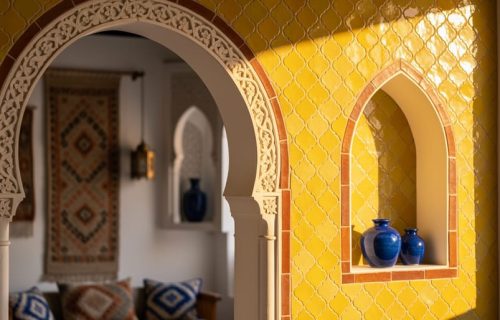
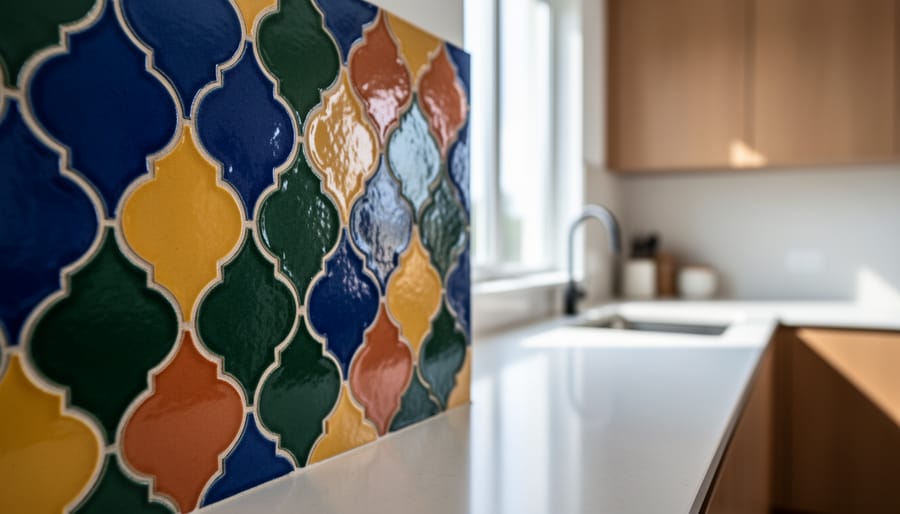
Ceramic Moroccan tile transforms kitchens with handcrafted geometric patterns and vivid glazes rooted in centuries of North African artisan tradition. These tiles stand apart through their distinctive zellige technique, where artisans hand-cut small clay pieces into tessellated designs, then finish them with jewel-toned glazes in cobalt, emerald, saffron, and terracotta. Unlike mass-produced alternatives, authentic ceramic Moroccan tiles feature subtle variations in color depth and slight irregularities that give each installation its own character.
In kitchen spaces, these tiles excel as backsplashes, accent walls, or even flooring where their durable glazed surface resists moisture and daily wear. The patterns range from intricate star-and-cross motifs to simpler repeating geometrics, each carrying symbolic meaning from Islamic art traditions. A classic eight-pointed star represents cosmic order, while interlocking patterns symbolize unity and infinity.
The real beauty lies in how these tiles anchor a kitchen’s personality. A vibrant blue and white zellige backsplash behind your stove becomes an instant focal point, while earth-toned patterns in rust and cream create warmth without overwhelming neutral cabinetry. You can mix patterns within the same color family for visual interest or stick to a single repeating design for clean sophistication.
Installation requires patience and precision, particularly with smaller zellige pieces, but the result rewards you with a kitchen that feels both timeless and distinctly worldly. Proper sealing and gentle cleaning keep the glazes luminous for decades, making these tiles an investment in both beauty and longevity.
What Makes Ceramic Moroccan Tile Unique
Ceramic Moroccan tiles begin their journey in workshops where artisans shape earthenware clay by hand, preserving techniques passed down through generations of Fez and Meknes craftsmen. Unlike mass-produced porcelain, each ceramic tile receives individual attention during the glazing process. Artisans apply mineral-based glazes in layers, creating depth and luminosity that factory methods can’t replicate. The tiles then enter traditional kilns where variable firing temperatures produce subtle color shifts and tonal variations from batch to batch.
This handcrafted approach means no two tiles are identical. You’ll notice slight irregularities in glaze thickness, tiny pinholes, and color gradations that tell the story of human hands and open flames. These aren’t flaws but signatures of authenticity. The earthenware base absorbs glaze differently than porcelain’s dense composition, resulting in colors that seem to glow from within rather than sit flatly on the surface.
Moroccan ceramic tiles also differ fundamentally from cement alternatives in both composition and appearance. While cement tiles rely on pigmented concrete pressed into patterns, ceramic tiles achieve their designs through painted glazes fused to fired clay. This creates a glassy, reflective surface with vibrant jewel tones that cement tiles can’t match. The glazed finish also offers superior stain resistance in kitchen environments.
The cultural heritage embedded in these tiles runs deep. Many patterns reference Islamic geometric principles, where repeating motifs symbolize infinity and divine order. Colors carry meaning too: cobalt blue represents water and the heavens, emerald green signifies paradise, and saffron yellow honors the spice routes that shaped Morocco’s history. When you choose ceramic Moroccan tile, you’re not just selecting a decorative surface. You’re bringing centuries of artistic tradition into your home.
Popular Ceramic Tile Patterns for Kitchen Spaces
Zellige Geometric Designs
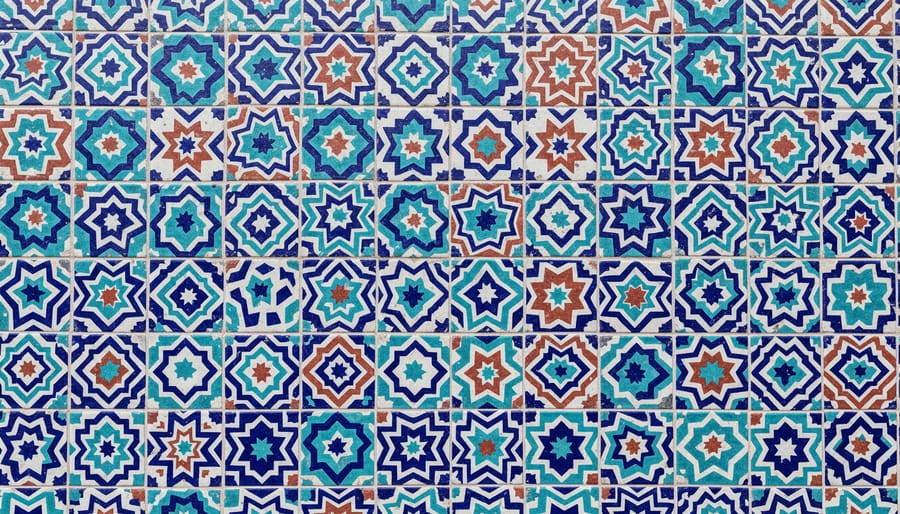
Zellige tiles represent the pinnacle of Moroccan ceramic artistry, featuring intricate geometric mosaics that have adorned palaces and riads for centuries. Each piece is hand-cut from glazed terracotta, then assembled into mesmerizing patterns where diamonds, stars, crosses, and hexagons lock together with mathematical precision.
The beauty lies in slight imperfections. Because artisans chisel each tile individually, no two pieces are identical. Color variations within a single glaze batch create subtle depth that machine-made alternatives can’t replicate. This handcrafted irregularity catches light differently throughout the day, making your backsplash feel alive rather than static.
For kitchens, classic zellige patterns work brilliantly behind ranges and sinks. The traditional star-and-cross layout (often called “Fez pattern”) offers timeless sophistication, while simpler chevron or diamond arrangements suit contemporary spaces. Consider a neutral palette of whites, grays, and soft blues if your kitchen already has bold cabinetry, or go dramatic with cobalt, emerald, and terracotta if you want the tilework to command attention.
Plan for wider grout lines than standard subway tile requires. Zellige’s handcut edges need that breathing room, and the thicker grout actually enhances the mosaic’s texture and authenticity.
Hand-Painted Floral and Botanical Motifs
Nature blooms across hand-painted ceramic tiles in the softer side of Moroccan design tradition. Artisans carefully brush pomegranates, lotus flowers, and trailing vines onto each tile surface, creating organic warmth that balances the geometric boldness found elsewhere in Moroccan interiors.
Pomegranate motifs carry symbolic meaning in Moroccan culture, representing abundance and prosperity. These designs often feature the fruit split open to reveal seeds rendered in rich crimson and gold against cream or sage backgrounds. Kitchen backsplashes adorned with pomegranate tiles create inviting focal points that feel both traditional and timeless.
Lotus and water lily patterns bring serene beauty to cooking spaces, with petals painted in layers of blue, pink, or amber. These botanical tiles work beautifully as accent panels within simpler tile fields or as continuous patterns in smaller kitchens where the delicate motifs prevent visual overwhelm.
Vine and leaf patterns offer the most versatility. Climbing tendrils painted in earthy greens and ochres can frame doorways, edge countertops, or create vertical interest on narrow wall sections. The hand-painted variations between tiles ensure no two pieces match exactly, giving your kitchen the authentic character of artisan work rather than mass production.
Solid Color Ceramics and Border Tiles
Solid-color ceramic tiles in saturated jewel tones, sapphire blue, emerald green, ruby red, or saffron yellow, offer remarkable flexibility when designing a Moroccan kitchen. Unlike intricate patterns that demand attention, these glazed monochromes create breathing room while maintaining cultural authenticity through their characteristic luster and depth.
A single bold color works beautifully across entire backsplashes, especially when you want cabinetry or cookware to remain the focal point. Moroccan artisans traditionally produced these tiles in batches, so subtle glaze variations between pieces add organic character rather than factory uniformity. This slight irregularity catches light differently across the surface, creating quiet visual interest.
Border tiles transform solid-color installations from simple to sophisticated. A decorative strip featuring geometric cutwork or calligraphy-inspired motifs can frame a cooking niche, outline a window, or define the boundary between wall and countertop. Borders also bridge the gap between patterned and plain sections, try running a slim geometric border at the top of a solid-color backsplash, or use it to separate colored field tiles from white upper walls. This layering technique honors traditional Moroccan design principles while keeping the overall look balanced and uncluttered.
Where to Use Ceramic Moroccan Tile in Your Kitchen
Backsplash Applications
A ceramic Moroccan tile backsplash transforms the wall behind your stove or sink into the kitchen’s visual anchor. The glazed surface handles heat and splashes beautifully while reflecting light in ways that bring those cobalt blues, saffron yellows, and terracotta oranges to life.
For maximum impact, extend your ceramic tiles from counter to upper cabinet in a full wall installation. This approach works especially well with zellige mosaics, where the handcrafted irregularities create mesmerizing depth across the entire cooking zone. The repetition of geometric patterns draws the eye upward and makes modest kitchens feel more spacious.
If you prefer subtlety, install a concentrated accent panel just behind the range. Frame a 3-by-4-foot section with your most ornate ceramic tiles, then use neutral subway tiles or paint elsewhere. This focused treatment costs less and lets you showcase intricate hand-painted florals without overwhelming the space.
Consider height carefully. Standard backsplashes stop at 18 inches, but Moroccan ceramics shine when they climb higher, especially in open kitchens where that vertical drama balances expansive sightlines.
Flooring and Accent Areas
Ceramic Moroccan tiles transform kitchen floors into works of art, though their suitability depends on your household’s traffic patterns and your willingness to maintain them. In moderate-use kitchens, these tiles create stunning focal points, particularly in breakfast nooks, beneath kitchen islands, or as decorative insets bordered by more neutral flooring. The glazed surface provides reasonable resistance to spills and stains when properly sealed, but high-traffic areas may show wear over time as the glaze can chip under heavy impact.
For entryway transitions between kitchens and adjacent rooms, ceramic tiles serve as natural thresholds that honor Moroccan design tradition. A band of patterned ceramics creates visual separation without requiring full-floor installation, reducing both cost and durability concerns.
When using ceramic tiles underfoot, choose thicker options (at least 8mm) and ensure your subfloor is perfectly level, any flexing increases crack risk. Place decorative ceramic patterns strategically in low-traffic zones while reserving high-wear paths for more robust materials. Many homeowners combine cement tiles in walkways with ceramic accents in protected spots, balancing authenticity with practicality.
Countertop Edges and Niches
Ceramic Moroccan tiles excel as decorative accents along countertop edges, transforming utilitarian surfaces into statement pieces. Install a single row of hand-painted ceramic tiles as trim where your countertop meets the wall, creating a jewelbox effect that draws the eye upward from solid stone or butcher block. This application works particularly well with narrow 2×6 inch rectangular ceramics featuring border patterns.
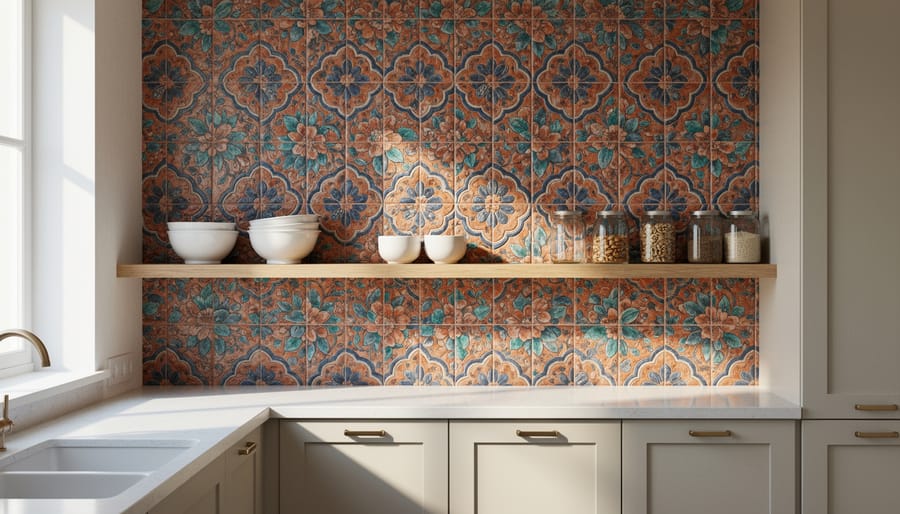
Open shelving and wall niches benefit enormously from ceramic tile backing. Line the rear wall of floating shelves with zellige mosaics or solid jewel-tone ceramics to make displayed dishes and glassware pop against a rich background. In recessed wall niches, create miniature feature walls using a contrasting ceramic pattern that frames cookbooks, spice collections, or decorative tagines. The glazed surface reflects light beautifully while protecting the wall from moisture and splashes in these functional display areas.
Color Palettes That Bring Ceramic Tiles to Life
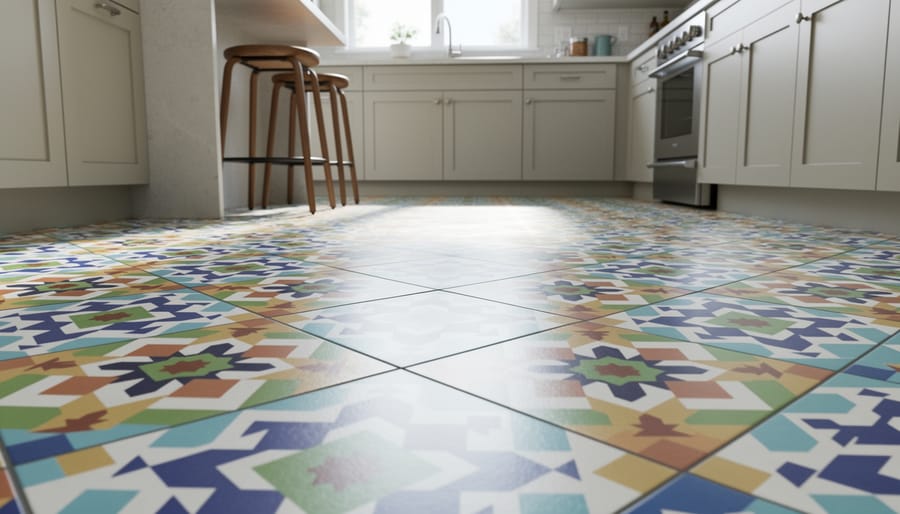
Selecting the right color palette transforms ceramic Moroccan tiles from beautiful accents into the defining feature of your kitchen. The key is understanding how different hues work together to create mood and visual harmony.
Traditional Moroccan palettes draw from the earth and sky: terracotta reds, sun-baked ochres, deep cobalt blues, and emerald greens. These warm, saturated tones create the classic souk atmosphere many homeowners crave. Pair turquoise and sapphire ceramic tiles with honey-toned wood cabinets and cream walls for an inviting space that feels transported from Marrakech. The contrast between cool tiles and warm wood brings depth without overwhelming smaller kitchens.
For contemporary fusion styles, consider pairing jewel-tone ceramics with neutral backdrops. Charcoal gray cabinets provide a modern canvas that makes ruby red or peacock blue tiles pop dramatically. White subway tile walls flanking a ceramic Moroccan backsplash create a gallery effect, letting the intricate patterns command attention. This approach works particularly well in open-plan spaces where you want the kitchen to feel cohesive with modern living areas.
| Palette Name | Primary Tile Colors | Complementary Elements | Mood Created |
|---|---|---|---|
| Classic Medina | Cobalt blue, terracotta, ivory | Honey oak cabinets, warm beige walls | Traditional warmth, inviting |
| Coastal Fusion | Turquoise, white, soft coral | White or light gray cabinets, seafoam accents | Airy, Mediterranean fresh |
| Modern Jewel Box | Emerald green, deep plum, gold | Charcoal gray or black cabinets, white marble | Luxurious, dramatic contrast |
| Desert Minimalist | Soft ochre, sand, muted sage | Natural wood, off-white walls, brass fixtures | Serene, organic warmth |
Monochromatic schemes offer another sophisticated option. Multiple shades of blue ceramic tiles, from powder to midnight, create depth through tonal variation rather than contrasting colors. This technique suits smaller kitchens where too many competing hues might feel chaotic.
Don’t forget the 60-30-10 rule: let your ceramic tiles occupy about 30 percent of the visual space, with cabinetry at 60 percent and metallic fixtures or textiles providing the final 10 percent accent. This proportion prevents the patterns from overwhelming while ensuring they remain the focal point your kitchen deserves.
Caring for Ceramic Moroccan Tile in Kitchen Environments
Ceramic Moroccan tiles withstand daily kitchen demands beautifully when you follow a few straightforward care routines. Their glazed surface naturally resists stains, but the grout lines between tiles need regular attention to prevent discoloration from cooking oils and food splashes.
For everyday cleaning, wipe tiles with warm water and a drop of pH-neutral dish soap. Avoid acidic cleaners like vinegar or lemon-based products, they can gradually dull the glaze and etch the surface. A soft microfiber cloth works better than abrasive sponges, which might scratch the glossy finish over time.
Grout maintenance makes the biggest difference in keeping your installation looking fresh. Seal grout lines every 12 to 18 months with a penetrating sealer, especially in backsplash areas near the stove where grease accumulates. When you notice grout darkening, scrub it gently with a paste of baking soda and water using a soft-bristled brush, then rinse thoroughly.
The glazed ceramic surface itself doesn’t require sealing, that protective glass-like coating is fired on during manufacturing. However, if you’re using handcrafted zellige tiles with slight surface variations, ask your supplier whether an additional topical sealer might enhance protection without compromising the authentic matte-to-gloss interplay.
Address spills quickly, particularly acidic tomato sauce or wine, by blotting rather than wiping them across the surface. For stubborn stains, let a damp cloth sit on the spot for a few minutes to soften buildup before gentle scrubbing.
These simple habits preserve both the vibrant colors and cultural authenticity of your tiles. The same care principles apply across many Moroccan décor ideas throughout your home, from kitchen accents to bedroom features.
DIY Installation Tips for the Home Decorator
Installing ceramic Moroccan tiles yourself is entirely doable with patience and the right approach. Unlike perfectly uniform commercial tiles, handcrafted ceramic pieces have slight variations in thickness and size, embrace these as marks of authenticity rather than fighting them.
Start by ensuring your surface is clean, level, and properly primed. Wall surfaces need a cement board backing for backsplashes, while floors require a stable, crack-free substrate. Any dips or bumps will telegraph through ceramic tiles, so address them now. Prime the surface with a quality bonding primer to prevent the porous tile backs from sucking moisture out of your adhesive too quickly.
Lay out your entire design on the floor before mixing any adhesive. Moroccan ceramic tiles often come in mixed batches with subtle color variations, so blend pieces from different boxes to avoid obvious clusters of lighter or darker tiles. This is also when you’ll catch any pattern alignment issues or decide where to place your most vibrant pieces as focal points.
For adhesive, use a polymer-modified thin-set mortar rather than basic mastic. Ceramic tiles need the flexibility and strong bond that thin-set provides, especially in kitchens where temperature changes and moisture are constants. Mix to a peanut butter consistency and apply with a notched trowel, a 3/16″ square notch works well for most wall applications.
- Apply thin-set to a small section (about two square feet) and comb it with your notched trowel in one direction
- Press each tile firmly with a slight twisting motion, using spacers only if your tiles are particularly uniform, many authentic ceramics look better with varied grout lines
- Check frequently with a level and make adjustments before the adhesive sets (you have about 20 minutes)
- Let the installation cure for 24 hours before grouting
- Apply grout with a rubber float, working diagonally across tiles and packing joints firmly
- Clean excess grout with a damp sponge before it hardens, rinsing frequently
- After three days, seal both the grout lines and the tile faces with a penetrating sealer designed for glazed ceramics
Work slowly and deliberately. Rushing leads to lippage (tiles at different heights) and grout smears that are tedious to remove from textured glazes. If you mess up a section, thin-set stays workable long enough to pull tiles and reset them, one advantage over quick-setting adhesives.
The grout color matters enormously. White grout creates a crisp, modern look that highlights each tile, while charcoal or terra cotta tones blend for a more traditional, cohesive appearance. Test on sample tiles first, because some grout colors can stain lighter glazes if not sealed properly.
Common Questions About Ceramic Moroccan Tile
Are ceramic Moroccan tiles heat-resistant enough for kitchen backsplashes?
Yes, ceramic tiles withstand the heat from cooking surfaces without cracking or discoloring. However, leave at least six inches clearance behind gas burners for optimal safety and longevity.
How can I tell if my tiles are authentically Moroccan?
Genuine handcrafted Moroccan ceramic tiles show slight color variations, subtle glazing irregularities, and artisan marks on the back. Factory-produced imitations display perfect uniformity and lack the depth of hand-applied glazes.
Can I mix different ceramic tile patterns in one kitchen?
Absolutely. Combining geometric zellige with floral motifs or solid borders creates visual interest, provided you maintain a consistent color family. The key is anchoring your design with one dominant pattern and using others as accents.
What price range should I expect for quality ceramic Moroccan tiles?
Authentic handcrafted ceramic tiles typically run $15 to $35 per square foot, while machine-made versions start around $8 per square foot. The investment reflects the artisan labor and traditional techniques involved in production.
Understanding these practical considerations helps you make informed decisions when planning your kitchen renovation. Questions about grout also arise frequently: ceramic Moroccan tiles perform best with sanded grout in lighter shades that complement rather than compete with the tile colors. White, cream, or light gray grout enhances the individual tile patterns, while darker grout creates a grid effect that can overwhelm delicate designs.
The comparison between ceramic and cement Moroccan tiles confuses many homeowners. Ceramic tiles offer a glossy, reflective finish with brighter colors, making them ideal for backsplashes and accent areas. Cement tiles provide a matte, slightly porous surface better suited for floors in lower-traffic areas. Both honor authentic Moroccan design traditions, but ceramic’s glazed surface requires less sealing and maintenance in kitchen environments where spills and splashes occur daily.
Ceramic Moroccan tiles do more than decorate, they connect your kitchen to centuries of artisan tradition, each glazed piece carrying the rhythm of hands that shaped clay and mixed pigments. Whether you’ve chosen zellige mosaics for your backsplash or hand-painted florals to frame your cooking space, you’ve brought something genuinely soulful into your home, a living art form that gains character with every meal prepared.
The beauty lies in honoring the craftsmanship while making it yours. Mix traditional patterns with modern cabinetry, pair jewel tones with natural wood, or let a single vibrant wall speak volumes in an otherwise neutral space. There’s no single “correct” way, Moroccan design has always thrived on personal expression within its rich visual language.
As you continue transforming your spaces, consider how these design principles extend beyond the kitchen. Explore Moroccan bedroom style to bring that same warmth and cultural depth into your private retreats, or discover lantern lighting, textile layering, and architectural details that complete the vision. Your ceramic tiles are just the beginning of a home filled with craftsmanship, color, and story.