8 Stunning Yellow Moroccan Tile Designs to Brighten Your Space in 2026
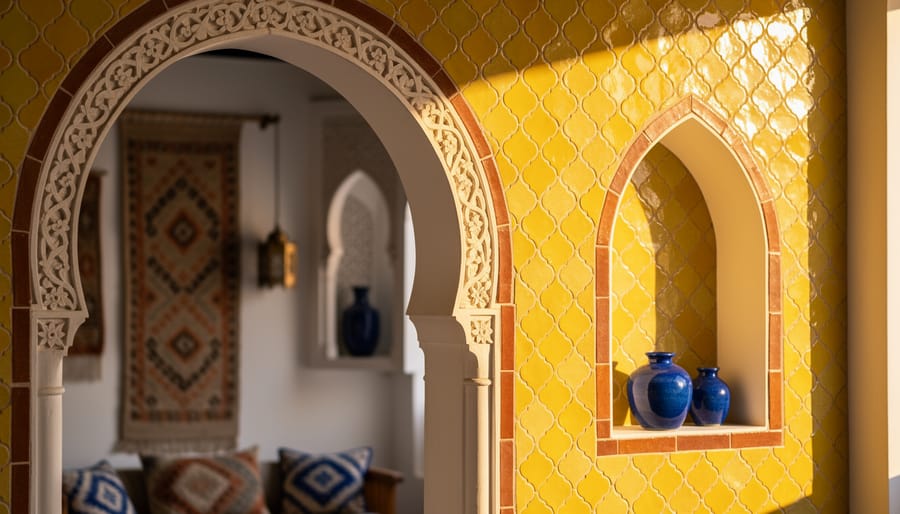
Yellow Moroccan tiles bring eight distinct design personalities to your home, from sun-washed lemons to deep saffron hues, each anchored in centuries of North African craftsmanship. Whether you’re drawn to geometric zellige patterns that shimmer with hand-cut edges or glossy relief tiles that catch afternoon light, yellow offers a warmth that transforms kitchens, bathrooms, and outdoor spaces without the heaviness of traditional jewel tones. The secret lies in understanding which yellow works where: buttery tones soften modern kitchens, golden ochres ground Bohemian living spaces, and citrus brights punch up powder rooms with unexpected joy.
The beauty of incorporating these tiles into Moroccan interior design extends beyond aesthetics. Yellow reflects light in ways that make small rooms feel larger and dark corners come alive, a principle Moroccan artisans have understood for generations. The terracotta clay base used in traditional production creates depth that synthetic pigments simply can’t replicate, giving each tile subtle variations that prevent that flat, dated look many homeowners fear.
This guide walks you through the most versatile yellow Moroccan tile styles available in 2026, from classic hand-painted ceramics to contemporary glass fusions. You’ll discover which patterns suit your space, how to mix yellow with other Moroccan palette staples like cobalt blue and emerald green, and practical considerations for everything from grout color to lighting placement. Each tile type includes real-world application ideas that work in both traditional riads and minimalist lofts.
Why We Selected These Yellow Moroccan Tile Styles
Our curation process for these eight yellow Moroccan tile styles prioritized five essential criteria to ensure each option delivers both cultural authenticity and real-world functionality for your 2026 home project.
- Authenticity to Moroccan design traditions, from hand-cut zellige techniques to patterns rooted in centuries-old architectural motifs
- Versatility across different rooms, whether you’re updating a kitchen backsplash, bathroom accent wall, or floor surface
- Color range spanning pale lemon to deep saffron, offering options for subtle warmth or bold statement-making
- Compatibility with both glass and ceramic Moroccan tile designs, allowing creative mixing within a single project
- Current availability from reputable suppliers in 2026, ensuring you can actually purchase what you see here
Each selection balances reverence for traditional craftsmanship with the practical demands of contemporary interiors. We excluded tiles that merely mimic Moroccan aesthetics without honoring the cultural techniques behind them, and we skipped overly trendy interpretations likely to feel dated within a few years. The result is a collection that respects Morocco’s rich tile-making heritage while addressing how you actually live and design today. Some options lean traditional, others contemporary, but all maintain that essential connection to the Moroccan design philosophy where pattern, color, and light work together to transform ordinary spaces into sensory experiences.
1. Zellige Hand-Cut Tiles in Honey Yellow
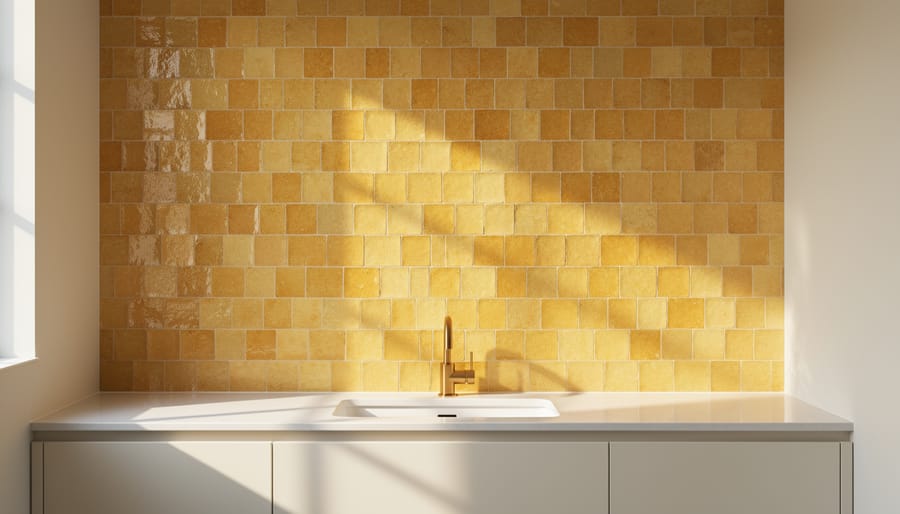
Zellige tiles represent the pinnacle of Moroccan ceramic craftsmanship, with their honey-yellow variation capturing the warmth of Saharan sunlight. Each tile begins as a clay square that artisans hand-cut with hammers and chisels, creating precisely shaped tessellations meant to fit together without mechanical uniformity. This centuries-old technique produces surface variations, slight undulations, tiny chips along edges, subtle glaze pooling, that aren’t flaws but rather signatures of human touch. Unlike factory-pressed tiles, no two zellige pieces reflect light identically.
Honey yellow sits between pale butter and deep amber, evoking the golden glow inside traditional Moroccan riads where zellige has adorned walls and fountains for generations. In Moroccan architecture, yellow symbolizes prosperity and sunlight, making these tiles a deliberate choice for spaces meant to feel abundant and welcoming. The glaze itself contains natural variations, some tiles lean slightly green-gold, others more orange-gold, creating a living mosaic that shifts as daylight moves across the surface. Morning light makes them luminous and soft; afternoon sun intensifies their warmth.
For contemporary homes, honey zellige works beautifully as a kitchen backsplash extending from counter to cabinet, where the handmade irregularities prevent the sterile look of perfectly uniform tile. In bathrooms, use them on a single accent wall behind a freestanding tub or across a shower wall, where water droplets catch and multiply the tiles’ natural shimmer. They pair exceptionally well with white grout (which emphasizes each tile’s shape) or charcoal grout (which creates a modern graphic effect while honoring the traditional Moroccan practice of bold contrast). The key is leaving these tiles as your room’s statement piece, keep surrounding elements simple so the zellige’s texture and color variations can breathe.
2. Sunflower Yellow Geometric Moroccan Glass Tiles
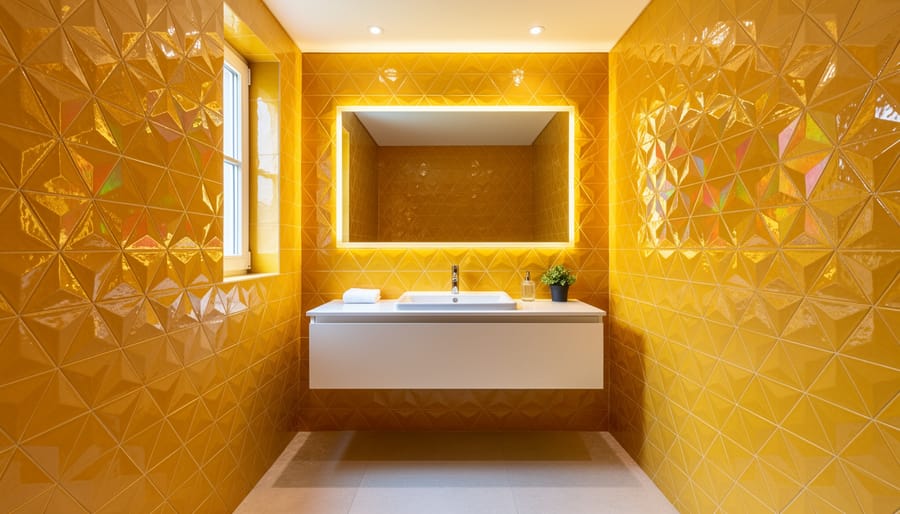
Sunflower yellow glass tiles with geometric Moroccan patterns deliver an intensity that ceramic or cement simply cannot match. The glass backing acts as a mirror, catching and bouncing light through the yellow pigment layer to create a luminous, almost incandescent glow. When these tiles feature traditional star-and-cross motifs or intricate tessellations, the pattern appears to float on a field of captured sunshine. This optical effect changes throughout the day as natural light shifts angles, transforming a static tile installation into something that feels alive and responsive to its environment.
The geometric patterns most commonly found in sunflower yellow glass tiles, eight-pointed stars, interlocking crosses, and zellige-inspired tessellations, descend directly from centuries of Moroccan architectural tradition. These designs originally decorated the walls of palaces and madrasas, where they symbolized mathematical harmony and divine order. In contemporary applications, that same geometry provides visual interest without requiring additional decoration. A powder room clad in these tiles needs nothing more than simple fixtures and perhaps a vintage brass mirror to feel complete.
Fireplace surrounds present an ideal canvas for these tiles because the glass material withstands heat while the yellow color visually amplifies the warmth of flames. Install them in a vertical band flanking the firebox, or create a full surround that extends to the mantel. The geometric patterns provide enough visual weight to anchor a living room without competing with furniture or artwork.
For maximum drama, combine sunflower yellow glass tiles with pale gray or off-white zellige in a checkerboard or alternating stripe pattern. The matte, handcrafted surface of zellige makes the glass tiles appear even more brilliant by contrast, while the neutral tones give the eye a resting place. This pairing works especially well in kitchen backsplashes, where you want personality without sacrificing the ability to change decor over time.
3. Pale Lemon Beveled Subway-Style Moroccan Tiles
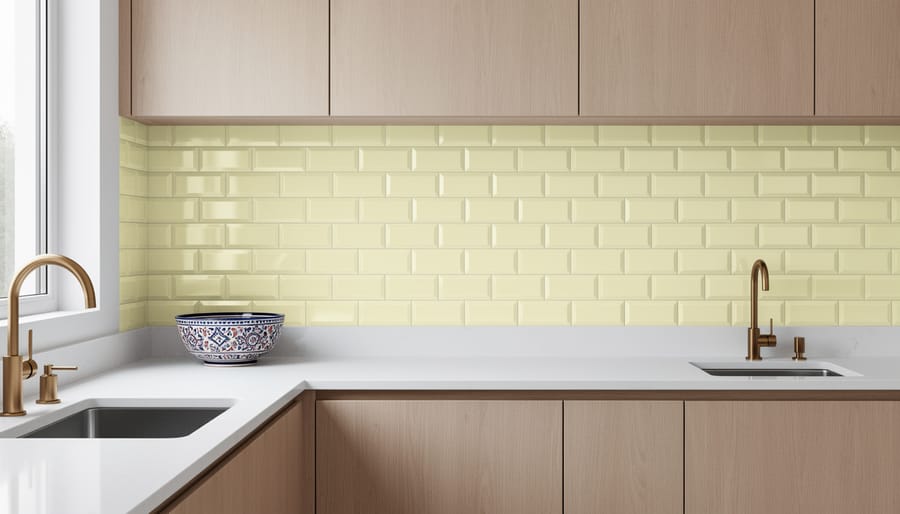
Pale lemon subway tiles with a beveled edge represent where Moroccan artisan tradition meets the clean lines of contemporary design. These tiles take the rectangular format familiar in modern homes and infuse it with the handcrafted quality and subtle color variations characteristic of Moroccan ceramics. The soft, buttery lemon shade sits comfortably between cream and true yellow, making it unexpectedly adaptable in spaces where bold color might feel overwhelming.
The beveled edge is key here. That gentle chamfer along each tile’s perimeter catches and reflects light differently throughout the day, creating dimension that flat subway tiles simply can’t match. When sunlight hits a backsplash of these tiles at an angle, you’ll notice how the bevels create delicate shadow lines that shift as morning turns to afternoon, a subtle nod to the play of light across zellige walls in Moroccan courtyards.
Installation patterns significantly affect the final look. A traditional brick layout (offset by half) reads more classic and calming, while herringbone arrangement adds visual energy and showcases the beveled edges from multiple angles. Vertical stacking creates unexpected height in compact bathrooms. The lemon tone works beautifully with brushed brass or matte black fixtures, and pairs naturally with white grout for crisp definition or buff grout for a softer, more integrated appearance.
These tiles particularly shine in minimalist kitchens where you want warmth without pattern complexity, and in transitional bathrooms bridging traditional and modern aesthetics. They provide the sunny disposition and artisanal quality of Moroccan design while maintaining the restrained profile contemporary interiors demand. A full wall installation makes a confident statement; even a small section above a vanity brings that welcome splash of Mediterranean light.
4. Saffron and Gold Mixed-Pattern Patchwork Tiles
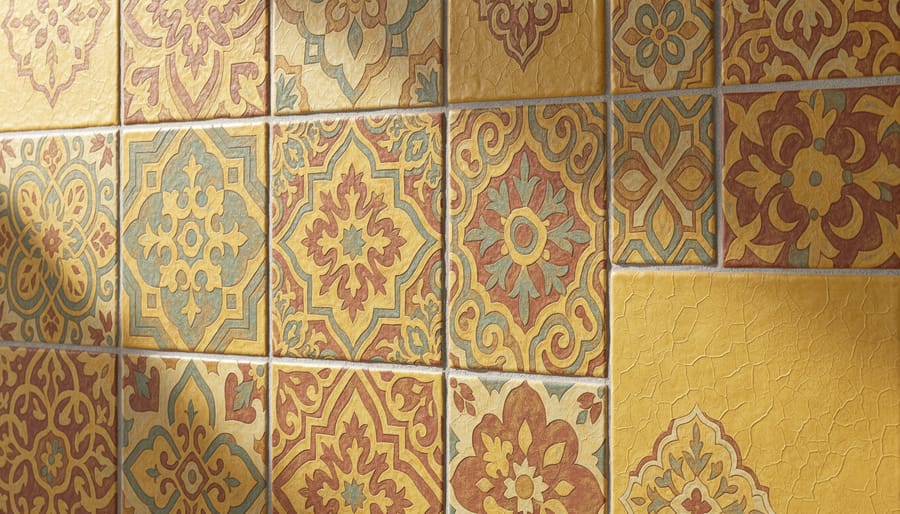
Saffron and gold patchwork tiles represent one of the most exuberant expressions of Moroccan tile artistry, where each piece becomes a miniature canvas showcasing different traditional motifs. These collections layer warm yellow tones, deep saffron, burnished gold, earthy mustard, across a single tile surface or within coordinated sets, creating visual complexity that never repeats exactly. One square might feature a four-petal flower in saffron on cream, while its neighbor displays an eight-pointed star in gold on mustard. The effect mirrors the random beauty of ancient Moroccan courtyards where centuries of repairs and additions created accidental masterpieces.
This maximalist approach creates what designers call the “boho-Moroccan” aesthetic, a bridge between traditional riads and contemporary eclectic interiors. The pattern density works beautifully as a focal point rather than wall-to-wall coverage. Feature walls behind dining benches or bed headboards gain instant personality without overwhelming the space. Stair risers offer an especially clever application; the vertical surfaces showcase the intricate patterns at eye level as you ascend, transforming a utilitarian element into architectural jewelry.
Balancing these busy tiles requires restraint everywhere else. Choose solid-colored grout in charcoal gray or deep navy rather than white, which can look chaotic against multiple patterns. The darker lines unify the composition by creating visual containers around each tile’s design. Keep fixtures and hardware simple, brushed brass or matte black in clean silhouettes. Surrounding walls should remain neutral in warm whites or soft taupes, allowing the patchwork to sing without competition.
The payoff is a space that feels collected over time rather than designed in a single purchase, capturing the layered soul of Moroccan interiors where pattern, color, and craft converge in joyful abundance.
5. Citrine Yellow Fish Scale (Scallop) Tiles
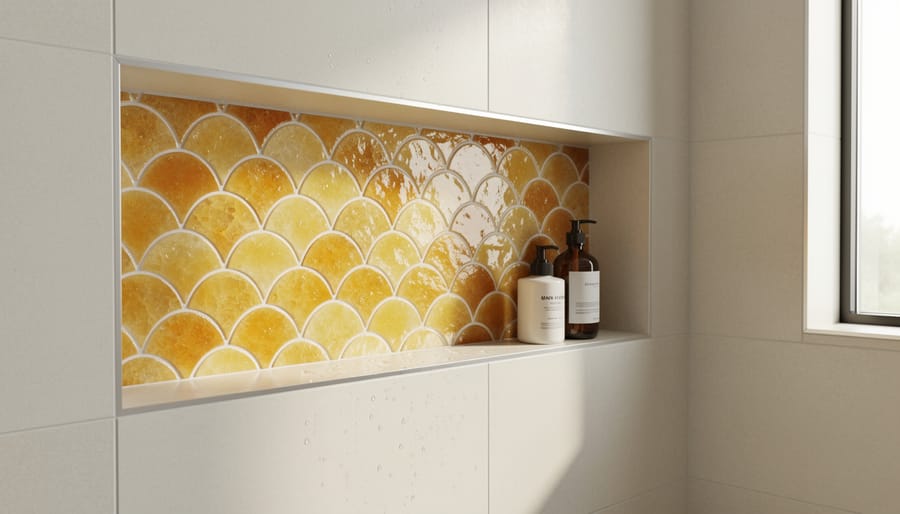
Fish scale tiles, also called scallop or fan tiles, bring an undeniably sculptural quality to walls, and in citrine yellow they capture the luminous, honeyed glow of Moroccan sunlight filtering through courtyard archways. These tiles have surged in popularity because their overlapping pattern creates texture and movement that flat tiles can’t match. Each scallop catches light differently throughout the day, producing subtle shadows that make the surface feel alive.
In Moroccan design tradition, water holds deep symbolic meaning. Riads are built around central fountains, and tilework often mimics the ripple and flow of water through geometric abstraction. Fish scale tiles in citrine yellow honor this heritage, their wave-like arrangement evokes the concentric rings spreading across a fountain’s surface, while the warm yellow suggests the sun’s reflection dancing on that water. This isn’t just decorative; it connects your space to centuries of Moroccan architectural storytelling.
Practically, these tiles excel in vertical applications where you want drama without overwhelming a room. A niche behind a freestanding tub becomes a golden focal point. The wall behind a floating vanity gains dimension and catches bathroom lighting beautifully. In shower stalls, the scales’ curves soften hard rectangular enclosures while their slight texture provides visual grip that makes the space feel secure rather than slippery.
Installation requires patience, the curves mean more cutting around outlets and corners, but the payoff is a feature that photographs like art and feels custom rather than cookie-cutter. Pair citrine fish scales with simple white subway tiles on adjacent walls to let the scallops command attention, or use them as a border running at chair-rail height to bring Moroccan flair into unexpected rooms like hallways or home offices.
6. Amber Yellow Lantern-Pattern Glass Tiles
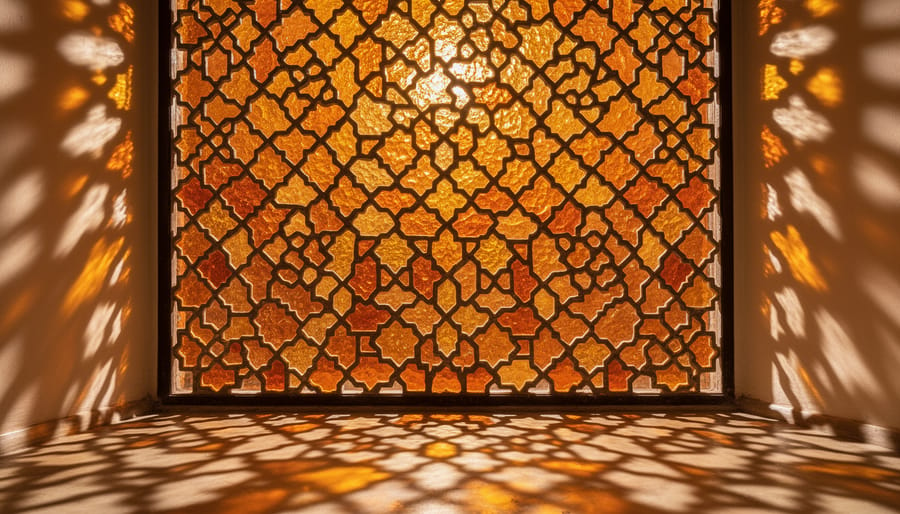
Amber yellow lantern-pattern glass tiles capture the interplay of light and shadow that defines Moroccan architectural magic. These tiles feature pierced geometric designs, think eight-pointed stars, interlocking arabesques, and keyhole arches, with translucent amber glass filling the negative spaces. When light hits them, they project delicate patterns onto adjacent surfaces, recreating the enchanting glow of traditional brass lanterns swaying in a Marrakech courtyard.
The genius lies in their layered construction. Most designs sandwich the pattern between a solid amber base and a clear or frosted glass top layer, creating depth that shifts as you move through the room. During daylight hours, they catch natural light and cast golden pools on countertops or floors. At dusk, they take on a burnished, almost molten quality that transforms ordinary spaces into intimate sanctuaries.
Backlit installations showcase these tiles at their most dramatic. Install them as a bar backsplash with LED strip lighting behind, and watch your home bar become a conversation piece that rivals any high-end lounge. The translucent sections glow like embers while the patterned cutouts create intricate shadow lace on the wall behind. They’re equally stunning in meditation or prayer spaces, where their warm radiance fosters contemplation without harsh brightness.
For powder rooms, consider a single strip above the vanity mirror. The amber tones cast flattering light on skin while the lantern patterns add architectural interest to a typically overlooked space. Wine cellars and reading nooks benefit from their moody sophistication, especially when paired with dark wood or charcoal grout that makes the amber sections appear to float.
One practical note: these tiles work best where you control the lighting. Under-cabinet lights, picture lights, or dedicated LED strips let you adjust intensity to match the mood you’re creating.
7. Mustard and Teal Dual-Tone Moroccan Border Tiles
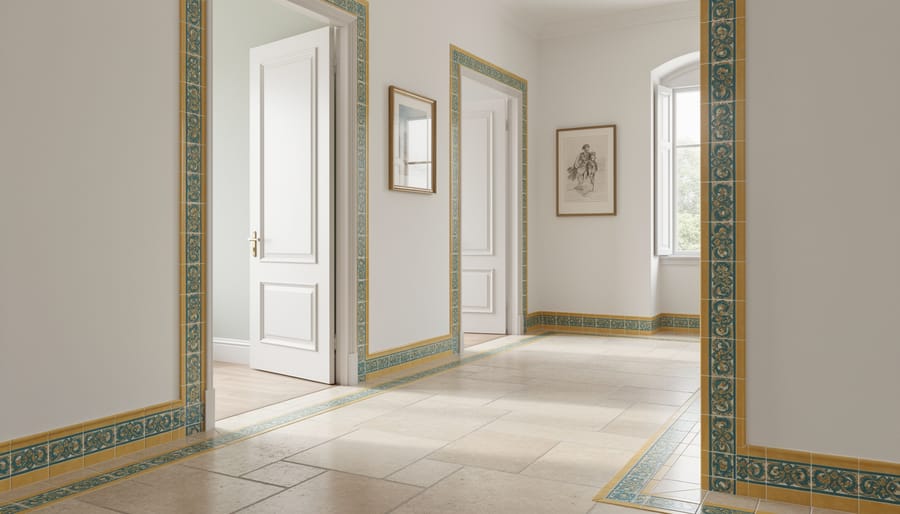
Mustard yellow paired with teal or cobalt blue represents one of Morocco’s most iconic color combinations, rooted in centuries of architectural tradition where warm earth tones meet cool Mediterranean hues. Border and trim tiles featuring this dual-tone palette serve as visual punctuation in Moroccan interiors, defining spaces without physically dividing them. These tiles typically measure 2-4 inches wide and come in elongated rectangular or square formats, with patterns that alternate between the two colors or feature mustard backgrounds with teal geometric overlays.
The strategic placement of these border tiles transforms ordinary rooms into layered, intentional spaces. Use them to frame a neutral tile field in your kitchen, running a decorative band at countertop height while the surrounding wall remains in simple white or cream subway tile. This approach gives you Moroccan character without overwhelming the space, and it’s far more distinctive than standard backsplash alternatives. In open-plan homes, apply these borders along the floor where the kitchen transitions to the dining area, creating a visual threshold that honors Moroccan design’s love of defined yet flowing spaces.
Doorways and windows gain instant architectural interest when outlined with mustard-teal borders. This technique echoes the decorative frames found around entryways in Marrakech riads and works beautifully in Moroccan bedroom style interiors where you want to draw attention to an arched doorway or a window overlooking a courtyard. The contrast between warm mustard and cool teal creates depth and prevents the yellow from feeling one-dimensional, while the linear format of border tiles guides the eye along architectural features rather than competing with them.
8. Butter Yellow Hexagon Moroccan Cement Tiles
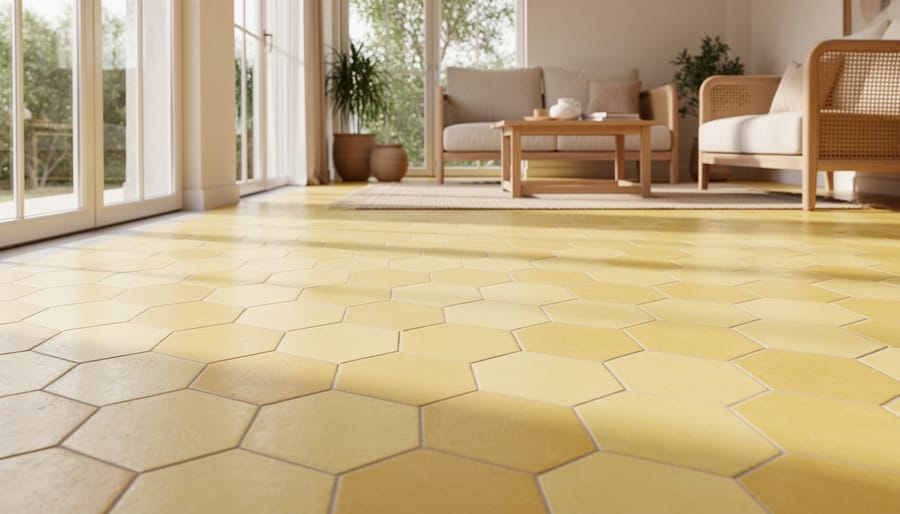
Butter yellow hexagon cement tiles bring a softness and warmth that glossy options can’t replicate. These six-sided tiles feature a matte, almost chalky finish in pale butter tones, often centered with delicate floral rosettes, tiny eight-pointed stars, or interlocking geometric motifs hand-stenciled in white, cream, or soft gray. The hexagonal shape itself nods to the honeycomb patterns found throughout Islamic architecture, while the cement construction offers exceptional durability for high-traffic floor installations.
Unlike ceramic Moroccan tile cement tiles are porous and require proper sealing before and after installation to prevent staining and moisture penetration. Apply a penetrating sealer to all sides before laying them, then seal the surface again once grouting is complete. This extra step rewards you with floors that can withstand decades of foot traffic while developing a subtle patina that enhances their handcrafted character.
The matte surface provides visual balance when you’ve used glossy glass tiles elsewhere in your home. Install butter yellow hexagons in entryways to create an immediate sense of warmth and welcome, or use them in laundry rooms where their practical durability meets cheerful aesthetics. Sunroom floors benefit particularly from their soft glow, which amplifies natural light without glare. Pair them with walls in coordinating paint color codes for a cohesive look, or let them anchor a space with all-white walls and natural wood accents.
Because cement tiles are thicker than ceramic options, ensure your subfloor is level and stable. The investment in proper installation pays off with a floor surface that ages gracefully, with the butter yellow base developing richer depth over time while the delicate central patterns remain crisp focal points.
Bringing Yellow Moroccan Tiles to Life in Your Home
Installing yellow Moroccan tiles transforms your vision into reality, but success lies in the details. Before you begin, consider your substrate carefully. Glass tiles require a bright white thinset to prevent the adhesive from dulling their luminosity, while cement tiles need breathable mortar that accommodates their natural porosity.
Grout color dramatically affects your final look. White grout creates crisp definition between tiles and makes patterns pop, perfect for geometric glass designs where you want each motif to stand distinct. Charcoal grout offers sophisticated contrast that prevents visual busyness in patchwork installations and hides dirt in high-traffic floor areas. Matching yellow or cream grout creates a seamless, almost textile-like surface where the overall color field takes precedence over individual tile boundaries. Test your choice on sample tiles first; what looks right on a palette card can surprise you on the wall.
Yellow tiles demand specific maintenance. Seal cement tiles immediately after installation and reseal annually to prevent staining and grout discoloration. For glass surfaces, avoid abrasive cleaners that scratch, a solution of warm water and pH-neutral dish soap maintains their gleam. Combat grout yellowing by choosing epoxy grout in moisture-prone areas or applying grout sealer every six months.
Here’s a weekend DIY project: Create a Moroccan-inspired serving tray using four to six leftover tiles. Cut a wooden base slightly larger than your tile arrangement, glue tiles in your desired pattern, grout the spaces, then attach decorative brass corner brackets and handles from a craft store. You’ll have a functional art piece that carries the spirit of a Moroccan souk to your table, and a tangible reminder of your larger renovation’s beauty.
Common Questions About Yellow Moroccan Tiles
Do yellow tiles make small rooms look smaller?
Not when used thoughtfully. Pale lemon and butter yellow tones reflect light and can actually open up compact spaces, while deeper saffron shades work best as accents on a single wall rather than surrounding the entire room.
How do I prevent yellow from looking dated?
Choose tiles with authentic Moroccan patterns rather than solid blocks of color, and pair them with contemporary fixtures and neutral surroundings. The hand-crafted variations in zellige or the geometric complexity of Moroccan designs give yellow tiles timeless character that transcends trends.
Can I mix yellow Moroccan tiles with other colors?
Absolutely. Traditional Moroccan design celebrates color combinations, yellow pairs beautifully with cobalt blue, emerald green, terracotta, or crisp white. Start with yellow as your anchor and introduce complementary hues through border tiles or alternating patterns.
What’s the difference between glass and ceramic yellow Moroccan tiles?
Glass tiles offer luminosity and light reflection with vivid color saturation, making them ideal for backsplashes and accent walls. Ceramic and cement options provide a matte, earthy finish better suited for floors and high-traffic areas, with more color depth than surface shine.
Are yellow tiles harder to keep clean?
Yellow tiles themselves don’t show dirt more than other colors, but light-colored grout lines can. Choose a grout shade slightly darker than your tiles or use an epoxy grout that resists staining, and seal porous cement tiles properly to maintain their golden glow.
Beyond these practical considerations, remember that yellow holds special meaning in Moroccan culture. It represents sunshine, hospitality, and joyful celebration, qualities that naturally combat any worry about the color feeling overwhelming. When you choose yellow Moroccan tiles with traditional patterns and craftsmanship, you’re not just following a color trend. You’re bringing centuries of design wisdom into your home, where yellow has always been used to create warmth and welcome guests with radiant energy.
Yellow Moroccan tiles carry a unique power to transform ordinary spaces into warm, light-filled environments that honor centuries of North African design tradition. Whether you choose the luminous depth of glass tiles, the handcrafted irregularities of zellige, or the grounded presence of cement hexagons, you’re bringing more than color into your home. You’re introducing the solar energy of Moroccan courtyards, the joy of festival days, and the cultural symbolism of celebration and abundance that yellow has represented in Moroccan tradition for generations.
If you feel overwhelmed by the variety, start small. A single row of honey-toned zellige behind your kitchen sink, a powder room accent wall of citrine fish scales, or even a handmade trivet from leftover tiles can help you experience how yellow Moroccan designs interact with your existing decor and lighting. These modest projects build confidence and often inspire larger transformations once you see how naturally the warmth integrates into your daily life.
The beauty of Moroccan tile work lies in its invitation to personal expression within cultural patterns. Mix your chosen yellow tiles with complementary Moroccan glass tile designs in cobalt or emerald, pair them with neutral ceramics, or let them stand alone as pure statements of light. However you approach your project, you’re participating in a living design tradition that continues to evolve while staying rooted in the craftsmanship and color philosophy of Moroccan artisans. Let your space tell its own story, illuminated by the golden glow of tiles that have brightened homes across continents and centuries.