Geographical Features of Morocco That Shape Authentic Bedroom Design
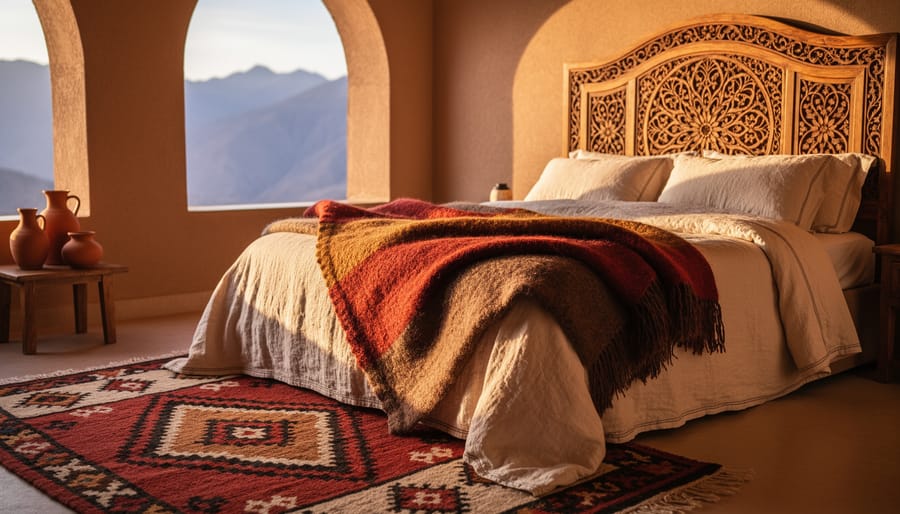
Morocco’s dramatic landscape spans snow-capped Atlas Mountains, golden Sahara dunes, windswept Atlantic coastlines, and verdant river valleys, each region offering distinct color palettes, textures, and materials that translate beautifully into Moroccan bedroom style. Understanding these geographical features gives you authentic design direction: the terracotta reds and warm ochres of the desert, the cool blues and whites borrowed from coastal medinas, the rich earth tones pulled from mountain Berber villages, and the lush greens echoed in oasis-inspired spaces.
Each of Morocco’s five major geographical zones has shaped local architecture, craftsmanship, and color traditions for centuries. The High Atlas Mountains bred sturdy wool textiles and carved cedar furniture. The Sahara inspired geometric patterns found in nomadic rugs and low-slung seating. Coastal cities like Essaouira developed the signature blue-and-white aesthetic now synonymous with Mediterranean Moroccan design. Ancient imperial cities refined intricate tilework and ornate metalwork. The Draa and Dades valleys cultivated palm fiber weaving and natural dye techniques.
When you connect your bedroom design to these authentic geographical roots, you move beyond surface-level decoration into meaningful cultural storytelling. This guide walks through each major landscape feature and shows you exactly how to translate its colors, materials, and traditional crafts into your personal space, whether you’re working with a full renovation or simple weekend DIY projects.
The Atlas Mountains: Earthy Textures and Layered Warmth
Berber Textile Traditions in Bedroom Decor
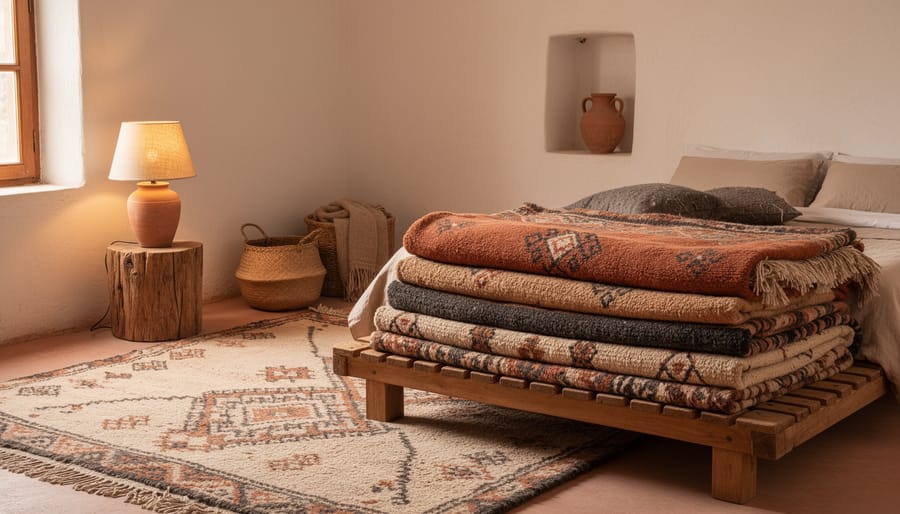
Berber women across Morocco’s Atlas Mountains have woven wool, cotton, and recycled fabrics into functional art for centuries, and these textiles bring instant warmth and character to bedroom spaces. Traditional boucherouite rugs, crafted from scraps of old clothing and leftover yarn, feature bold abstract patterns in vibrant pinks, oranges, and purples that pop against neutral walls. Their thick, shaggy pile adds softness underfoot and visual texture that grounds a room. Striped handira blankets, originally wedding gifts symbolizing protection, layer beautifully across bed ends or draped over chairs, their sequined details catching light and adding subtle sparkle. The geometric patterns you see in these textiles aren’t purely decorative; they carry symbolic meanings related to protection, fertility, and mountain Life in the High Atlas connecting your bedroom to generations of mountain culture.
To layer these textiles authentically, start with a foundation rug in earthy tones, then add a smaller boucherouite as an accent piece beside the bed or in a seating area. Stack cushions of varying sizes in complementary colors, mixing solid wool with patterned kilim covers. Drape a handira across your bed at an angle rather than perfectly centered for that lived-in look. For a simple DIY project, combine three smaller vintage Berber textiles into a quilted throw by backing them with soft flannel and tying the layers together with wool yarn at regular intervals. This preserves their individual character while creating a cozy, personalized bedroom accent that honors mountain weaving traditions.
The Sahara Desert: Warm Palettes and Natural Materials
Desert-Inspired Color Schemes for Tranquil Sleep
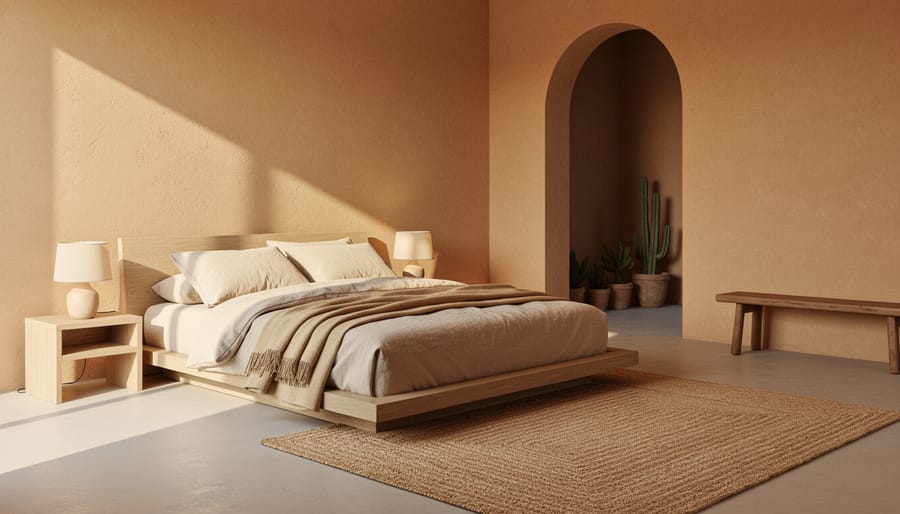
The Sahara’s shifting light offers bedroom palettes that promote restful sleep while maintaining Morocco’s signature warmth. At dawn, the desert sky transitions from deep mauve and soft lavender to pale peach and warm apricot, a combination that creates serene bedroom environments when you anchor walls in sand beige or warm cream, then layer in dusty rose bedding and terracotta accent pillows.
Golden dune colors form the foundation of desert-inspired schemes. Use sandy beige (hex #D2B48C) as your primary wall color, then introduce burnt sienna (#E97451) through throw blankets and ochre yellow (#CC7722) in ceramic lamps or woven baskets. This tonal progression mirrors the desert’s natural depth without overwhelming the senses before sleep.
Balance these warm tones with cooling elements drawn from desert oases. Deep teal pillows reference hidden water sources and create visual relief against terracotta throws. Sage green accents, whether through potted succulents or linen curtains, echo hardy desert vegetation while lowering the room’s perceived temperature. Charcoal gray in metal light fixtures or picture frames grounds the palette and prevents it from skewing too amber.
For maximum tranquility, limit your scheme to four colors: one neutral base, two warm accent tones, and one cooling contrast. Paint three walls in warm sand, reserve one accent wall for deeper clay red, then distribute cooling sage and slate blue through textiles you can adjust seasonally. This restraint mirrors the desert’s vast simplicity while giving your bedroom the layered richness Moroccan design requires.
Coastal Regions: Mediterranean Blues and Breezy Elegance
Morocco’s Atlantic and Mediterranean coastlines have shaped a distinct bedroom aesthetic that captures the essence of sea-facing medinas and whitewashed harbor towns. The influence of coastal cities like Essaouira, with its fortified Portuguese architecture and endless ocean views, and Tangier, where Europe meets Africa across the Strait of Gibraltar, translates into bedrooms defined by brilliant light, cooling breezes, and a palette borrowed from sky and surf.
The signature whitewashed walls of coastal Moroccan homes serve a practical purpose that designers now embrace for bedrooms: they reflect intense sunlight while keeping interiors cool. Paint walls in crisp white or soft cream, then layer in azure blues through textiles, from deep cobalt reminiscent of fishing boats to pale aquamarine that echoes shallow coastal waters. This color combination creates visual calm while maintaining the bright, airy quality essential to seaside living.
Coastal bedroom architecture centers on managing light and airflow. Arched doorways and windows, inherited from Moorish design, frame views while their curved forms soften harsh angles. Consider installing or highlighting existing arches in your bedroom to channel this graceful coastal sensibility.
- Mashrabiya
- Ornate lattice screens of turned wood that filter light into geometric patterns across bedroom walls and floors. These screens provide privacy while maintaining airflow, essential in humid coastal climates.
- Tadelakt
- Waterproof lime plaster polished to a soft sheen, traditionally used in Moroccan hammams but increasingly popular for coastal bedroom accent walls. Its slightly irregular surface catches light beautifully and resists moisture.
- Zellij
- Hand-cut mosaic tilework in geometric patterns, often featuring blues and whites in coastal applications. Use sparingly as a headboard backing or floor accent to add artisan detail without overwhelming the space.
The coastal aesthetic favors natural fibers that withstand salt air: cotton gauze curtains that billow in sea breezes, linen bedding in sun-bleached tones, and sisal or jute rugs underfoot. Keep furniture simple, whitewashed wood or wrought iron pieces echo the utilitarian elegance of port architecture. Add vintage blue pottery from Safi or woven fishing baskets as wall art to complete the connection between Morocco’s geography and your restful coastal bedroom retreat.
Imperial Cities: Ornate Details and Artisan Craftsmanship
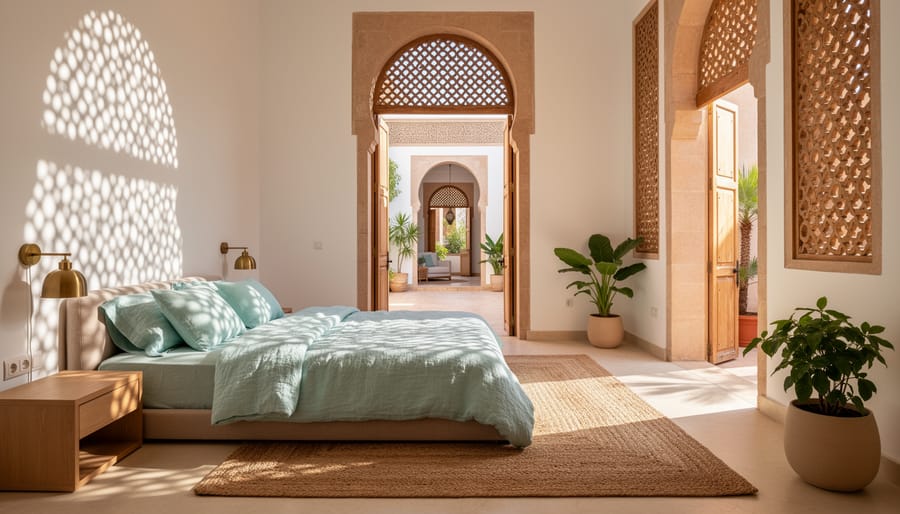
Morocco’s four imperial cities, Marrakech, Fez, Rabat, and Meknes, served as royal capitals across centuries, leaving behind architectural masterworks that define urban Moroccan bedroom design. Walk through the medinas of these cities and you’ll see geometric zellij mosaics climbing walls, carved plaster framing doorways, and painted cedar ceilings casting intricate shadows. These same elements transform bedrooms into sanctuaries of craftsmanship, where every surface tells a story of artisan tradition.
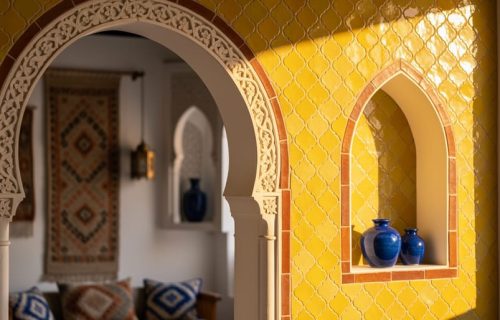
Zellij tilework offers the most direct connection between imperial architecture and bedroom design. These hand-chipped ceramic Moroccan tile pieces, arranged in star-and-cross patterns or complex geometric tessellations, traditionally accent the lower third of bedroom walls or frame doorways and alcoves. In Fez, where the craft reaches its zenith, artisans still cut each tile by hand from larger glazed squares, assembling them face-down like puzzles before setting them in plaster. For bedrooms, a zellij headboard wall or a tiled niche beside the bed creates a focal point without overwhelming the space.
Carved gypsum plaster, another hallmark of imperial design, brings three-dimensional texture to bedroom walls and ceilings. Artisans in Marrakech and Meknes carve floral arabesques, calligraphic verses, and interlocking patterns into wet plaster, which hardens into permanent relief. A plaster panel above the bed or surrounding a window mimics the ornamental frames found in riad reception rooms. The white or cream surface catches light beautifully, adding depth without color competition.
Painted cedar ceilings represent the pinnacle of imperial bedroom luxury. In royal palaces, these ceilings feature geometric patterns in deep blues, greens, and golds against natural cedar. Modern interpretations might include a single painted beam as a headboard backdrop or a small section of patterned woodwork above a reading nook. The cedar itself contributes a subtle, lasting fragrance.
Urban riads shape bedroom design through their courtyard-centered layouts. Bedrooms face inward toward private courtyards, receiving filtered natural light through carved screens and creating symmetrical arrangements around central fountains or gardens. This inward focus translates to bedrooms with minimal street-facing windows but abundant indirect light, latticed screens for privacy, and balanced furniture placement that mirrors the riad’s architectural symmetry.
Oasis Valleys: Lush Greenery and Natural Cooling Elements
Morocco’s oasis valleys, ribbons of emerald vitality threading through arid plains, bring an entirely different sensibility to bedroom design. The Draa, Dades, and Todra valleys support life through ingenious water management, creating microclimates where date palms tower overhead and gardens flourish below. This intersection of desert heat and irrigated abundance translates into bedrooms that balance cooling strategies with touches of cultivated green.
Date palm wood appears throughout oasis valley homes as bed frames, window shutters, and decorative ceiling beams. The timber’s natural grain and honey tones add warmth without visual weight. Woven palm fiber textiles, originally used for baskets and mats, now appear as wall hangings, lampshades, and even headboard panels, their organic texture softening hard surfaces. These materials carry inherent cooling properties, remaining pleasant to touch even in summer heat.
Indoor plants become more than decoration in oasis-inspired bedrooms. Potted ferns, trailing ivy, and small palms echo the valley gardens while improving air quality. Palm frond motifs appear in zellij-inspired patterns on accent tiles or carved into wooden furniture, creating visual connections to the landscape outside.
Water references matter here. Small fountains, if feasible, add humidity and soothing sound. More practical for most bedrooms: ceramic bowls placed near windows to catch breezes, blue glass bottles arranged on windowsills to filter light, or wall art depicting irrigation channels and reflecting pools. Natural ventilation strategies borrowed from oasis architecture, high transom windows, cross-breeze configurations, and thick walls that moderate temperature swings, help bedrooms stay comfortable without constant air conditioning.
The oasis aesthetic celebrates resourcefulness: maximum comfort drawn from minimal water and strategic placement of cooling elements where they matter most.
Bringing Morocco’s Geography Into Your Bedroom
Start by identifying which Moroccan landscape resonates most with your existing bedroom conditions and personal aesthetic. If you live in a dry climate with cool winters, mountain-inspired layers and textiles create natural harmony. Humid coastal regions pair beautifully with breezy Mediterranean whites and blues that manage moisture while maintaining airflow. Desert palettes work universally but shine in spaces with abundant natural light.
Combine geographical influences thoughtfully rather than cramming every region into one room. A coastal base of whitewashed walls and arched doorways gains depth with desert-toned textiles draped across the bed. Mountain wool blankets folded at the foot add textural contrast to sleek oasis palm furniture. The key is letting one region dominate while others provide accent layers, this approach honors what makes it authentic rather than creating a disconnected mashup.
Source materials with intention and transparency. Seek fair-trade cooperatives for Berber rugs, verify artisan origins for carved furniture, and distinguish between authentic pieces and inspired reproductions. Both have their place, a genuine vintage boucherouite rug becomes a focal point, while quality reproductions of zellij patterns or tile alternatives make ornate details accessible on modest budgets.
Can I mix mountain textiles with coastal colors?
Yes, layering warm Berber blankets over crisp Mediterranean linens creates satisfying contrast while representing Morocco’s diverse geography authentically.
How do I adapt desert design to humid climates?
Choose terracotta and sand tones in lighter fabrics like cotton gauze instead of heavy wool, and incorporate plenty of airflow through lattice screens or open weaving.
What’s a budget-friendly way to start?
Begin with paint, a single accent wall in desert ochre or coastal blue immediately shifts the mood. Add secondhand poufs recovered in Moroccan-inspired fabric as your next step.
For a DIY regional focal point, create a mountain-inspired headboard using reclaimed wood planks stained in varied earth tones, arranged vertically to echo Atlas valley terracing. Alternatively, stencil a desert sunrise gradient across one wall using warm sunset hues that transition from deep terracotta at the base to pale peach at the ceiling. These projects anchor your room in specific geography while remaining achievable weekend transformations.
Morocco’s diverse geography doesn’t just inspire bedroom design, it defines it. The rugged Atlas Mountains bring earthy textures and layered warmth through wool blankets and handwoven Berber rugs. The Sahara Desert contributes terracotta tones and low, grounded furniture that echoes nomadic traditions. Coastal regions introduce breezy blues and whitewashed walls that capture Mediterranean light. Imperial cities offer intricate tilework and carved plaster that reflect centuries of artisan skill. Fertile oasis valleys add lush greenery and natural cooling elements that balance Morocco’s intense heat.
These geographical features work together, creating bedrooms that feel collected rather than decorated. A single space might combine mountain textiles with desert color palettes, coastal archways with city craftsmanship. That’s the beauty of Moroccan design, it’s inherently layered because the land itself is so varied.
As you design your own space, let Morocco’s geography be your guide. Choose the landscape that resonates most with your climate, aesthetic, or the feeling you want to create. Source materials thoughtfully, understanding their regional origins and cultural significance. Whether you embrace one geographical influence or blend several, you’re not just decorating a bedroom. You’re creating a space that honors the relationship between land and craft, between place and culture, and tells a story that spans mountains, deserts, coasts, cities, and valleys.