What Is Moroccan Interior Design? (And How to Bring It to Life in Your Home)
Moroccan interior design is a richly layered aesthetic that blends the architectural traditions of North Africa with Moorish, Arab, Berber, and Mediterranean influences, creating spaces that feel both exotic and inviting through vibrant colors, intricate geometric patterns, handcrafted textiles, and ornate metalwork. This centuries-old design philosophy transforms ordinary rooms into sensory experiences where every surface tells a story of cultural heritage and masterful craftsmanship.
What draws homeowners to Moroccan design in 2026 isn’t just its visual drama. It’s the warmth these spaces radiate, the way handcrafted zellige tiles catch afternoon light, how carved wooden screens filter shadows across plush floor cushions, and the tactile pleasure of running your hand along a woven kilim rug. Moroccan interiors engage all the senses, turning your home into a personal riad that feels worlds away from cookie-cutter decor.
You don’t need to overhaul your entire home or travel to Marrakech to capture this aesthetic. The beauty of Moroccan design lies in its accessibility. A single lantern casting geometric shadows can shift a room’s entire mood. A collection of jewel-toned cushions transforms a plain sofa into an inviting gathering spot. Even small touches honor the tradition of artisan craftsmanship that defines this style.
This guide breaks down the essential elements that make Moroccan interiors unmistakable, from the signature color palettes and architectural details to the textiles and metalwork that layer depth into every corner. You’ll discover how to apply these principles room by room, along with DIY projects that let you create authentic pieces yourself while respecting the cultural origins that make this design tradition so enduring.
What Moroccan Interior Design Means
Moroccan interior design is a centuries-old decorative tradition rooted in North African culture, characterized by rich colors, intricate patterns, handcrafted details, and layered textures that transform living spaces into warm, sensory-rich sanctuaries. This aesthetic emerged from the convergence of diverse cultural influences across Morocco’s history: indigenous Berber craftsmanship, Arab architectural traditions, Moorish geometric artistry, and French colonial refinement. The result is a design language that feels both exotic and inviting, ornate yet livable.
What sets Moroccan design apart is its philosophy of abundance through layering. Unlike minimalist approaches that strip away, Moroccan interiors embrace multiplication: stacked textiles, overlapping patterns, clustered lanterns, and walls adorned with carved plaster or colorful zellige tilework. The Morocco geography itself informs the palette, with desert ochres, Atlas Mountain blues, and Mediterranean whites all finding expression in traditional homes.
Three core values shape authentic Moroccan interiors: hospitality (spaces designed to welcome and comfort guests), craftsmanship (handmade details that tell stories of artisan skill), and sensory richness (engaging sight, touch, and even scent through materials and light). Every element serves a purpose beyond decoration, from cooling tadelakt plaster walls to privacy-granting mashrabiya screens.
- Zellige
- Hand-cut mosaic tilework featuring geometric patterns, traditionally used on floors, walls, and fountains. Each tile is individually chiseled and arranged to create intricate designs.
- Tadelakt
- Waterproof plaster finish made from lime, polished with stone and treated with soap, creating smooth, luminous surfaces. Originally developed for hammam baths.
- Riad
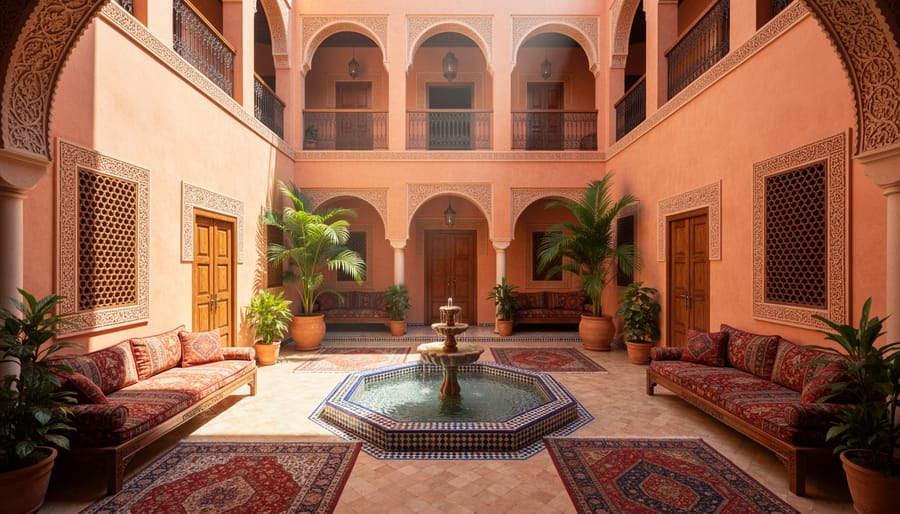
- Traditional Moroccan house built around an interior courtyard or garden, often featuring a central fountain. The design turns inward for privacy and climate control.
- Mashrabiya
- Intricately carved wooden lattice screens that filter light, provide ventilation, and allow residents to see out while maintaining privacy. Often feature geometric or floral motifs.
This combination of cultural depth and visual drama makes Moroccan design endlessly adaptable, allowing homeowners to incorporate its elements at any scale while honoring its rich heritage.
How Moroccan Design Creates Its Signature Atmosphere
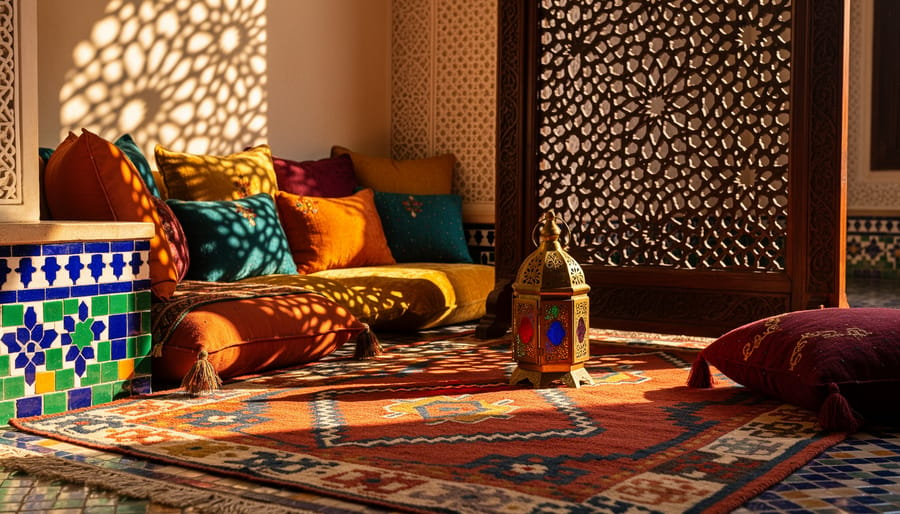
Moroccan design doesn’t rely on a single statement piece or a neutral backdrop with accents. Instead, it builds atmosphere through deliberate layering, colors upon patterns upon textures, until the space feels alive with warmth and visual interest. Walk into a Moroccan-inspired room and you’ll notice the difference immediately: it wraps around you. That enveloping quality comes from how every surface contributes. Carved plaster catches the light, woven rugs soften footsteps, embroidered cushions invite you to sit, and lanterns cast intricate shadows across painted walls. Nothing stands alone; everything works together.
Start with color, which sets the emotional foundation. Moroccan interiors favor saturated, warm tones, saffron yellows, burnt oranges, deep blues, and spiced reds, that create an instant sense of coziness. These aren’t timid pastels. They’re bold choices that energize a room, especially when layered together. A terracotta wall might be paired with cobalt blue tilework and copper accents, each hue intensifying the others rather than competing.
Pattern comes next, and it’s rarely subtle. Geometric zellige tiles cover floors, backsplashes, and even fountain edges. Textiles introduce different scales of pattern, large diamonds on a Beni Ourain rug, smaller stars on embroidered pillows, delicate florals on curtains. The trick is mixing these patterns without creating chaos: vary the scale, keep a cohesive color palette, and let some areas breathe.
Texture adds the tactile dimension that makes Moroccan spaces feel indulgent. Smooth zellige tiles contrast with rough plaster walls. Soft wool rugs meet carved wooden furniture. Metal lanterns hang beside flowing silk drapes. This constant interplay between surfaces keeps the eye moving and makes rooms feel more dynamic than flat.
Lighting brings it all together. Moroccan design treats light as a design element, not just a utility. Pierced metal lanterns create dappled patterns across walls and ceilings. Low-hanging pendants draw the eye downward, making spaces feel intimate. Candles flicker inside glass hurricanes. The result is a room that shifts throughout the day, revealing new details as shadows lengthen and highlights change. It’s this layered, evolving quality, built through intentional accumulation rather than careful subtraction, that gives Moroccan interiors their unmistakable soul.
Essential Elements of Moroccan Interior Design
Rich Color Palettes and What They Represent
Moroccan interiors speak through color with a boldness and intentionality rooted in centuries of tradition. The palette draws directly from the Moroccan landscape and culture, saffron yellows echo spice markets, deep indigos mirror artisan-dyed textiles, terracotta reflects the sun-baked earth of the Atlas Mountains, and emerald greens evoke the lush oasis gardens hidden within desert cities.
Jewel tones form the heart of Moroccan color philosophy. Rich ruby reds, sapphire blues, and amethyst purples create visual warmth and luxury, traditionally signifying hospitality and celebration. These saturated hues aren’t timid accents, they cover entire walls, upholster seating, and dominate textile choices. In living spaces, jewel tones work beautifully on feature walls or as the foundation for layered cushion arrangements.
Earthy terracotta and clay tones ground the palette, connecting interiors to Morocco’s natural building materials. These warm neutrals appear in tile floors, plasterwork, and pottery, providing balance against more vibrant colors. Bedrooms benefit from terracotta walls paired with white linens and pops of cobalt.
Deep blues and teals carry spiritual significance in Moroccan culture, believed to ward off negative energy. These colors shine in bathrooms through zellige tilework or painted cabinetry, creating serene, spa-like atmospheres.
The key is confidence. Moroccan color schemes reject the notion of “too much,” instead embracing the sensory richness that comes from fearless combinations and saturated tones working in harmony.
Intricate Patterns and Tilework
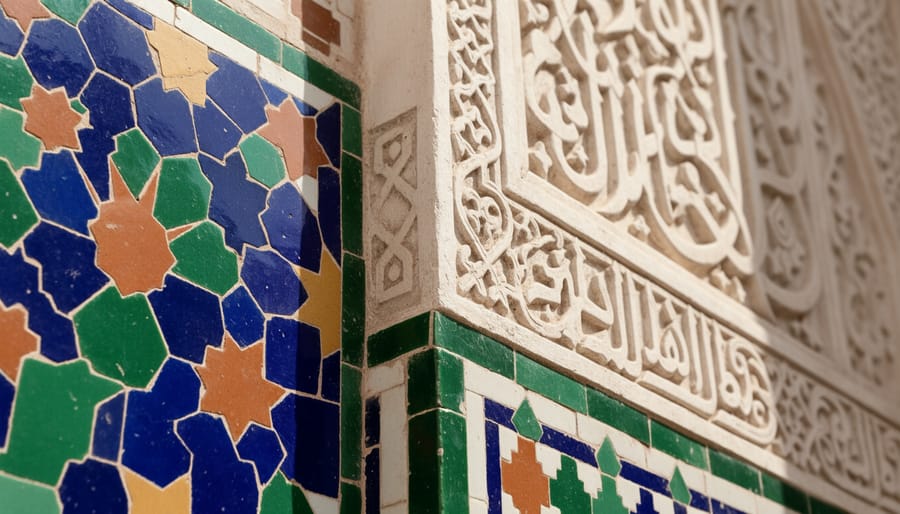
Moroccan patterns tell stories in geometry. Stars radiate from central points, interlocking tessellations stretch infinitely across surfaces, and arabesques curl with mathematical precision, all rooted in Islamic artistic tradition where figurative imagery gives way to abstract beauty. The most iconic expression appears in zellige, hand-cut mosaic tilework where artisans chip glazed tiles into precise shapes and assemble them into kaleidoscopic compositions. You’ll find these patterns adorning fountain surrounds, stair risers, kitchen backsplashes, and bathroom floors.
Start small if full zellige installation feels daunting. A ceramic Moroccan tile border around a mirror or along a fireplace hearth introduces pattern without overwhelming your space. For renters or commitment-phobes, vinyl floor decals mimicking traditional motifs offer reversible impact in entryways or powder rooms.
Carved wooden screens, called mashrabiya, filter light while maintaining privacy, originally designed to cool interiors through evaporative airflow. Modern interpretations range from room dividers to decorative wall panels. You can achieve similar effects with laser-cut MDF panels or even stenciled accent walls using Moorish star patterns in metallic paint.
The key is intentional placement. Concentrate intricate patterns in one focal area, a tiled niche, a statement floor, an accent wall, then let simpler surfaces rest the eye. Moroccan design embraces abundance, but even exuberance needs rhythm and breathing room to captivate rather than confuse.
Textiles and Layered Textures
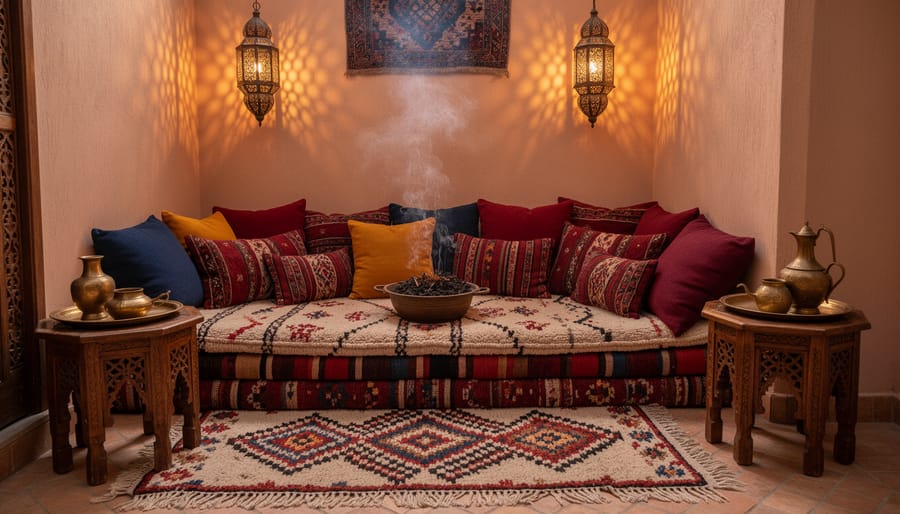
Textiles transform Moroccan interiors from beautiful to genuinely inviting. Unlike styles that rely on a single statement rug or matching throw pillows, Moroccan design embraces abundance, layers upon layers of woven rugs, embroidered cushions, leather poufs, and flowing fabrics that create tactile depth and visual warmth.
Start with the foundation: Berber rugs. These handwoven wool pieces, traditionally made by indigenous North African tribes, anchor a room with their geometric patterns and natural textures. Many feature cream or neutral backgrounds with dark tribal motifs, though some boast vibrant diamonds and stripes. The beauty lies in their irregularities, slight asymmetries and variations prove their handmade origins.
Layer additional textiles freely. Pile embroidered silk cushions in jewel tones alongside cotton-woven pillows with tassel trim. Drape a kilim throw over a sofa arm. Place leather poufs, traditionally stuffed with fabric scraps, near seating areas as footrests or extra perches. Hang flowing curtains in sheer fabrics that filter harsh sunlight into soft, golden light.
The secret to mixing patterns successfully is varying the scale. Pair large geometric rug designs with smaller repeating patterns on cushions, then add solid or subtly textured pieces to give the eye rest. Stick to a cohesive color story, perhaps terracotta, navy, and cream, so patterns complement rather than clash.
This layering creates the hallmark Moroccan sense of abundance and comfort, where every surface invites you to sit, recline, and linger.
Metalwork and Lighting Features
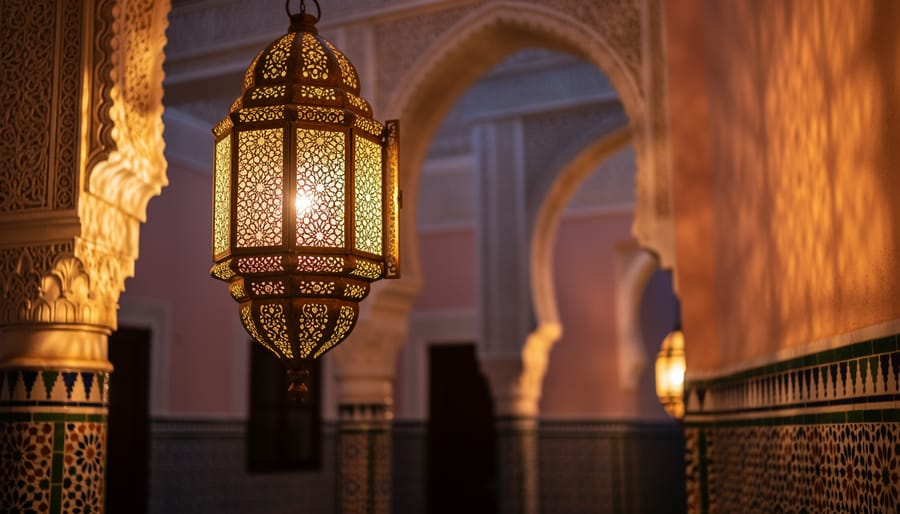
Moroccan metalwork transforms light into living art. Walk through any medina at dusk and you’ll see pierced brass lanterns casting geometric shadows across whitewashed walls, that interplay between metal and illumination defines the Moroccan approach to lighting.
Traditional Moroccan lanterns, called fanous in Arabic, feature hand-punched or cut metal (typically brass, copper, or blackened iron) surrounding colored or clear glass panels. When lit, they project intricate patterns onto surrounding surfaces, turning functional light into decorative spectacle. Hanging a cluster of these lanterns at varying heights over a dining table or in a corner creates instant atmosphere, especially effective in spaces with plain walls that become canvases for the cast shadows.
Pendant lights with pierced metal shades work beautifully in modern homes, offering the same shadow-play effect while providing task lighting over kitchen islands or reading nooks. The warm metals, brass and copper, develop natural patina over time, adding character rather than requiring polishing.
Beyond lighting fixtures, decorative metalwork appears in mirrors framed with hammered brass, ornate metal trays displayed as wall art, and wrought-iron window grilles or room dividers. These pieces often feature Islamic geometric patterns or organic scrollwork rooted in centuries of North African craftsmanship.
The key principle: Moroccan design treats light as a design element itself, not just illumination. Layer ambient light from lanterns with functional lighting, and choose metal finishes that reflect your color palette, warm brass and copper complement jewel tones, while darker metals ground lighter, airier spaces.
Architectural Details and Carved Elements
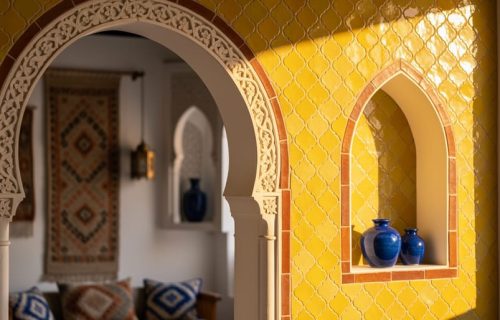
Moroccan architecture speaks through curves and craftsmanship. Arched doorways, keyhole shapes, horseshoe curves, pointed ogee arches, soften the boundaries between rooms and echo the flowing geometry found in Islamic design. These arches aren’t merely decorative; they create a sense of procession and discovery as you move through a home, transforming ordinary transitions into moments of visual pleasure.
Carved wood screens, known as mashrabiya, filter light into intricate shadow patterns while maintaining privacy and airflow. Traditionally made from turned wood spindles arranged in geometric configurations, these screens appear in windows, room dividers, and cabinet fronts. The delicate lattice casts ever-changing patterns as sunlight shifts throughout the day, adding movement and depth to static walls.
Ornate plasterwork, or tadelakt and gypsum carving, brings texture and three-dimensional detail to ceilings and upper walls. Craftsmen hand-carve repeating geometric patterns, floral arabesques, and calligraphic bands directly into plaster, creating surfaces that catch light and shadow. The relief work often frames doorways, circles ceiling medallions, or runs as decorative borders where walls meet ceilings.
If your home lacks original Moroccan architectural bones, you can still introduce these elements through thoughtful additions:
- Arched mirrors in entryways or above mantels to echo doorway shapes
- Carved wood panels as headboards, wall art, or cabinet door inserts
- Decorative niches with arched tops for displaying pottery or candles
- Fretwork room dividers or folding screens that partition space while maintaining openness
- Plaster ceiling medallions with geometric patterns around light fixtures
- Carved wooden corbels or brackets supporting shelves
Even a single arched element, a mirror, a repurposed window frame, or a niche cut into drywall, can suggest Moroccan architecture without full renovation. Pair these features with the colors, textiles, and lighting discussed earlier, and the architectural fragments work together to build a cohesive atmosphere that honors the craftsmanship tradition at the heart of Moroccan design.
Where to Use Moroccan Design in Your Home
Moroccan design adapts beautifully to any room, each space offering unique opportunities for layering the style’s signature elements.
In living rooms, anchor the space with a hand-knotted Berber rug, then build around it with low seating arrangements. Arrange floor cushions and poufs around a carved wooden coffee table, hang a brass lantern cluster above the seating area, and add warmth with embroidered throw pillows in jewel tones. A carved wood screen or mashrabiya panel can define zones without blocking light.
Bedrooms become sanctuaries when you embrace Moroccan bedroom style through layered textiles. Start with rich bedding in deep blues or terracotta, pile on patterned cushions, and drape sheer fabric from the ceiling to create a canopy effect. Flanking wall sconces with pierced metalwork cast mesmerizing shadow patterns, while a woven pouf at the foot of the bed adds both function and visual warmth.
Bathrooms offer perfect opportunities for zellige tilework. Cover a feature wall behind the vanity or create a patterned floor with geometric tiles. If renovation is not an option, consider tile alternatives like waterproof Moroccan-pattern stencils on existing walls. Add hammered copper or brass fixtures, rolled towels in open niches, and a hanging lantern for spa-like ambiance.
Dining spaces come alive with a statement pendant light above the table, surrounded by upholstered chairs with carved wooden frames. Layer a patterned runner over a solid tablecloth, and display hand-painted ceramics on open shelving.
Outdoor patios transform into Moroccan courtyards with terracotta planters, mosaic-topped side tables, weather-resistant floor cushions, and string lights mimicking lantern glow. The key is choosing elements that suit each room’s function while maintaining the layered, sensory-rich approach that defines the style.
DIY Projects to Start Your Moroccan Journey
Starting small with hands-on projects lets you discover what resonates before committing to larger changes. These three DIY ideas require minimal tools and modest budgets, yet each captures an essential facet of Moroccan design.
Create a Moroccan Lantern Display
Gather three to five lanterns in varying heights and metalwork styles, brass, pierced tin, or painted iron. You’ll find affordable options at import shops, online marketplaces, or even thrift stores where vintage lanterns often hide. Cluster them on a low table, shelf, or floor corner at staggered heights. Use battery-operated LED candles for safe, flickering light, or real candles if you’ll supervise them. The pierced patterns will cast intricate shadows across walls and ceilings, transforming ordinary corners into atmospheric focal points. In Moroccan homes, lanterns aren’t merely functional; they’re gathering markers, signaling hospitality and warmth. Your display honors that tradition while introducing layered light, a cornerstone of the aesthetic.
Make a Zellige-Inspired Accent Wall with Stencils
Choose one wall, ideally in a powder room, entryway, or behind a bed where pattern won’t overwhelm. Purchase or cut a geometric stencil featuring star-and-cross or hexagonal motifs typical of zellige tilework. Use two or three paint colors, perhaps terracotta, deep teal, and cream, to build the repeating pattern across the wall. Work in small sections, aligning the stencil carefully for clean edges. This technique mimics handcrafted tile at a fraction of the cost and lets you explore authentic bedroom details without permanent commitment. If you tire of it, you can repaint. The repetition and geometry echo centuries of Moroccan craftsmanship, where patience and precision create beauty.
Assemble a Layered Textile Corner
Start with a vintage or new Berber rug as your foundation. Add two or three poufs in leather or woven fabric, then pile embroidered cushions in complementary colors and varying sizes. Drape a lightweight throw over one pouf. This arrangement invites sitting, reading, or conversation, core to Moroccan hospitality. Source textiles from ethical importers, estate sales, or online artisan marketplaces. Mixing textures and patterns is encouraged; the richness comes from abundance, not matching sets.
Common Questions About Moroccan Interior Design
Can I mix Moroccan design with modern or minimalist styles?
Absolutely. Modern Moroccan style works beautifully when you choose a few signature elements, like a statement lantern, geometric rug, or zellige tile accent, and pair them with clean lines and neutral backdrops. The contrast between ornate Moroccan pieces and minimalist spaces creates visual interest without overwhelming the room.
Is incorporating Moroccan design cultural appropriation?
Appreciation becomes appropriation when you strip away cultural context or treat design elements as exotic props. Approach Moroccan design with respect by learning about the craft traditions, supporting artisans when possible, and celebrating the culture rather than commodifying it. Understanding the meaning behind patterns, colors, and techniques shows genuine appreciation.
What’s a good starting point if I’m on a budget?
Begin with textiles. A Moroccan-style rug, a handful of patterned cushions, or some vintage-inspired poufs can transform a room for a fraction of renovation costs. Thrift stores, import markets, and online marketplaces often carry affordable lanterns and ceramics that capture the essence without the premium price.
How do I keep Moroccan design from looking too busy or chaotic?
Balance is everything. Choose one or two dominant patterns and let them shine against simpler backdrops. Use solid colors to give your eyes a rest between intricate tilework or textiles, and embrace negative space. Think of layering as intentional rather than maximal, each element should have room to breathe.
Many people worry that Moroccan design demands an all-or-nothing commitment, but the style actually thrives on selective layering. You don’t need to transform every surface or corner. Pick elements that genuinely speak to you, maybe it’s the warmth of terracotta and brass in your entryway, or the cozy appeal of floor cushions in a reading nook. Start small, observe how the pieces interact with your existing space, then add gradually. This approach not only protects your budget but also ensures the final result feels personal rather than like a showroom replica. The most successful Moroccan-inspired interiors tell a story of thoughtful curation, where each lantern, tile, and textile has been chosen with intention and respect for the craftsmanship behind it.
Moroccan interior design isn’t about recreating a perfect replica of a riad in Marrakech. It’s about inviting warmth, craftsmanship, and sensory richness into your own space, one thoughtful layer at a time. Whether you begin with a single embroidered cushion, a carved lantern casting gentle shadows, or a bold accent wall in deep terracotta, each element you introduce tells a story of heritage and hospitality.
The beauty of this style lies in its forgiving nature. There’s no rigid formula, no checklist to complete. You can start small, experiment with colors and textures, and let your space evolve naturally. Mix a vintage Berber rug with your existing furniture. Add a brass tray table. Layer patterns that make you smile. The goal isn’t perfection but personal connection.
As you explore Moroccan design, remember that these elements carry cultural significance shaped by centuries of artistry and tradition. Approach them with appreciation rather than appropriation. Seek out authentic pieces when possible, learn the stories behind the motifs, and honor the craftspeople whose skills bring these designs to life.
Your home should feel like you, enhanced by the textures, colors, and craftsmanship that draw you in. Start where your curiosity leads you, and trust that each small addition builds toward a space that welcomes you home with open arms.