
8 Modern Moroccan Rug Picks That Transform Any Room
Modern Moroccan rugs bring eight distinct pattern families into contemporary interiors, from the minimalist diamond grids of Beni Ourain to the geometric precision of Azilal and the bold tribal symbols of Boucherouite. These patterns transform living rooms, bedrooms, and dining spaces when you match their visual weight and cultural heritage to your existing aesthetic, whether that’s Scandinavian simplicity, bohemian layering, or mid-century warmth.
The magic of Moroccan rug patterns lies in their dual nature. They’re woven by Berber artisans using centuries-old motifs that carry meaning about fertility, protection, and daily life in the Atlas Mountains, yet their clean lines and neutral palettes feel completely at home in a 2026 loft or suburban family room. A Beni Ourain’s ivory field dotted with black lozenges anchors a minimalist space without competing for attention. An Azilal’s starburst of color and asymmetry injects personality into a neutral scheme.
Understanding which pattern works where requires looking beyond “I like how it looks” to考虑 scale, density, and cultural context. Dense, intricate patterns suit formal dining rooms and create visual boundaries in open-plan spaces. Sparse, large-scale motifs let furniture breathe and complement rather than dominate. The best modern Moroccan rugs honor their tribal origins while adapting to how we actually live: durable enough for high-traffic zones, washable when life gets messy, and sized to fit real floor plans.
This guide walks through eight pattern types with the room contexts and style pairings that make each one shine, plus practical selection advice rooted in both design principles and respect for the craft traditions behind every knot.
Understanding Modern Moroccan Rug Patterns
Modern Moroccan rug patterns have evolved from the purely utilitarian textiles woven by Berber tribes in the Atlas Mountains into sought-after design elements that anchor contemporary interiors. What sets modern interpretations apart is their thoughtful simplification, ancient tribal symbols like diamonds, chevrons, and protective eye motifs are streamlined into cleaner geometric forms that speak to minimalist sensibilities while maintaining their cultural roots. Where traditional rugs featured dense, intricate patterns woven with symbolic meaning for the weaver’s family and tribe, today’s versions embrace negative space and restraint.
The color palette tells the story of this evolution most dramatically. Traditional Berber rugs relied on natural, undyed wool in creams and browns, occasionally punctuated by the bold Moroccan red color derived from madder root or pomegranate rind. Modern versions expand into soft neutrals, dusty pastels, sophisticated monochromes, and even single-tone designs that let texture do the talking. This shift reflects how these rugs now serve primarily as aesthetic choices rather than practical necessities against cold mountain floors shaped by Morocco geography.
The transformation hasn’t meant abandoning authenticity. The best modern Moroccan rugs still honor the hand-knotted techniques passed down through generations of women weavers, maintaining the slightly irregular, organic quality that distinguishes artisan work from machine production. What’s changed is the visual vocabulary, fewer layers of meaning compressed into busy fields, more deliberate use of pattern as punctuation rather than constant narration. This evolution makes these rugs remarkably versatile, capable of grounding a Scandinavian living room as comfortably as they once warmed a nomadic tent.
How We Selected These Modern Moroccan Rugs
Our selection process balanced respect for centuries-old Berber weaving traditions with the practical needs of today’s homes. We examined over forty modern Moroccan rugs from various artisan cooperatives, sustainable brands, and reputable importers to narrow down these eight standout pieces.
We applied these core criteria to ensure authenticity and quality:
- Pattern heritage rooted in genuine Amazigh and Berber symbols, not generic imitations
- Materials that honor traditional craftsmanship, 100% wool, natural cotton, or ethically-sourced sustainable fibers
- Design versatility that works across multiple interior styles without looking out of place
- Confirmed availability through trusted suppliers for 2026 purchases
- Price range diversity, from accessible entry pieces to heirloom-quality investments
- Visual impact strong enough to anchor a room or elevate an existing aesthetic
Each rug in this collection carries forward the storytelling essence of Moroccan weaving while adapting proportions, color palettes, and motif density for contemporary spaces. We deliberately avoided mass-produced replicas that strip patterns of their cultural context. These selections represent collaborations with actual weaving communities or brands that transparently credit their artisan partners. The result is a curated group that transforms rooms while maintaining the soul of Moroccan textile art.
1. Minimalist Beni Ourain Style, For Scandinavian-Moroccan Fusion

The Beni Ourain style stands out as the most effortlessly adaptable pattern in modern Moroccan design. Originating from the Middle Atlas mountains, these rugs traditionally featured ivory or cream wool with spontaneous, hand-drawn geometric symbols in charcoal or black. Today’s versions retain that signature contrast but streamline the motifs, think sparse diamond shapes, minimal zigzag lines, or occasional abstract symbols floating across an unmarked field.
What makes this pattern perfect for Scandinavian-Moroccan fusion is its quiet restraint. The neutral palette mirrors Nordic design’s love of whites and grays, while the organic, asymmetric patterns inject warmth that manufactured minimalism often lacks. In a room with clean-lined furniture and bare walls, a Beni Ourain rug becomes the textural anchor without visual noise.
Authentic pieces use hand-knotted wool with a plush, almost shaggy pile that feels luxurious underfoot. This depth creates shadow play across the surface, adding dimension to monochrome spaces. The natural lanolin in the wool resists dirt and provides subtle sheen, qualities that improve with age rather than diminish.
For modern bohemian interiors, the Beni Ourain works beautifully layered over jute or positioned beneath low-profile sofas. Its simplicity doesn’t compete with plants, macramé, or vintage finds, it grounds them. The pattern’s breathing room is intentional: each symbol carries meaning in Berber culture, placed with purpose rather than filling every inch. That philosophy translates perfectly into contemporary spaces where less truly delivers more.
2. Geometric Grid Pattern, For Mid-Century Modern Interiors

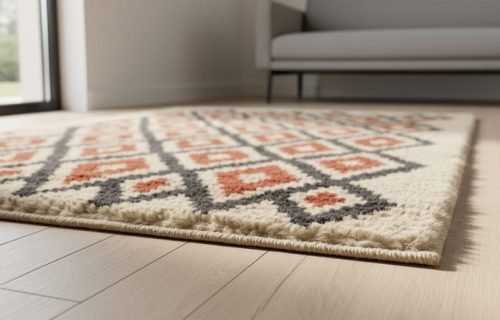
If you love clean lines and graphic punch, this geometric grid pattern brings Moroccan heritage into mid-century modern territory without missing a beat. The design draws from traditional Amazigh symbols, those repeating diamonds, crosses, and lattice work that Berber weavers have used for generations, but translates them into a bold, contemporary grid executed in high-contrast black and white or sophisticated charcoal and taupe palettes.
What makes this pattern work so well in mid-century spaces is the deliberate symmetry and rhythmic repetition. Moroccan weavers have long understood that balanced geometry creates visual harmony, and when you pair that ancient principle with the architectural precision that mid-century design demands, you get something that feels both grounded in tradition and completely current. The stark color contrast keeps the eye moving across the rug’s surface, adding energy to dining rooms where conversation flows or home offices where you need visual stimulation without distraction.
Place one under a walnut dining table with Eames chairs, and the rug becomes an instant focal point that ties the room together. In a home office, the grid grounds modern furniture while adding texture that concrete or hardwood alone can’t deliver. The flat-weave construction typical of these rugs means they sit low under furniture legs and won’t compete with the room’s horizontal emphasis, a key consideration when you’re working with the long, low silhouettes that define mid-century style.
3. Chevron and Zigzag Motifs, For Eclectic and Transitional Spaces

Chevron and zigzag patterns bring movement and energy to spaces that celebrate layering and personality. These rugs feature rhythmic V-shaped bands or angular lines, often rendered in warm terracotta, sandy beige, dusty rose, or soft sage, colors that feel both grounded and fresh. The beauty of chevron Moroccan rugs lies in their ability to anchor eclectic rooms where vintage finds meet modern pieces, or transitional spaces that haven’t fully committed to one aesthetic.
In Berber tradition, zigzag motifs carry protective symbolism. The angular pattern represents the backbone, strength, and the winding path of life, a visual prayer woven into everyday objects. Modern interpretations honor this heritage while softening the intensity through muted palettes and balanced spacing, making them approachable for contemporary homes.
These rugs work exceptionally well in living rooms where a mid-century sofa sits beside a rattan chair, or where gallery walls mix abstract art with family heirlooms. The directional pattern creates visual flow without overwhelming other design elements. They’re equally effective in Moroccan bedroom style settings, adding subtle dynamism beneath platform beds.
Look for hand-woven examples where the chevron lines show slight irregularities, evidence of human hands rather than machine precision. This organic quality prevents the geometric pattern from feeling rigid, allowing it to play well with the intentional imperfection that defines eclectic spaces.
4. Monochrome Diamond Pattern, For Industrial and Urban Lofts

The monochrome diamond pattern strips traditional Moroccan lattice work down to its essential geometry, creating a sophisticated texture play that thrives in raw, industrial spaces. These rugs typically feature repeating diamond or lozenge motifs rendered entirely in a single color family, charcoal on black, navy on midnight blue, or rust on terracotta, where depth comes from pile height variation and tonal shifts rather than contrasting hues.
This restraint makes them ideal companions for exposed concrete floors, weathered brick walls, and steel-framed furniture. The pattern adds visual interest and softens hard surfaces without competing with the architectural bones of lofts and converted industrial spaces. A charcoal flat-weave with raised diamonds, for instance, catches light differently throughout the day, revealing its pattern subtly as shadows shift across the weave.
Flat-weave construction is particularly practical here. Unlike high-pile Beni Ourain styles, these tightly-woven rugs lie flat against concrete or polished cement, preventing the bunching and slipping common in urban lofts. They’re substantially more durable under rolling desk chairs and heavy foot traffic, and their low profile works seamlessly under modern platform beds or minimalist coffee tables.
The diamond itself carries protective symbolism in Berber tradition, the eye against evil, but in monochrome execution, it reads as pure architectural form. Choose darker tones for smaller spaces to ground the room, or lighter charcoals in open-plan lofts where you want texture without visual weight.
5. Asymmetric Tribal Pattern, For Bohemian Maximalist Rooms

Asymmetric tribal patterns reject perfect symmetry in favor of authentic, hand-drawn irregularity that tells the story of the artisan behind each knot. These rugs feature organic shapes scattered across the field, tribal marks, dots, dashes, and abstract symbols that seem to float without rigid structure. The beauty lies in their imperfection: lines that wobble slightly, motifs that don’t mirror exactly, spacing that follows intuition rather than mathematical precision.
This pattern type celebrates the weaver’s personal expression. Traditional Berber rugs were never meant to be uniform; each woman encoded her own narratives, prayers, or life events into the design. Modern interpretations honor this storytelling tradition while working with color palettes that suit contemporary bohemian spaces, warm ochres, burnt sienges, indigos, and natural wool tones.
Asymmetric tribal rugs thrive in maximalist bedrooms where layered textiles create cocoon-like warmth. They anchor reading nooks beautifully, their visual complexity inviting long, contemplative gazes. Creative spaces and artist studios benefit from their unstructured energy, the pattern doesn’t compete but rather complements the creative chaos of such rooms.
The hand-knotted texture adds tactile richness, making these rugs equally appealing underfoot and as conversation pieces. They pair exceptionally well with vintage furniture, macramé wall hangings, and collected objects from travels, building an environment where every element has character and nothing feels mass-produced.
6. Pastel Berber Design, For Nurseries and Soft Modern Aesthetics

Pastel Berber rugs represent a thoughtful evolution of traditional Moroccan design, replacing bold earth tones with whisper-soft hues like blush pink, sage green, powder blue, and dove grey. These gentle color palettes maintain the authentic diamond lattices, tribal symbols, and geometric precision of classic Berber patterns while creating a soothing visual atmosphere that works beautifully in nurseries, bedrooms, and serene living spaces.
The softened aesthetic doesn’t diminish cultural authenticity. Many artisan cooperatives now use natural plant-based dyes to achieve these delicate shades, pomegranate skins for blush tones, indigo diluted for pale blues, and turmeric combined with less pigment for muted yellows. This approach honors traditional dyeing methods while meeting contemporary design preferences for calming, neutral-leaning interiors.
In children’s rooms, pastel Berber rugs provide crucial texture and warmth without overwhelming developing visual systems. The subtle contrast between background and motif creates interest without overstimulation. For adult bedrooms, these rugs anchor the space with cultural depth while supporting restful color schemes built around whites, creams, and soft grays.
Wool remains the ideal material for pastel versions. Its natural fibers hold gentle dyes beautifully and provide the plush, cushioned feel that makes these rugs perfect for floor play, barefoot mornings, or creating cozy reading corners. The hand-knotted texture adds dimension that flat color can’t achieve, giving even the quietest palette a sense of life and movement.
7. Layered Stripe and Symbol Fusion, For Global Eclectic Homes

This pattern type brings the free-spirited energy of Hanbel weaving traditions into contemporary spaces, marrying horizontal bands of color with spontaneous Berber motifs scattered across the surface. The result feels alive rather than static, stripes create visual rhythm while hand-drawn diamonds, crosses, or protective symbols interrupt the lines with organic charm. Unlike symmetrical grid patterns, this fusion style celebrates the unpredictable, making each rug genuinely one-of-a-kind.
The versatility sets this design apart. In narrow entryways or hallways, the horizontal striping draws the eye forward and makes tight spaces feel more expansive. Layered beneath a coffee table or dining set, the stripes ground the furniture while the symbols peek out at the edges, adding unexpected detail. Many owners hang these rugs as textured wall art, transforming them into tapestries that honor Moroccan culture while serving as conversation pieces.
Color palettes range from earthy terracotta and saffron stripes punctuated by charcoal symbols, to cooler navy and cream combinations with rust accents. The multi-directional visual interest works brilliantly in global eclectic homes where textiles from different cultures coexist, the stripes provide structure while the scattered motifs echo the relaxed, collected-over-time aesthetic that defines truly layered interiors.
8. Oversized Abstract Berber, For Statement Living Rooms

When you need a rug that commands attention without shouting, oversized abstract Berber patterns deliver exactly that balance. These pieces take the familiar geometric vocabulary of traditional Moroccan weaving and reimagine it at a dramatically larger scale, transforming what would typically be intricate, repeating motifs into bold, singular artistic statements.
Picture a classic diamond pattern stretched to four or five times its usual size, with each geometric shape now spanning several feet rather than inches. The visual effect shifts entirely: what was once a busy, detailed textile becomes a calming, sculptural element that anchors an entire room. Artisans working in this contemporary style embrace freeform interpretation, allowing traditional symbols to blur and overlap, creating depth through subtle shifts in pile height rather than color contrast.
In open-concept living spaces where defining zones proves challenging, an oversized abstract Berber acts as both foundation and focal point. The scale alone creates natural boundaries around seating areas, while the abstracted patterns maintain visual interest without competing with furniture or artwork. These rugs work hardest in neutral palettes, think warm ivory with barely-there camel outlines, or deep charcoal with tonal variations that reveal themselves only as light shifts throughout the day.
The beauty lies in restraint. By limiting color and maximizing scale, you get functional art underfoot that feels intentional and curated, never accidental or overly decorative.
Caring for Your Modern Moroccan Rug
Your modern Moroccan rug is an investment in artisan craft and cultural heritage, and proper care ensures it ages beautifully while maintaining its texture and pattern clarity. Wool rugs, the most common choice for Moroccan designs, are remarkably resilient but benefit from gentle, consistent maintenance rather than aggressive cleaning.
Vacuum your rug weekly using a suction-only setting, no beater bar. Always vacuum in the direction of the pile, not against it, to prevent fiber damage and preserve the natural sheen of hand-spun wool. Rotate your rug 180 degrees every three to four months to distribute foot traffic and sun exposure evenly, preventing uneven fading or wear patterns that can distort the geometric symmetry of Moroccan motifs.
For spot cleaning, blot spills immediately with a clean, undyed cloth, never rub, which pushes liquid deeper into the fibers. Mix cool water with a tiny drop of pH-neutral wool detergent, dampen a cloth, and gently dab from the outside of the stain inward. Rinse the area with a cloth dampened in plain water, then press dry with towels and allow complete air drying before replacing furniture.
- Wool rugs: vacuum weekly without beater bar, professional clean every 12-18 months
- Cotton flatweaves: shake outdoors monthly, gentle machine wash on cold for smaller pieces
- High-pile Beni Ourain: brush with a soft-bristle brush to fluff fibers between vacuuming
- Low-pile geometric patterns: spot-clean with damp cloth, avoid soaking which can cause dye bleed
Once or twice a year, refresh your rug the traditional Berber way: take it outside, sprinkle the surface lightly with baking soda, let it sit for 30 minutes to absorb odors, then gently beat the back with a rug beater or broom handle to release embedded dust. This method, used for generations in Moroccan homes, revitalizes fibers without harsh chemicals and restores the rug’s natural bounce.
Common Questions About Modern Moroccan Rug Patterns
Buying a modern Moroccan rug brings up practical questions, especially when you’re balancing authenticity with contemporary style and budget. Here are clear answers to help you choose wisely and care for your investment.
How can I tell if a Moroccan rug is authentically handmade?
Flip the rug over and check the back, handmade rugs show slight irregularities in knots and patterns, while machine-made versions display perfect uniformity. Authentic pieces also have natural wool texture and weight, with edges that are hand-finished rather than serged.
Do modern interpretations lose the cultural meaning of traditional patterns?
Not necessarily. Many contemporary artisans intentionally preserve symbolic motifs like protection diamonds or fertility symbols while adapting color palettes and scale for modern homes. The key is purchasing from makers who respect the heritage rather than mass producers who strip patterns of context.
What size Moroccan rug works best in different rooms?
Living rooms typically need 8×10 or larger to anchor furniture, bedrooms benefit from 5×7 or 6×9 placed at the bed’s foot, and entryways look polished with 3×5 or 4×6 runners. Always allow at least 18 inches of floor to show around the rug’s perimeter.
Can I mix Moroccan rugs with other global textiles?
Absolutely. Moroccan patterns pair beautifully with Turkish kilims, Indian dhurries, or Scandinavian weaves if you maintain a cohesive color story. Stick to two or three main hues across all textiles and vary the pattern scale to avoid visual chaos.
What should I budget for an authentic modern Moroccan rug?
Expect to pay $300-$800 for quality 5×7 handmade pieces, $800-$2,000 for 8×10 sizes, and upwards of $2,500 for larger custom or antique-inspired rugs. Prices reflect hours of hand-knotting, a genuine 8×10 takes three to six months to complete.
When shopping, don’t hesitate to ask sellers about the rug’s origin story, the weaver’s cooperative, and the natural materials used. Reputable vendors welcome these questions and can provide provenance details that add meaning to your purchase. Remember that slight imperfections aren’t flaws, they’re signatures of human craftsmanship and the very thing that makes each rug irreplaceable.
The beauty of modern Moroccan rug patterns lies in their remarkable ability to honor centuries-old traditions while speaking the visual language of contemporary homes. These pieces are not mere floor coverings, they’re woven narratives that carry the wisdom of Berber artisans into your living space, creating warmth and character that manufactured décor simply cannot replicate.
Choosing a rug with Moroccan patterns is deeply personal. The minimalist might gravitate toward a spare Beni Ourain, finding peace in its quiet geometry. The maximalist may fall for asymmetric tribal designs that celebrate handmade imperfection. Both choices are equally valid. What matters is selecting a pattern that resonates with how you want your space to feel, not just how it should look according to trends.
As you consider which of these eight patterns fits your home, remember that authentic Moroccan rugs represent real hands, real time, and real cultural heritage. Supporting artisan-made pieces preserves weaving traditions that have sustained communities for generations. Even modern interpretations should acknowledge this lineage with respect.
A thoughtfully chosen Moroccan rug transforms a room from decorated to designed. It anchors furniture, softens acoustics, and adds layers of visual interest. More than that, it invites conversation, provides comfort underfoot, and tells a story every time someone asks, “Where did you find that beautiful rug?” That transformative power makes these patterns worth seeking out, investing in, and living with for years to come.